By Natalie Willis, Reporter, Valley Ag Voice
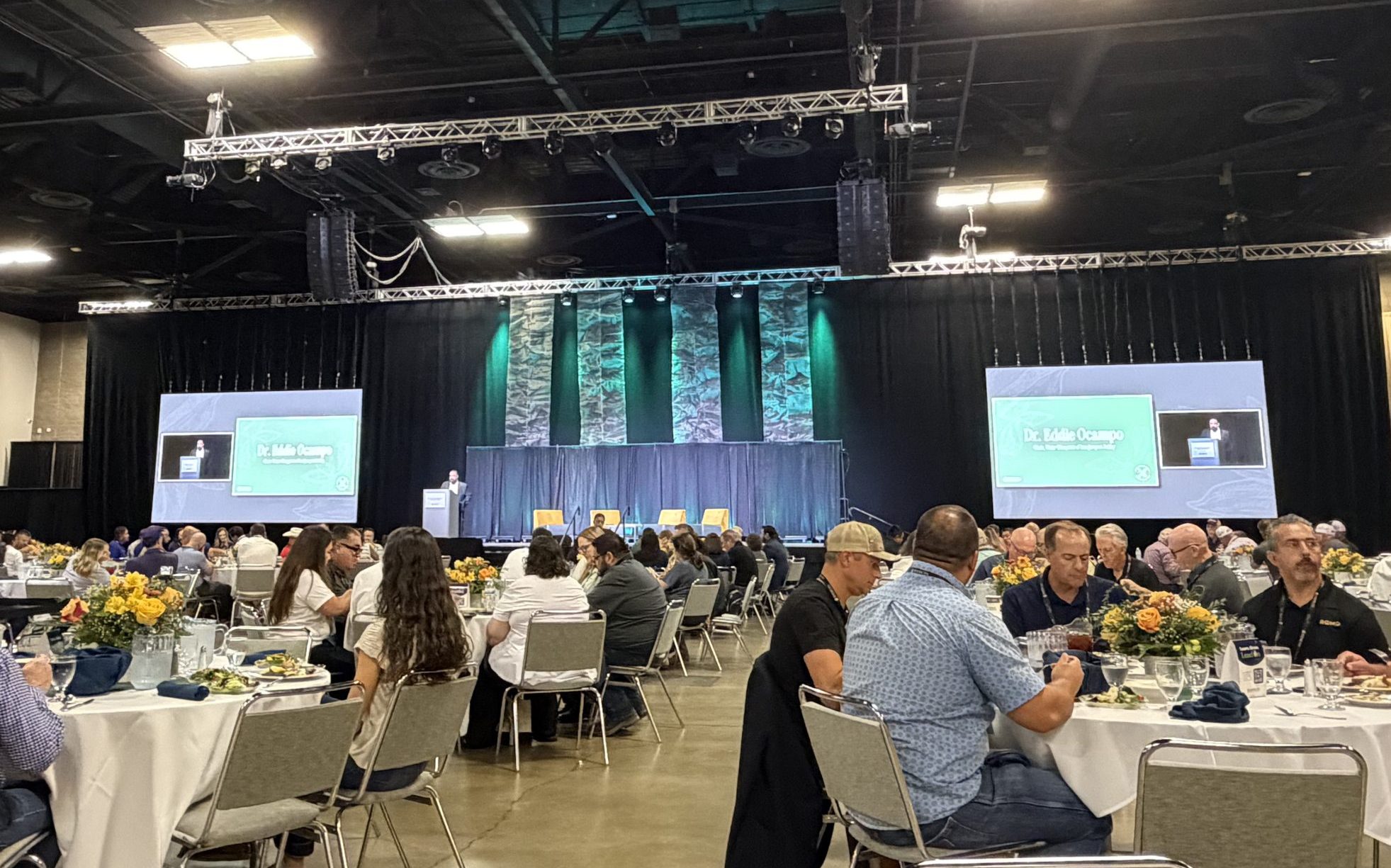
On July 24, the American Pistachio Growers hosted local growers and industry partners at the 2026 Pistachio Industry Insights Day at the Visalia Convention Center. The event included updates on the current state of the pistachio industry as well as the water policies and management conditions that are shaping the future of California agriculture.
During the event, Mike Forbes was announced as the new CEO for American Pistachio Growers, effective on September 1. Forbes has over 20 years of experience in the food, agriculture, and health and wellness industries. He most recently worked with The Vitamin Shoppe as the Chief Strategy Officer and Executive Vice President.
“It’s also really exciting to be in a room with all of you, because if you think about it, there’s nobody in the world that is better at growing pistachios than all of you. And so, it’s kind of like playing hoops with the Dream Team,” Forbes said at the event. “I’m really excited to be with all of you. I also want to tell you that I feel the future is extraordinarily bright for pistachios. If you think about all of the trends that are happening right now…people want health and wellness, people want premium experiences, the beautiful green color of pistachios happens to work really well on social media. There’s a bunch of great things happening for pistachios.”
According to Joe Coelho, director of sustainability and member outreach for APG, California will have roughly 630,000 acres of pistachios by the end of 2026-2027 and approximately 90% will be bearing acres.
“There is a maturing acreage base,” Coelho said. “This is really important to know because much of our supply is coming from what is already in the ground, not from what is going to be planted.”
From 2012 to 2022, there was an average of 35,000 acres planted per year, but Coelho explained that 2023-2024 saw an approximate 75% decline in new plantings.
“We still have some small acreage that’s going to be moving into production as it matures, but the next wave is much smaller,” Coelho said. “So, it’s really a story of controlled expansion, not just uncontrolled planting, and it’s really about a disciplined growth cycle and strong decision making as we consider planting pistachios.”
Supply is showing signs of tightening in 2026 due to extreme spring heat that disrupted pollination in the Central Valley, but strong demand for pistachios is keeping prices high, according to a new report from Terrain Ag. Demand continues to be fueled by the Dubai chocolate trend, expanding export markets, and health and wellness initiatives.
According to Coelho, these market conditions are reshaping the industry’s strategy.
“When we have strong demand and that meets a tighter crop, the conversation shifts a little bit from just strictly moving volume to then protecting quality and value,” Coelho said.
While maintaining producing acreage remains a priority, the future of the pistachio industry through 2030 and beyond depends on water availability and the anticipated impacts of the Sustainable Groundwater Management Act, Coelho explained.
“I’ve heard people talk about nearly 100,000 acres of pistachios potentially coming out because of the lack of water over the next five plus years,” Coelho said. “That’s huge. That’s a lot of supply. We’re not keeping up with that in terms of new planting, so really…we need to plan around demand. Our marketing team certainly has their job cut out for them because we have to maintain the market. We have to do it around our water availability, productivity, and profitability at the end of the day.”
WATER INSIGHTS
During the second half of APG’s event, Coelho moderated a panel discussion on California’s water policy priorities and the impacts on the agricultural industry. Panelists included Vice Chair of the State Water Resources Control Board Dorene D’Adamo, fourth-generation farmer and former U.S. Representative John Duarte, and Chair of the Water Blueprint for the San Joaquin Valley Eddie Ocampo.
According to Duarte, California does not suffer from a lack of public support for expanding water supplies and supporting infrastructure. He referenced Senate Bill 72 which passed in October 2025 and directed the Department of Water Resources to modernize the California Water Plan. This spearheaded the California Water Plan 2028’s goal of reaching a statewide target of 9 million acre-feet of additional water supply by 2040 — roughly equal to two Shasta Reservoirs.
Duarte also referenced water bonds, such as Proposition 1 and Proposition 4, that were supported by voters, explaining that across California residents, businesses, and farms, there is a shared interest in water abundance. According to Duarte, government bureaucracy and inaction, rather than public opposition, have stalled efforts to increase water supplies.
“We simply have a current regime in our government that is completely disconnected with the health and economic realities of our water situation and with the will of the people,” Duarte said.
According to D’Adamo, California’s water future depends on building a diversified portfolio of local water supplies.
“Those that are going to survive SGMA and the regulatory uncertainty and the pinch point at the Delta have a portfolio of supplies, not just groundwater, not just surface water,” D’Adamo said. “I can say that personally, because my husband’s family got out of farming because they were relying on [Central Valley Project] supplies entirely.”
D’Adamo explained that DWR estimates roughly a 10% reduction in surface water supplies by 2040, which they attribute to climate change.
“And it’s even worse if you look at the State Water Project,” D’Adamo said. “The Department of Water Resources estimates a 23% impact if they just look at their supplies because they’re so Sierra reliant.”
Following the panel, one audience member raised concerns over the timeline of major water infrastructure projects, including Sites Reservoir, and the escalating costs associated with project delays.
D’Adamo said she could not comment specifically on Sites Reservoir or the Delta Conveyance Project because the State Water Resources Control Board serves in an adjudicatory role on the projects. However, in earlier remarks, D’Adamo explained that the SWB issued a draft water right decision and associated permit for Sites Reservoir on March 20 and she anticipates further Board action in the fall or by the end of the year.
In Duarte’s closing remarks, he explained that California must continue investing in statewide infrastructure.
“If we do not do statewide water projects, we have to accept scarcity indefinitely. We have to accept the field fallowing,” Duarte said. “We have to accept that produce and nut crops become a luxury good and that they’re not accessible to a lot of working families because of cost and supply issues…so, I am a long ways from agreeing that we have to give up on statewide water supply projects.”