By Natalie Willis, Reporter, Valley Ag Voice
On August 21, Governor Gavin Newsom announced that a funding increase of nearly $219 million from the California Water Commission was approved for the long-delayed Sites Reservoir project, which is exalted as one of the largest water storage efforts in California history.
Initially proposed in the 1950s, Sites Reservoir has become a symbol of how long it takes to turn water promises into reality. The project gained steam after voters approved Proposition 1 in 2014, authorizing $2.7 billion of the $7.545 billion water bond for new storage projects — namely, Sites Reservoir.
Over a decade and several delays later, the project’s cost ballooned from roughly $3.9 billion to up to $6.8 billion, roughly representing a 74% increase. This cost increase is due, in part, to project delays as well as design development and inflationary costs.
“We can’t wait to protect our state from water shortages – there are 40 million Californians depending on us. I am pleased to see the Sites Reservoir project move forward with additional funding, and urge the Legislature to continue to make our state’s water future a priority,” Newsom said in a press release. “Each day that we delay these projects costs our state more money. The Legislature has an opportunity to make history by fast-tracking critical water infrastructure that will ensure we are resilient against droughts and can continue delivering necessary water – a basic human right — to all Californians.”
According to the California Farm Water Coalition, tens of millions of Californians and roughly 43 million acres of farmland rely on a fragile water network consisting of aging levees, canals, and dams, dating back to the 1930s. Yet real upgrades remain stalled by politics and lawsuits.
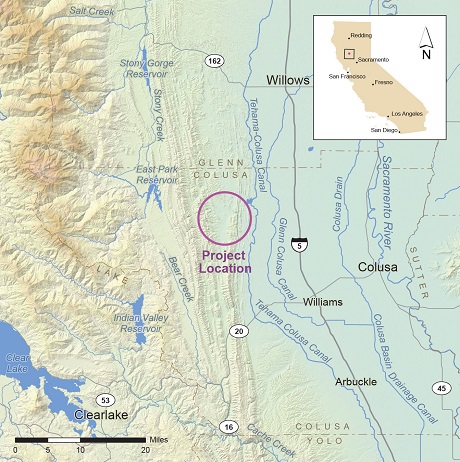
Sites Reservoir, if it becomes operational, would be a 1.5-million-acre-foot off stream surface storage reservoir west of Colusa in the Sacramento Valley. According to the California Water Commission, the reservoir’s conveyance facilities would include the use of existing Tehama Colusa Canal and Glenn-Colusa Irrigation District Canal diversion and conveyance facilities, as well as a proposed new diversion and discharge pipeline.
The operation of Sites Reservoir would be in cooperation with the operations of the Central Valley Project and State Water Project system facilities.
In the meantime, as larger infrastructure projects like Sites inch through regulatory hurdles, California’s water infrastructure continues to collapse under its own age.
PLANNING PURGATORY
After decades of lawsuits, studies, and revisions, Sites Reservoir is expected to break ground by the end of 2026, according to the Sites Project Authority. However, the project still needs to secure water rights from the State Water Resources Control Board.
According to Jerry Brown, the executive director of the Sites Project — no relation to the former governor — the issue of water rights and environmental reviews further exacerbates project delays.
“I think the environmental regulations take time to work through and that’s definitely the case… and there are many layers of environmental regulation,” Brown told ABC 7.
The Site Project Authority explained that the reservoir will not dam or impede a major river system and does not threaten fish migration or spawning. Additionally, it will provide up to 372,020 acre-feet of storage space for environmental use.
Still, a broad coalition of environmental groups and Native American tribes including Friends of the River, the Sierra Club, Save California Salmon, the California Sportfishing Protection Alliance, and the Winnemem Wintu Tribe, oppose the Sites Reservoir project due to concerns about fish populations, the Delta ecosystem, and endangered species habitats.
The coalition filed a lawsuit with the Yolo County Superior Court in December 2023, citing that the Environmental Impact Report was inadequate and failed to consider alternatives that would protect fish and wildlife, contending that the project would threaten imperiled fish species.
A trial court dismissed the lawsuit in May 2024, finding the EIR to be legally adequate, but the environmental groups filed an appeal with the Third District Court of Appeal which upheld the lower court’s ruling and effectively dismissed the appeal.
While the courts have cleared the way, the next threat comes from mounting costs tied to inaction as regulatory and permitting processes drag out.
Other marquee infrastructure projects also find themselves trapped in Sacramento’s endless process. The Delta Conveyance tunnel, for instance, has been studied under three governors — Schwarzenegger, Brown, and Newsom — with little progress.
Since 2019, the Newsom administration has slowly advanced the project through its Environmental Review, with the Department of Water Resources certifying the Final EIR in December 2023.
Currently, this 45-mile tunnel to move water beneath the Delta is working through the permitting and regulatory compliance phase, most recently securing an Incidental Take Permit under Section 2081 of the California Endangered Species Act from the California Department of Fish and Wildlife. The State Water Board is also reviewing the project’s change petitions for water rights.
As of May 2024, the Delta project is estimated at $20.1 billion. According to a DWR analysis, the benefit-cost ratio is 2.2, suggesting that for every dollar spent, the project yields $2.20 in benefits from improved water supply, quality, and seismic resilience.
Still, environmental groups continue to delay the project, according to a report from Charley Wilson, Executive Director of the Southern California Water Coalition.
“Despite the project’s robust environmental protections—developed in close consultation with scientists and regulatory agencies—opposition groups continue to peddle scare tactics about ecological harm,” Wilson stated. “These narratives ignore the extensive habitat restoration efforts embedded in the project design and the state’s commitment to ongoing environmental stewardship.”
In a letter to the State Water Board in March 19 water managers explained that each day of delay in constructing the project causes the cost of the project to increase by over $1 million.
LESS LIP SERVICE, PLEASE
For those in the ag industry, the true danger of the state’s drawn-out approval process goes beyond higher price tags on megaprojects — it widens the gap between water demand and supply. Higher construction costs, less reliability, and fewer options for keeping agriculture productive compounds with each delay to update an aging water infrastructure.
When promised projects like Sites Reservoir, with funding approved by voters, remain stalled in regulatory processes, it means another season of uncertainty for farms already juggling volatile surface water allocations and mounting groundwater restrictions under the Sustainable Groundwater Management Act.
The reliable water deliveries agriculture needs to survive are not going to be found in press releases of new funding announcements, but rather in concrete progress — shovels in the ground, permits finalized, and projects moving forward.
Until then, California’s water system will continue to strain under demand. For the state’s near $60 billion agricultural economy, every month of delay is a lost opportunity and a reminder that water security requires action, not rhetoric.