By Natalie Willis, Reporter, Valley Ag Voice
On October 29, the Water Blueprint for the San Joaquin Valley held a public meeting at the Fresno County Farm Bureau to discuss the Unified Valley Water Plan and other pressing issues affecting California’s water.
According to the Blueprint’s Board Vice Chair Geoff Vanden Heuvel, the coalition aims to advance water resource policies and projects that maximize reliable supplies for farms and ranches, communities, and ecosystems in the San Joaquin Valley.
Vanden Heuvel explained that the passage and implementation of the Sustainable Groundwater Management Act was the impetus for this “coalition of the willing,” bringing stakeholders in the San Joaquin Valley together to address long-standing groundwater issues.
“There’s a lot of reasons for why we are where we are, including droughts and policies and all the rest, but the fact of the matter is we’ve been mining a lot of groundwater,” Vanden Heuvel said. “It’s no longer sustainable, and we have to stop it. And now, we have to legally stop it, and that is a massive paradigm shift and a massive game changer.”
UNIFIED WATER PLAN
In order to serve farmers, the environment, and the broader community, the Water Blueprint, California Water Institute, and other partners are working to develop a Unified Water Plan for the San Joaquin Valley.
The Bureau of Reclamation is supporting these efforts, with roughly $1 million directed to help CWI and Water Blueprint develop and integrate subregional water management efforts and local projects into a unified water plan. This two-year project will be published in a report to be submitted to Congress.
Bill Swanson, practice leader for water resources planning and management at Stantec, is supporting the plan’s development through the California Water Institute. He explained that the severity and intensity of the 2012-2016 drought revealed the vulnerability of water supplies in the Valley.
“The exposure of how fragile – that’s the best term – our water reliability is tied to Northern California and Delta conditions, and the requirement to [clear] ourselves from groundwater overdraft established a profound change for the Valley,” Swanson said.
Swanson explained that sustainable groundwater management requires not only stopping overdraft but also replenishing aquifers to restore their capacity and allow for natural water level fluctuations. This creates a new demand for water dedicated to recharge.
Additionally, the Bureau of Reclamation is obligated to fulfill water needs for wildlife refuges in the San Joaquin Valley under the Central Valley Project Improvement Act. Federal funding has never been sufficient to meet those obligations, Swanson explained.
“On top of that, what they’ve been buying in the past is still tied to a fixed amount of money,” Swanson said. “And we know that as water scarcity heightens in this Valley, particularly with SGMA implementation, the demand to acquire water will go up.”
When all competing demands on water supplies are considered, the projected gap between available supplies and expected demands for existing land uses in 2040 is estimated at 2.5 million to 3 million acre-feet per year.
“It’s a really big number, and it means a lot of land will be taken out of agricultural production if all we do is reduce demand,” Swanson said. “We know that’s a big problem, and we know that that’s just done as a reaction from a reduction in supply — you just let the market forces drive it…It will create an unorganized economic and social framework in the Valley that really should not be the desirable outcome.”
Thus, one of the primary goals behind the Unified Plan and the Water Blueprint is to chart the region forward to a more desirable outcome.
The outline of the plan covers the needs and opportunities for water supply problems, flood management problems, and environmental problems. It also discusses potential projects, project portfolios, and implementation to increase the capacity and movement of water in the Valley.
While the plan is still in development, chapters are available for public review and input. To request draft chapters, contact Laura Ramos, Associate Director of Research and Education of the California Water Institute, at lramos@mail.fresnostate.edu.
INVESTING IN THE FUTURE
Adam Nickels, acting Regional Director for the California-Great Basin region of the Bureau of Reclamation, joined the Blueprint’s Large Group Meeting to discuss federal actions to boost water supply reliability and the need for renewed investment in California’s aging water infrastructure.
Providing a brief history of the Central Valley Project, Nickels explained that between 1937 and 1985, the Bureau built out the CVP, and it was largely successful in delivering water supply, reducing flood impacts, and temporarily eliminated impacts related to subsidence.
Traditionally, state and federal water projects followed the beneficiary pays principle — that is, those who benefit, whether directly or indirectly, help pay for them.
“What our grandparents, great-grandparents, and great-great-grandparents did five generations ago was come up with a plan, and that plan did not have all the funding. It did not have all the authorization, and it did not have all the future expectations to come incorporated in it…those investments did pay off, but the conditions have changed,” Nickels said. “The environment has changed, the public perspective on how we use water has changed, and we need to think about those future investments. We need to think about the affordability of those future investments and how we approach them.”
Nickels explained that the Bureau builds and operates federal water projects authorized by Congress to supply agriculture, municipalities, industry, flood protection, recreation, and power. Facilities are operated in compliance with state-issued water rights, which are periodically updated through public processes overseen by the State Water Resources Control Board and reflected in California’s Water Quality Control Plan.
In terms of incoming infrastructure funding rollouts, Nickels explained that the Bureau has restoration projects on its facilities to restore the capacity of the Delta-Mendota Canal, the San Luis Canal, and the Friant-Kern Canal. These fall under the funding for aging infrastructure projects.
“This funding is largely reimbursable funding, so it does get into that place where we have to consider the cost of the investment,” Nickels said. “But the funding for these projects, there is $756 million available, and we do expect an announcement on what will be funded in 2026 very soon.”
Additionally, the Bureau anticipates further announcements under the Water Infrastructure Improvements for the Nation Act, with investments expected in the B.F. Sisk Dam and Sites Reservoir projects pending release from the Office of Management and Budget.
“With the government shutdown, OMB has not released that information yet so that we can announce it, but there should be, we do hope, an announcement soon on future WINN investments for B.F. Sisk and Sites Reservoir,” Nickels said.
In planning for the future, he explained that while these projects are expensive, the greatest civilizations have invested heavily in irrigation agriculture. When those civilizations stop that investment, they collapse.
“Investment in agriculture, investment in irrigation, investment in industry, and investment in our water supply reliability in the West is critically important to the survival of our civilization, the survival of the United States,” Nickels said.
EXECUTIVE ORDER 14181
Nickels addressed the Trump Administration’s Executive Order 14181, which directed federal agencies to reduce regulatory barriers restricting water movement south of the Delta. The Bureau reviewed its Record of Decision for the Long-Term Operation of the CVP and coordinated with the Department of Water Resources to off-ramp certain operational limits, making roughly 80,000 acre-feet of additional water available.
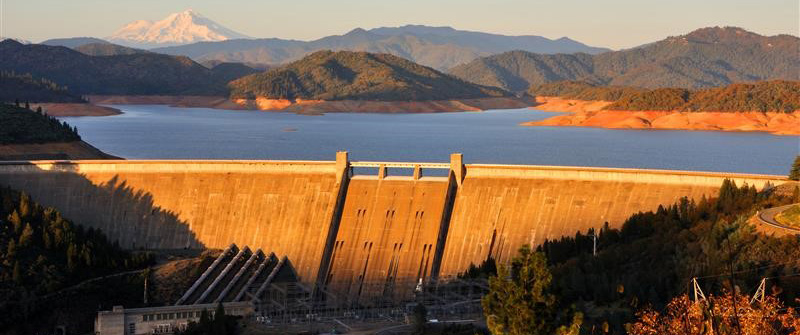
They also lifted this year’s Fall X2 flow requirements, conserving water in Lake Shasta and Lake Oroville that would have otherwise been released to meet those standards, helping preserve storage for next year.
Reclamation coordinated closely with DWR, the California Department of Fish and Wildlife, and U.S. Geological Survey to monitor Delta species impacts, but found no population-level effects that required operational changes.
These measures are now being formalized as “Action 5,” which uses the existing environmental report and Record of Decision to allow for the continued implementation of these decisions, making water supply more reliable in the future.
“Reclamation is looking at plans to try and evaluate the full range of alternatives that would potentially come out of what we’ll call an ‘Initiative 6.’ We are working with our water users to identify what those range of alternatives are and what we would carry forward,” Nickels said. “We don’t really have a full range of alternatives ready for public statement on, but we hope to have something on that in the future and continue to work and coordinate with our federal and state and local partners on what that range of alternatives will look like moving forward into another Long-Term Operations plan.”