By Natalie Willis, Reporter, Valley Ag Voice
A recent study from the University of California, Davis has put hard numbers behind what ranchers have long claimed — wolves are costing them millions.
Since late 2011, the gray wolf population has been steadily increasing in California, and with it, mounting livestock losses have caught the state between conservation efforts and economic realities.
To measure the direct and indirect costs after the California Department of Fish and Wildlife launched a pilot program to compensate ranchers for wolf-related losses, UC Davis professor and cooperative extension specialist in livestock and rangeland economics, Tina Saitone, assembled an interdisciplinary research team.
The group included Ken Tate, a UC Davis professor and rangeland sciences expert; Ben Sacks, director of the Mammalian Ecology and Conservation Unit, who analyzed wolf scat; and Brenda McCowan, a professor of population health and reproduction, who studied cattle stress through cortisol levels.
According to the findings, one wolf can cause between $69,000 and $162,000 in direct and indirect losses from reduced pregnancy rates in cows and decreased weight gain in calves. The total indirect losses ranged from $1.4 million to $3.4 million.
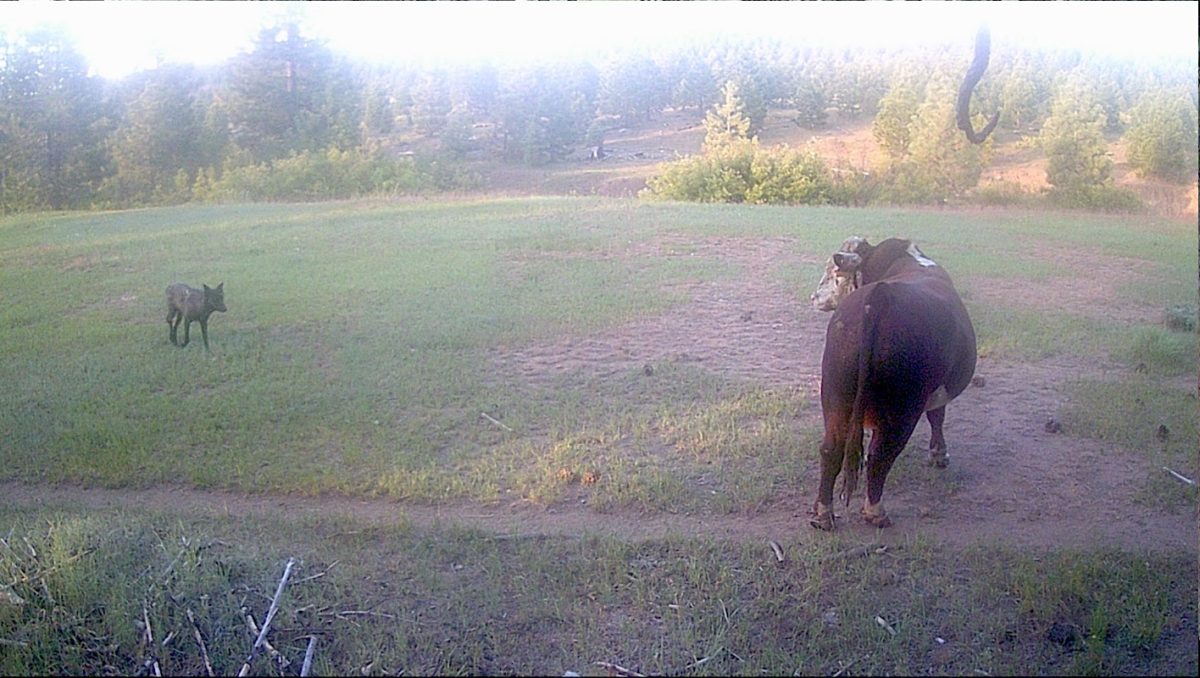
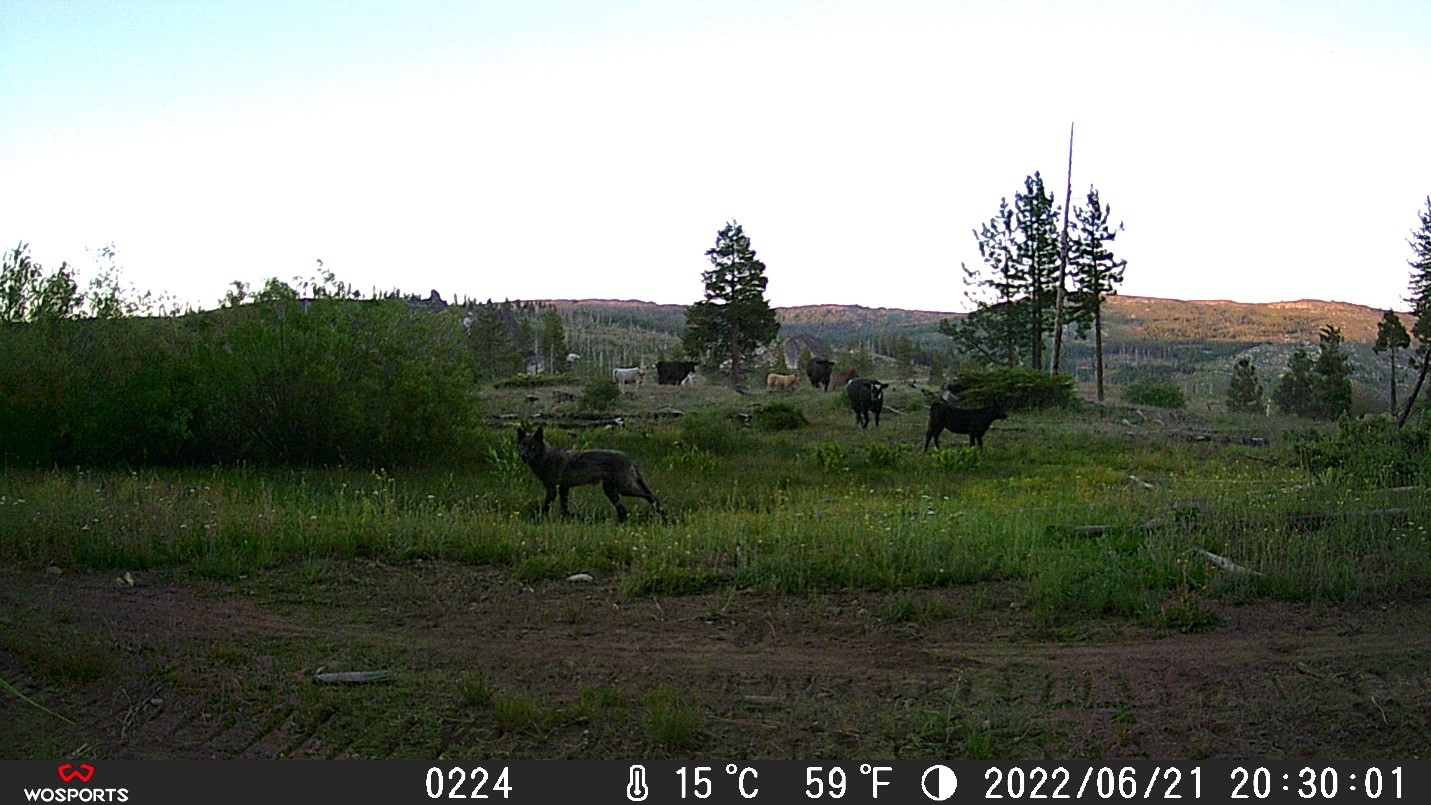
The research centered on three wolf packs — Harvey, Lassen, and Beyem Seyo — in northeastern California during the grazing seasons of June through October in 2022, 2023, and 2024.
As wolves continue to expand their territory across Northern and Central California, ranchers are increasingly reporting negative impacts on cattle operations. According to Kirk Wilbur, Vice President of Government Affairs at the California Cattlemen’s Association, the findings of the UC Davis study affirm what many producers already knew from firsthand experience.
“Their findings are 100% in line with my expectations,” Wilbur said. “Dr. Saitone, you know, in her role as an ag economist at UC Davis, has been hearing from ranchers much in the same way that I’ve been hearing from ranchers about the impacts that they are witnessing from wolves on the landscape.”
PROOF IN THE SCAT
Wolves were long thought to be extinct in California until a GPS-collared male wolf named OR-7 came to town from Oregon in 2011. The lone wolf — who later returned to Oregon — drew widespread public attention and contributed to gray wolves being listed for protection under the California Endangered Species Act.
By 2015, the first known pack in California was established in Siskiyou County— CDFW officially named them the Shasta Pack.
While the UC Davis study focused on northeastern wolf packs, there has been an uptick in wolf-related cattle mortalities in Tulare County in recent months. According to CDFW’s Wolf Management Update from October 2024 to December 2024, there have been two confirmed, two probable, and one possible gray wolf attacks on cattle in Tulare County from the Yowlumni pack.
From that same period, at least 19 cattle deaths statewide were attributed to wolves, primarily in the north.
The UC Davis study found that 72% of the wolf scat samples tested during the 2022 and 2023 summer seasons contained cattle DNA. In a press release, Ben Sacks — who analyzed the wolf scat — explained that the data does not indicate what actually killed the cattle.
“It just tells us what’s for dinner,” he said.
However, the study’s findings diverge from the narrative in the 2016 California Wolf Conservation Plan, which suggested wolves would primarily prey on wild ungulates — deer and elk. Wilbur explained that CCA began advising CDFW in 2012 that California does not have the native population of deer and elk to satisfy wolves.
“I think what we’re seeing over the past decade is that those cautions that we were giving the department back as it was developing that conservation plan have come to fruition,” Wilbur said. “We now know that the larger parts of wolves’ diets are livestock, and that’s because there isn’t enough native prey in the state, and also, livestock are an easy target for wolves.”
More recently, between January 26 and March 16, 2025, CDFW conducted 18 depredation investigations. Of these, 12 were confirmed wolf attacks, two were classified as probable wolf attacks, and one was considered a possible wolf attack.
During this period, confirmed wolf kills included six calves, two adult cows, and four heifers. The probable wolf attacks resulted in the deaths of one wether and two calves, while the possible attack involved one dead cow. Additionally, confirmed wolf-related injuries included one calf and one heifer.
It should be noted that wolf attacks on cattle are likely underreported due to undiscovered carcasses or ranchers not reporting.
THROWN TO THE WOLVES
As a recovering endangered species, gray wolves are protected under the California Endangered Species Act. This means that it is illegal to intentionally kill any wolves in the state except in defense of human life.
Penalties may include up to a $100,000 fine, up to one year imprisonment, or both.
So, because ranchers cannot legally defend their herds, CDFW introduced its Wolf-Livestock Compensation Pilot Program in 2021. According to Wilbur, in its entirety, it is considered the most comprehensive wolf compensation program in the Western U.S.
The program had three main components. First, it offered direct loss compensation, reimbursing ranchers for the market value of livestock confirmed to be killed or injured by wolves. Second, it provided support for non-lethal deterrents, such as fladry, fencing, or range riders, by covering or reimbursing the costs of implementation.
The third part of the program, called “pay-for-presence,” acknowledged the indirect impacts of wolves on livestock — it recognized that simply having wolves nearby could cause stress to herds, leading to lower weight gain, higher abortion rates, and other issues that reduce productivity and profits.
“That three-pronged compensation program probably wasn’t perfect,” Wilbur said. “You know, it may underpay certain ranchers or generalize non-indirect impacts under the pay-for-presence program, but it was really good. It was the most comprehensive compensation program in the West that I’m aware of.”
At the program’s impetus, CDFW received $3 million in funding from the Budget Act of 2021. As of January 12, 2024, CDFW notified the public that the applications received were expected to “exhaust” the current fund.
Although the California Cattlemen’s Association, California Farm Bureau, and Defenders of Wildlife secured an additional $600,000 for the program, that limited amount has forced the department to scale the program back. Currently, it only compensates ranchers for direct loss — that is, livestock that are killed or injured by wolves.
“So, I think that the whole program they’ve developed, I’m relatively satisfied with, but because the Legislature has underfunded the department’s full-fledged compensation program, it isn’t operating as intended,” Wilbur said. “So no, it’s not adequate right now, but that’s not the department’s problem or fault; that is the Legislature’s fault.”
While lawmakers will not face real legal liability as a result of inaction to adequately support cattle operations, Wilbur explained that in a more colloquial sense, ranchers may hold the Fish and Game Commission and the Legislature accountable.
“To ranchers, certainly the [Fish and Game Commission] for listing wolves as an endangered species and limiting not just ranchers’ ability to manage them but also limiting the department’s ability to manage that species, and the Legislature, by underfunding the compensation program,” Wilbur said. “Certainly, ranchers would view them as shouldering some of the blame for impacts to livestock producers from gray wolves.”
TWO WOLVES, ONE SHEEP: WHAT’S FOR DINNER?
While the state did not reintroduce gray wolves, the conservation efforts that were established hinder ranchers from effective wolf management.
Back in 2014, the California Fish and Game Commission listed gray wolves as endangered under the California Endangered Species Act, even though the CDFW advised against it. According to Wilbur, CDFW preferred to classify wolves as non-game mammals, which would have allowed them to manage the animals more actively, though ranchers still would not have been able to kill wolves themselves, even if those wolves were preying on their livestock.
“Now, that would probably mean my members couldn’t lethally take themselves a wolf that has been killing their calves, but perhaps that would give them the ability to call out the Department of Fish and Wildlife to their property and allow CDFW to appropriately manage that wolf,” Wilbur said. “So, at a minimum, that’s where we would like to see wolf management in California.”
As such, CCA is advocating for gray wolves to be removed from both the state and federal endangered species lists so CDFW can step in and manage them when necessary.
Wilbur explained that while continued protections under the endangered status will not dismantle California’s ranching industry, the effects can be devastating at the individual level. Many ranchers may never face direct losses from wolves, but those who do — particularly in wolf territory — can suffer significant losses as evidenced in the UC Davis study.
As an example, Wilbur highlighted that some ranchers in Siskiyou County have lost dozens of animals to specific wolf packs, which can force them out of business and lead to the sale of well-managed rangelands for development.
Additionally, ranchers have had to stop using federal grazing allotments due to wolf presence, leaving grasses unmanaged and increasing the risk of wildfires. So, while the overall industry may endure, individual producers could be harmed by ongoing wolf protection.
“I’m not going to be doom and gloom and say, ‘Hey, wolves are going to cause the ranching industry as we know it to cease in California.’ That won’t be the case. Ranchers are resilient, and they will continue producing beef in California,” Wilbur said. “But individual livestock producers could be devastated, and some folks will go out of business because of wolves.”
HOWL BACK
For its part, CDFW is entering Phase 2 of its wolf management plan since wolves are breeding and forming stable packs in the state. As a result, CDFW is considering easing strict protections to allow ranchers to use nonlethal deterrents — rubber bullets, bean bags, ATVs, and motorcycles — to scare wolves away from their livestock.
Shooting or killing wolves will remain illegal, as they are still protected under state and federal endangered species laws.
The department is also continuing to accept applications and issuing compensation payments to livestock producers who have had confirmed killed or injured livestock, or probable killed or injured livestock, by wolves through the Wolf Livestock Compensation Program.
Additionally, CDFW launched a new online mapping tool to help livestock producers track the movements of GPS-collared wolves. The “Wolf Location Automated Mapping System” offers regularly updated data on the general whereabouts of collared wolves, aiming to reduce conflicts by giving ranchers timely information to better protect their herds.
The map is now publicly available on CDFW’s website and can be accessed at https://wildlife.ca.gov/Conservation/Mammals/Gray-Wolf/Location-Map.
On the legislative front, Colorado Congresswoman Lauren Boebert and Wisconsin Congressman Tom Tiffany, along with 30 other members of Congress, reintroduced the Pet and Livestock Protection Act for the regular 2025-2026 session.
This bill would permanently remove gray wolves from the federal Endangered Species List. The legislation would return wolf management decisions to individual states and prevent federal courts from reversing this decision in the future.
Ranchers can support this legislation and promote similar initiatives in California by contacting their representatives and working with organizations like the California Cattlemen’s Association, the Farm Bureau, and other local groups that advocate for the state’s farmers and ranchers.