By Natalie Willis, Reporter, Valley Ag Voice
On December 16, the Westlands Water District Board of Directors voted to adopt the Valley Clean Infrastructure Plan, an initiative that would repurpose up to 136,000 acres of agricultural lands within the district for solar generation, energy storage, and transmission infrastructure.
The vote included the approval of the Final Program Environmental Impact Report and Findings of Fact under the California Environmental Quality Act.
According to a press release from Westlands Water District, the land-use strategy under VCIP stems from unpredictable water supplies and the effects of the Sustainable Groundwater Management Act, which has resulted in substantial land fallowing.
“Inadequate and unpredictable water supplies, made worse by SGMA’s demands, have forced more than 215,000 acres out of production this year alone, with real consequences for hardworking family farmers, workers and rural communities,” Allison Febbo, General Manager of Westlands Water District said in the release. “Westlands is leading in finding solutions that protect the future of farming in the District and provide landowners with viable alternatives when water simply isn’t available. VCIP does exactly that. It strengthens the District’s agricultural resilience by giving fallowed acreage a new purpose, generating stable revenue streams for landowners, and helping preserve family farms for the next generation.”
Under Assembly Bill 2661, Westlands is authorized to develop, construct, and own solar generation, battery storage, and transmission facilities outlined in the plan. Specifically, AB 2661 allows Westlands to generate solar photovoltaic electricity to support its own operations but discharged energy from energy storage and any surplus electricity generated from solar PV can be sold to other utilities.
According to the press release, the District will evaluate placing these facilities under the operational control of the California Independent System Operator.
PLAN DETAILS
The Valley Clean Infrastructure Plan is a development program proposed by Golden State Clean Energy, in collaboration with Westlands Water District, to repurpose several acres of agricultural lands within the Fresno County portion of the District on the west side of the San Joaquin Valley.
Westlands is the largest agricultural water district in the U.S., with more than 1,000 square miles of farmland in western Fresno and Kings Counties. Its federal contracts provide water to 700 family-owned farms that average 875 acres in size, and the service area covers approximately 615,000 acres.
According to Westlands, water shortages have forced over 215,000 acres, roughly 38% of the District’s irrigable farmland, out of production this year alone. Additional acreage is expected to be fallowed as SGMA continues to restrict groundwater use.
“These reductions jeopardize the thousands of jobs supported by the District and threaten the economic stability of rural communities whose essential services depend on the revenues generated by active agricultural production,” the press release stated.
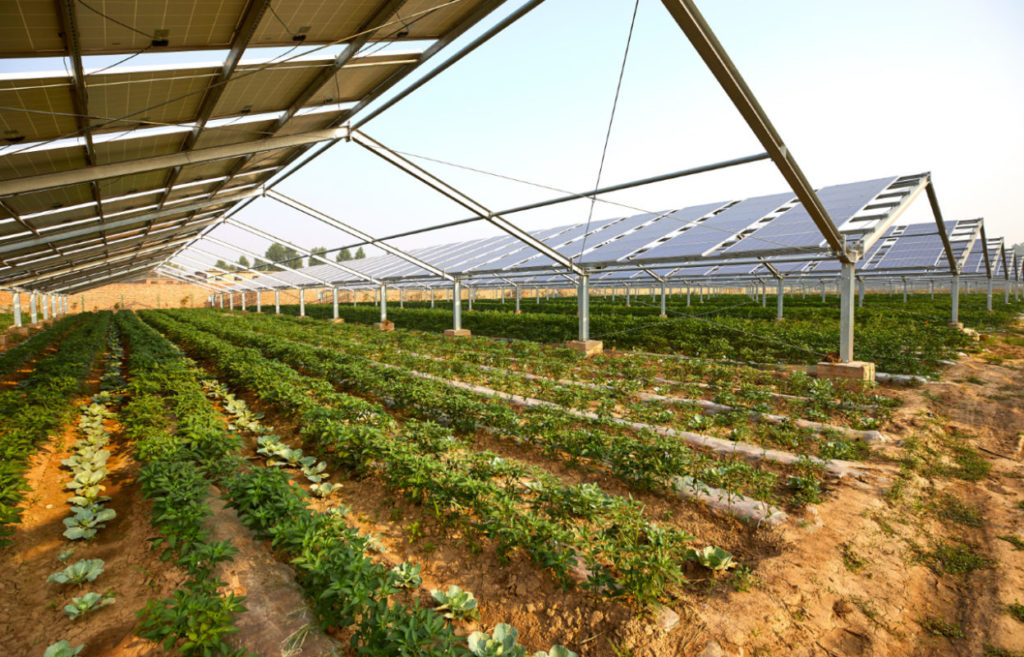
VCIP allows up to 136,000 acres of water-limited, drainage-impaired farmland to be used for solar power, energy storage, and transmission infrastructure, with the stated purpose of providing landowners with new revenue streams through long-term leases, enabling growers to focus water supplies on their most productive land.
According to Westlands, at full buildout, VCIP projects could generate up to 21 gigawatts of renewable energy. An anticipated average of 3,000 full-time equivalent construction jobs for at least 10 years and roughly 500 permanent jobs will be created, according to Golden State Clean Energy.
The Final Program Environmental Impact Report describes the VCIP as a “regional non-regulatory master planning tool for the structure and major components of clean energy projects in the District’s service area.”
As such, the master plan is intended to guide the potential construction of power lines, substations, and necessary conveyance infrastructure, as well as where clean energy could be generated and stored. The plan itself does not approve or regulate projects, and any actual construction would still need permits and approval from the appropriate regulatory agencies.
According to the FPEIR, the plan is meant to achieve several water supply and energy-related objectives, consisting of two main elements — the “Energy Resource Plan” and the “Infrastructure Plan.”
The Energy Resource Plan is a master plan for clean energy development, covering solar photovoltaic facilities and battery storage systems. According to the FPEIR, these projects would be developed within “Development Focus Areas” which consist of District-owned lands and private lands of participating landowners within the Fresno County portion of the service areas. The DFAs would be built out over a 10-year period.
The Infrastructure Plan includes gen-tie lines, substations, and transmission lines within the VCIP Plan Area.
One objective of the VCIP aims to provide a solution to the “chronic shortage” of water deliveries from the Central Valley Project by repurposing certain farmland and redirecting surface water allocation to other productive farmlands within the District.
These repurposed lands would be temporarily used for renewable energy. Following the decommissioning of those projects, the land would be restored for agricultural use, with advanced water conservation and irrigation technology, according to the FPEIR.
To view the Valley Clean Infrastructure Plan Final Program Environmental Impact Report in its entirety, an electronic version is available to download at https://wwd.ca.gov/news-and-reports/environmental-docs/.
The approval of the VCIP and FPEIR by the Westlands Board of Directors established a “blueprint” for developing clean-energy facilities and transmission infrastructure on repurposed agricultural lands unable to support irrigated agriculture, according to the press release. The next steps will include project-level planning, permitting, and implementation.