By Joshua Stevens, Faith Contributor, Valley Ag Voice
This article will continue in the spirit of the previous article, detailing several issues with the Catholic doctrine of justification. To be justified is to have right standing before the Lord. All Christians agree that we are sinners in desperate need of a savior with no way to be justified of our own accord. We agree that Christ came as the Messiah, lived a perfect life, and died a gruesome death on the cross as the atonement for our sins. We all agree that three days later, he was raised by the Father and ascended into heaven sometime after. We agree that we are initially justified by faith in Christ and not by our own works.
The disagreement arises from whether we must continue to enhance our justification. If we are justified once, then we cannot be more justified later.
The Council of Trent, in response to the protestant reformation, wrote in January of 1547, “If any one saith, that the justice received is not preserved and also increased before God through good works; but that the said works are merely the fruits and signs of Justification obtained, but not a cause of the increase thereof; let him be anathema.”i
Before going further, we should establish the importance of the disagreement. If Rome is right and we must increase our justification, it has alarming repercussions on our theology. Chiefly, it would make the instigating complaint among the reformers mute. If our justification must increase, then there is no wrong in selling indulgences for the forgiveness of sins, only the occasional abuse. While other reasons exist, this sole example proves the point. We should spend time in prayer, discussion, and study to determine which side has the better case for how a Christian should operate.
The issues that come from this canon of Trent are three-fold. First, scripture describes justification as an “all or nothing” matter. Second, the continued process of justification that Rome proposes devalues the sacrifice of Christ by adding magisterial middlemen to divvy out additional portions of grace to us sinners. Third, it holds the power to save not in Christ’s hands but in the church’s.
Justification as an “all or nothing” matter means that at any given point in time, people are either counted as righteous or unrighteous before the Lord.
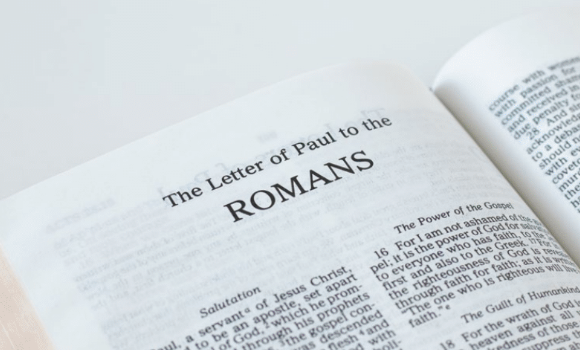
This has multiple references in scripture, but we will focus on one. Romans 5:9 says, “Since we have now been justified by his blood, how much more shall we be saved from God’s wrath through him!” The reference to “the blood” in this verse refers to Jesus’ death on the cross. We know the word “justified” here implies an instantaneous action since the preceding reconciliation has occurred “by the death of his Son” (verse 12). Therefore, we can be confident that justification is a matter of pass or fail. Either we are justified, or we are not.
While Catholics will say they agree this is the case with initial justification, it does not mean it is the case with continued justification; however, this argument fails under closer examination when we look at the context of Paul’s writing in this passage. We do not see a sense in which one is continually justified before the Lord. What we do see is precisely the opposite. Paul proclaimed emphatically that we are justified once and for all by the death of Christ.
The second and third issues I’ve described are more controversial, but the implication is clear. By tying justification to works given to us by men, Rome has removed the continued reliance on the cross. Parishioners do not look to God for grace but literally must go to a priest who gives the Eucharist; parishioners do not go to God for confession but the local priest instead. Where the veil was once torn so Christians could “…have confidence to enter the holy places by the blood of Jesus” (Hebrews 10:19), Rome has stitched the veil back together. While Catholics will say all of this comes from God, that Christ is present in the Eucharist, and priests offer confession by the authority of the Lord, it does not change the fact that the presentation of both is through man. Rome has made itself the ultimate arbiter of salvation–for if you disagree with Rome, you can be cut off from this continued grace. It has been a power abused by the church in the past and is at the heart of the very reformation itselfii. Men cannot be trusted with such power, which is why Christ came, and we should place our faith in the Holy Father in heaven, not the father in the Vatican.
Will you pray with me?
Jesus, thank you for your everlasting glory, which shines down upon us daily. From the sun you have made, which gives light, life, and warmth to each of us, to the wind that cools our faces, the trees we use to build and grow, and that provide us with shade on summer days. Thank you for the blades of grass you have dressed our hills with, that dance in the spring and wither in the summer. Let us be reminded that we, like the grass, are in need of constant support from our Creator. For it is You who provides us with water so we may not thirst, and bread that we may not hunger. You have provided, for each of us, passions and talents—may we use them for Your glory. Guide us as we live, so that we can do so with our eyes set on the kingdom to come.
In Jesus’ name,
Amen.