By Scott Hamilton, President, Hamilton Resource Economics
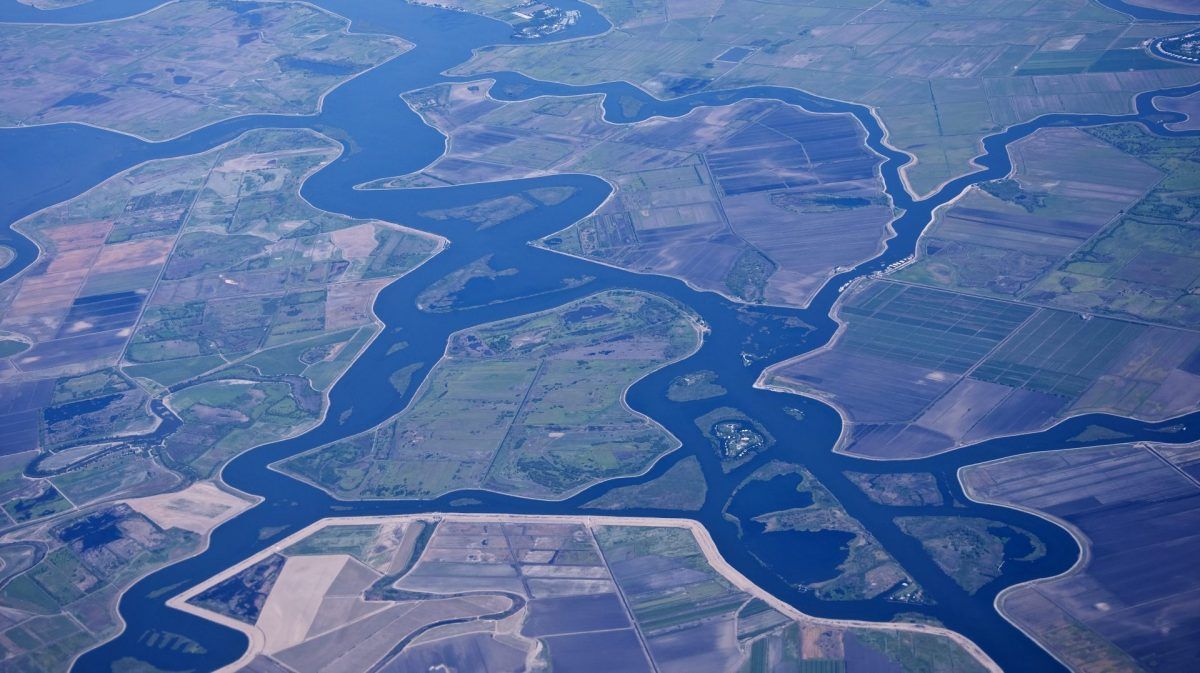
Water management in the Sacramento-San Joaquin Delta is contentious as water users and regulators battle over limited water supplies. The science is complex and answers to difficult scientific issues continue to be elusive in the face of inadequate data and studies that are all too frequently flawed.
To help find reconciliation, the U.S. Bureau of Reclamation requested an ad hoc committee of the National Academies of Sciences, Engineering, and Medicine to conduct a biennial review of the monitoring, modeling, and other relevant scientific activities and initiatives that support the long-term operations of the Central Valley Project.
In the first cycle of the study, the committee assessed the state of science as it relates to: a) fish losses associated with Old and Middle River (OMR) flow management, b) Shasta cold-water pool management which influences survival of winter-run salmon, and c) flow augmentation intended to enhance summer–fall habitat for Delta smelt. Additionally, the committee provided recommendations on how modeling and monitoring strategies and decision-support tools can be changed, improved, or replaced to more accurately assess the impacts of the water project operations.
The task statement was poorly stated — “assessing” the state of the science is vastly different from “evaluating” the strength of the available science to inform water project operations. Not surprisingly, the committee found the state of the science to be lacking, and their review suggested more studies were needed. As such, the management relevance from two years of work by 18 distinguished academics was underwhelming, not only because of a poorly framed task statement, but because the ultimate product is a “consensus” report, meaning that everyone on the committee must agree on the content of the report. The result is a watered-down product that no one on the committee objects to but takes only minor steps to advance science.
Management of Shasta’s cold-water pool involves a balance of keeping enough cold water in Shasta to provide suitable habitat for salmon downstream while maximizing deliveries to water users. The committee did not address that issue. Rather it recommended that there should be more monitoring of water temperatures in the reservoir and downstream of it, that additional studies need to be conducted on factors affecting mortality other than water temperature, and that plans should be developed to reintroduce salmon to historic spawning areas to safeguard portions of the population against a catastrophe in one area.
Water projects typically cause a net flow of Delta water toward the pumps that results in increased salvage and mortality of fish, including listed fish. Water project pumping is restricted to reduce the number of fish salvaged by managing flows toward the pumps in Old River and Middle River. In regard to OMR management, the Committee found the existing management lacked a defensible scientific basis. They made three primary recommendations. First, the scientific basis for the thresholds that trigger export reductions should be more transparent to enable scientific review. To their credit, the committee concluded that salvage (the counting of saved fish) was a “limited and contested proxy for impacts to fish” and advocated for thresholds based on population level impacts of water-project operations. Second, more modeling and monitoring is needed to improve water project operations (while recognizing that the committee documented 23 models already pertinent to the issue). And third, improvements in Delta channels, forebays, infrastructure, and operations might help to reduce Delta-wide native fish losses and should be studied for their potential to reduce the ecological impacts of pumping.
Augmenting Delta outflow (releasing water from reservoirs and allowing it to flow to the Pacific Ocean) has been an action favored by the California Department of Fish and Wildlife and some environmental organizations because it increases the area of lower salinity water, particularly in Suisun Bay, which, other than being equal, would benefit delta smelt. But with the invasion of the Asian clam, food availability in Suisun Bay has typically been less than sufficient in the late summer and fall to sustain delta smelt. Disappointingly, the committee’s report failed to recognize that limiting factor. While increased outflow will transport food from upstream to downstream, the supply of food downstream is still insufficient to sustain delta smelt, while the supply upstream, where more of the fish are, has been depleted. Hence, the action has been controversial. The committee concluded that the greatest uncertainty of flow augmentation actions is the inability to detect a response in fish populations. Normally, the “inability to detect a fish response” would be considered a failure either of the action or of the monitoring design, neither of which the committee was willing to conclude. The committee’s recommendation? More modeling is needed to inform a decision process based on a series of environmental triggers. Still, no credible studies have supported the action and more than a dozen peer-reviewed and published studies do not.
According to Karla Nemeth, the Director of the California Department of Water Resources, in the drought year of 2022, 1% of the water stored in Oroville Reservoir was delivered to water users. In the wet year of 2023, the number was 14%. All of the other water was used to meet water quality standards or to protect fish. To the causal observer, and to the water users paying for water they do not get, the system is broken. One would hope that rigorous, impartial science could be employed to resolve the controversial issues and improve water management, both for the benefit of the environment and for the water users. In this case, the National Academies Committee provided some small but important direction in improving science, but a resolution of the most critical scientific issues remains elusive.