By Natalie Willis, Reporter, Valley Ag Voice
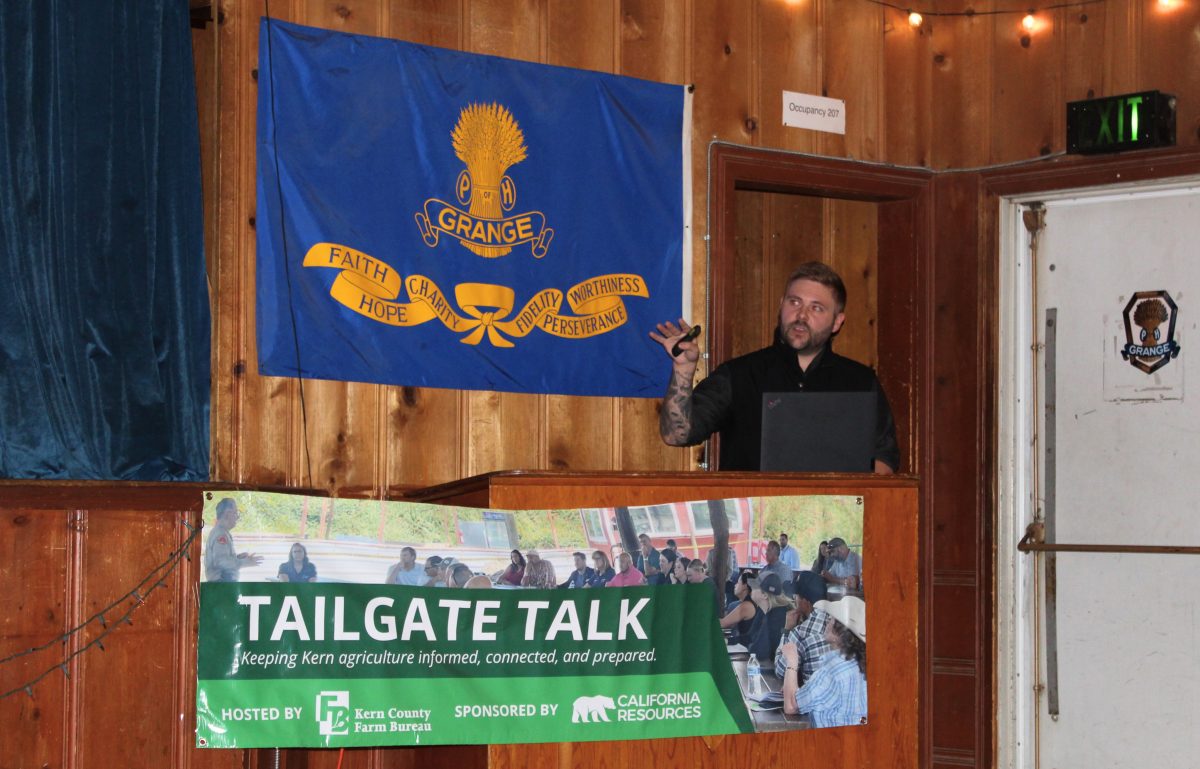
On July 10, the Kern County Farm Bureau hosted a Tailgate Talk in Bakersfield, California, to discuss recent agricultural policy developments as well as the growing concerns over the state’s predator recovery initiatives.
KCFB’s Tailgate talks are informal educational discussions that allow local agricultural leaders to engage with industry experts and stay informed on issues affecting Kern County agriculture.
The recent Tailgate Talk included presentations by Richard Filgas, the assistant director of policy advocacy at the California Farm Bureau, and Julie Finzel, the livestock and natural resources advisor serving Kern, Tulare, and Kings Counties at the University of California Cooperative Extension.
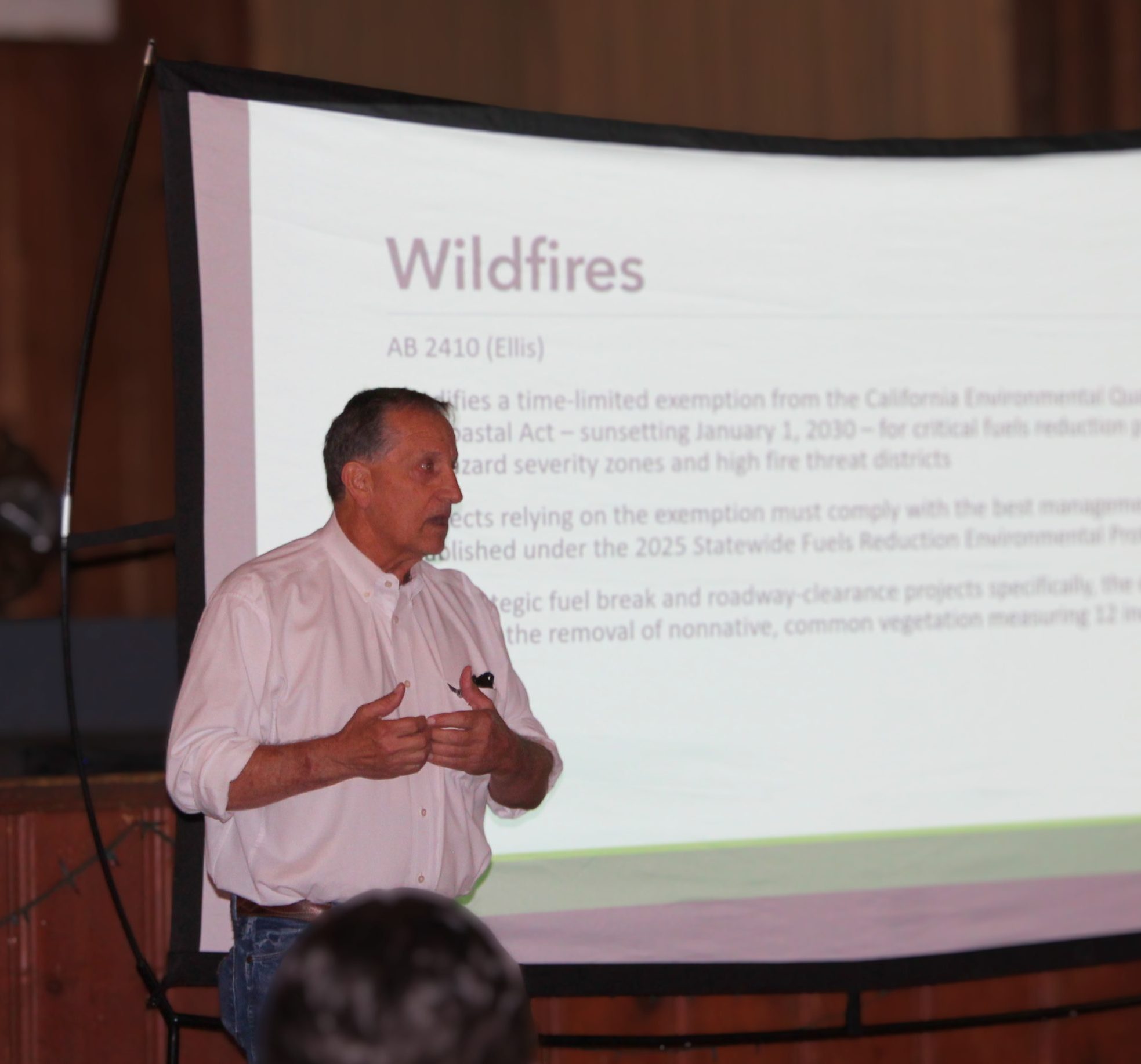
California Assemblyman Stan Ellis was also in attendance to discuss his proposed bill on wildfire prevention — AB 2410.
PREDATOR POLITICS
The population of gray wolves in California has been steadily increasing since one GPS-collared male wolf from Oregon crossed the border into the state in 2011. By 2015, the first confirmed wild gray wolf pack in California was established in Siskiyou County.
There are currently 12 known packs in California, and these wolves are having “increasing interactions” with cattle operations, Filgas explained.
According to the California Department of Fish and Wildlife’s latest data for wolf-livestock depredation cases in 2026, there have been 47 total investigations this year with 26 livestock confirmed/probable killed or injured by wolves. It should be noted that this data accounts for the months of January, February, and March, and there may have been livestock-depredation cases that went unreported.
Because gray wolves are protected under both federal and state endangered species laws, it is illegal for ranchers to kill them even if they kill or harm livestock.
“California classifies wolves as endangered, limiting lethal control options for producers.
Wolves are also classified as endangered under the Federal Endangered Species Act protections, so together, these two things add layers of complexity to the management of wolves in California,” Filgas explained. “Environmentalists would have ranchers believe that non-lethal deterrents, such as range riders, flag-fencing, guard animals, and carcass removal are part of this solution that fixes all the problems, but that’s not the case.”
According to Filgas, California is currently in Phase 2 of its Wolf Recovery plan which was triggered after CDFW documented at least four successful breeding pairs for two consecutive years.
“Phase 2 focuses on adaptive management strategies as the state’s wolf population grows and expands in range,” Filgas said. “Phase 3 will begin only once the state confirms a minimum of eight breeding pairs for two successful years.”
According to the Wolf Recovery plan, Phase 3 will consist of long-term management strategies of the gray wolf populations.
“Necessarily, this phase can only be framed in general terms because forecasting the details of this future is impossible using currently available information,” the plan stated. “For example, if wolves are then abundant, they may be recommended for delisting. CDFW will defer development of specifics for long-term management until the middle of Phase 2 when better information about wolves and their distribution is available.”
Filgas explained that while the wolf population in California is a quarter of the population in Wyoming, California has seen twice as many livestock kills. A peer-reviewed research article from researchers at the University of California, Davis published on July 8, 2026, found that wolves from the Lassen and Harvey packs in northeastern California were primarily eating cattle.
The researchers collected scat samples during the summer months of 2022 and 2023, finding that 72% of wolf scat contained cattle DNA. Mule deer was present in 45% of samples and small mammals appeared in 51% of samples.
“These results revealed that wolves in California’s human-modified landscape primarily satisfy their caloric requirements through livestock consumption, underscoring the considerable challenges posed by coexistence of wolves and humans within the state,” the article stated.
In 2021, the California State Legislature directed $3 million to CDFW to develop a Wolf-Livestock Compensation Pilot Program to provide ranchers when wolves kill or injure livestock. CDFW has provided $3.6 million to impacted ranchers to date, according to Filgas.
In July, CDFW awarded $1.1 million in compensation funding to the California Farm Bureau to administer to ranchers who lost livestock to confirmed wolf depredations.
During her presentation, Finzel discussed the economic impacts of the former Beyem Seyo pack which was lethally removed by CDFW in October 2025. According to CDFW, from March 28 to September 10, 2025, there were 110 confirmed or probable wolf-caused livestock losses statewide and the Beyem Seyo pack accounted for 63% of those losses in the Sierra Valley.
Extensive adaptive management deterrence efforts — such as drones, non-lethal bean bags, all-terrain vehicles, foot presence, diversionary feeding, fladry installation, and 24-hour field presence — did not deter wolves in the Beyem Seyo pack from killing livestock. The wolves had become habituated to cattle as a primary food source, leading to the lethal removal of the pack, CDFW explained.
Finzel discussed a case study by the University of California Giannini Foundation of Agricultural Economics which found that the Beyem Seyo pack created unprecedented livestock conflict in Sierra Valley, California, with conservative estimates placing livestock depredation losses at nearly $250,000. With unconfirmed losses and agency intervention costs included, the total impacts over seven months reach a minimum of $2.6 million.
“Scientific evidence indicates that wolves impose indirect costs on cattle operations beyond direct predation. Cattle exposed to wolves exhibit increased vigilance, spatial avoidance of certain areas, and heightened flight responses,” the study stated. “These behavioral changes can reduce foraging efficiency and weight gain, lower conception rates due to stress, and increase vulnerability to illness. Producers also incur elevated management costs from more frequent livestock monitoring, fence repair, engaging in non-lethal deterrence, and time spent engaged in depredation investigations.”
While California continues efforts to recover the gray wolf population, the state is also increasing protections for mountain lions and considering reintroduction possibilities for grizzly bears.
In 1990, California voters passed Proposition 117, making mountain lions a protected species with limited lethal control options for ranchers. In February 2026, the California Fish and Game Commission voted to list mountain lion populations in parts of southern California and the central coast as a threatened species under the California Endangered Species Act.
According to Filgas, this additional layer of protection to an already protected species increases the complex process of receiving depredation permits.
California lawmakers are also considering the reintroduction of grizzly bears under Senate Bill 1305. SB 1305, authored by Democratic State Senator Laura Richardson, would require CDFW — upon appropriation — to develop a feasibility study to reintroduce the apex predator in California.
“Our response to it is that there’s going to be significant costs with limited public benefit,” Filgas said. “Right now, the Department of Fish and Wildlife, the staff have got a third of what they need for sustaining other programs of this nature…we’re already seeing that the state is not able to adequately handle wolves and mountain lions.”
PLASTIC POLITICS
Filgas also discussed SB 54, California’s Plastic Pollution Prevention and Packaging Producer Responsibility Act, which passed in 2022 and establishes a framework to reduce plastic packaging waste by requiring producers to improve the recyclability and sustainability of packaging sold in California.
SB 54 shifts the financial and operational burden of managing single-use packaging and plastics away from consumers, placing sole responsibility on producers who sell, distribute, or import these items into the state, according to CalRecycle.
Under SB 54, producers must pay $5 billion over 10 years, or $500 million per year beginning in 2027, to address the environmental impacts of plastic pollution and “aid affected environmental justice communities most impacted by the damaging effects of single-use plastic waste,” according to CalRecycle.
By 2032, the law requires producers to ensure that 100% of single-use packaging and single-use plastic food service ware sold in the state is recyclable or compostable, 65% of single-use plastic packaging and single-use food service ware is recycled, and requires a 25% reduction, compared to 2023, in the sale or distribution of single-use plastic packaging and single-use food service ware.
Filgas explained that certain exclusions and exemptions exist within the food and agricultural sectors.
According to CalRecycle, small producers may apply to be exempt from most of the law’s reporting and fee requirements, but they must still plan for long-term compliance to ensure all packaging they sell is recyclable or compostable by 2032. Additionally, entities that produce, harvest, and package an agricultural commodity on site where the commodity was grown or raised are excluded from being a producer.
For more information on potential exclusions or exemptions, visit https://calrecycle.ca.gov/packaging/packaging-epr/exemptionsexclusions/.
A coalition of 17 states, led by Nebraska and joined by the National Association of Wholesaler-Distributors, filed a federal lawsuit challenging California’s SB 54.
According to a press release from Nebraska Attorney General Mike Hilgers, the law’s mandates extend beyond California and impact “virtually every” business that uses plastic packaging in the U.S.
“Once again, California is trying to enact a policy that negatively impacts the rest of the country. If California goes unchecked, consumers will be forced to pay more for basic necessities. Nebraska is continuing to fight for consumers against California’s overreach,” Hilgers stated.
The lawsuit aims to stop the enforcement of the Act, arguing that it violates both the U.S. Constitution and the California Constitution. The court filing lists the following violations:
“First, it violates the Commerce Clause by discriminating against interstate commerce, substantially burdening interstate commerce, and imposing unfairly apportioned taxes.
Second, the Act violates the Import-Export Clause by “condition[ing] sale of a good on the use of preferred farming, manufacturing, or production practices in another State where the good was grown or made.” Pork Producers, 598 U.S. at 408 (Kavanaugh, J., concurring and dissenting in part).
Third, it offends the First Amendment and California’s state-level equivalent, both by censoring the speech of producers who want to inform consumers what is causing these price increases and why, and because it compels those producers to associate with and fund the speech of an organization expressing a viewpoint with which they fundamentally disagree.
Fourth, the Act violates the structural Constitution and the Fifth Amendment’s Due Process Clause as an ultra vires attempt to exercise power California does not have.
Finally, the Act involves an unconstitutional delegation of regulatory authority to a private organization, in violation of the Fourteenth Amendment’s Due Process Clause and the California Constitution’s nondelegation doctrine.”
Despite the litigation, SB 54 remains in effect unless a court rules otherwise. Businesses that manufacture, package, import or distribute products in California should continue preparing for compliance while monitoring the case, Filgas explained.
WILDFIRES
Assemblymember Stan Ellis discussed his proposed bill, AB 2410, which would create a narrow, time-limited exemption from the California Environmental Quality Act and the Coastal Act for critical fuel reduction projects in high fire hazard severity zones and high fire threat districts. The exemption would last until January 1, 2030.
AB 2410 would allow for the quick removal of dead brush and trees to prevent wildfires in high-risk areas by exempting critical fuel reduction projects from the requirement to procure a Coastal Development Permit until January 1, 2030.
“Basically, it’s just common sense. If you’ve got growth underneath power lines or in a right-of-way, you should be able to go in there and just mow it down instead of worrying about going through CEQA and all the environmental impact studies,” Ellis told Valley Ag Voice.
The bill passed out of the Assembly and is being reviewed by the Senate.
Ellis also told Valley Ag Voice that getting reliable water to farmers remains a top priority.
“We should have water,” Ellis said. “If we spent as much time talking about water and getting water to our farmers, we would increase our CO₂ sequestration, our environmental compliance, and get rid of the High-Speed Rail.”