By Natalie Willis, Reporter, Valley Ag Voice
Rollins highlights export opportunities and addresses growing wolf-livestock conflicts.
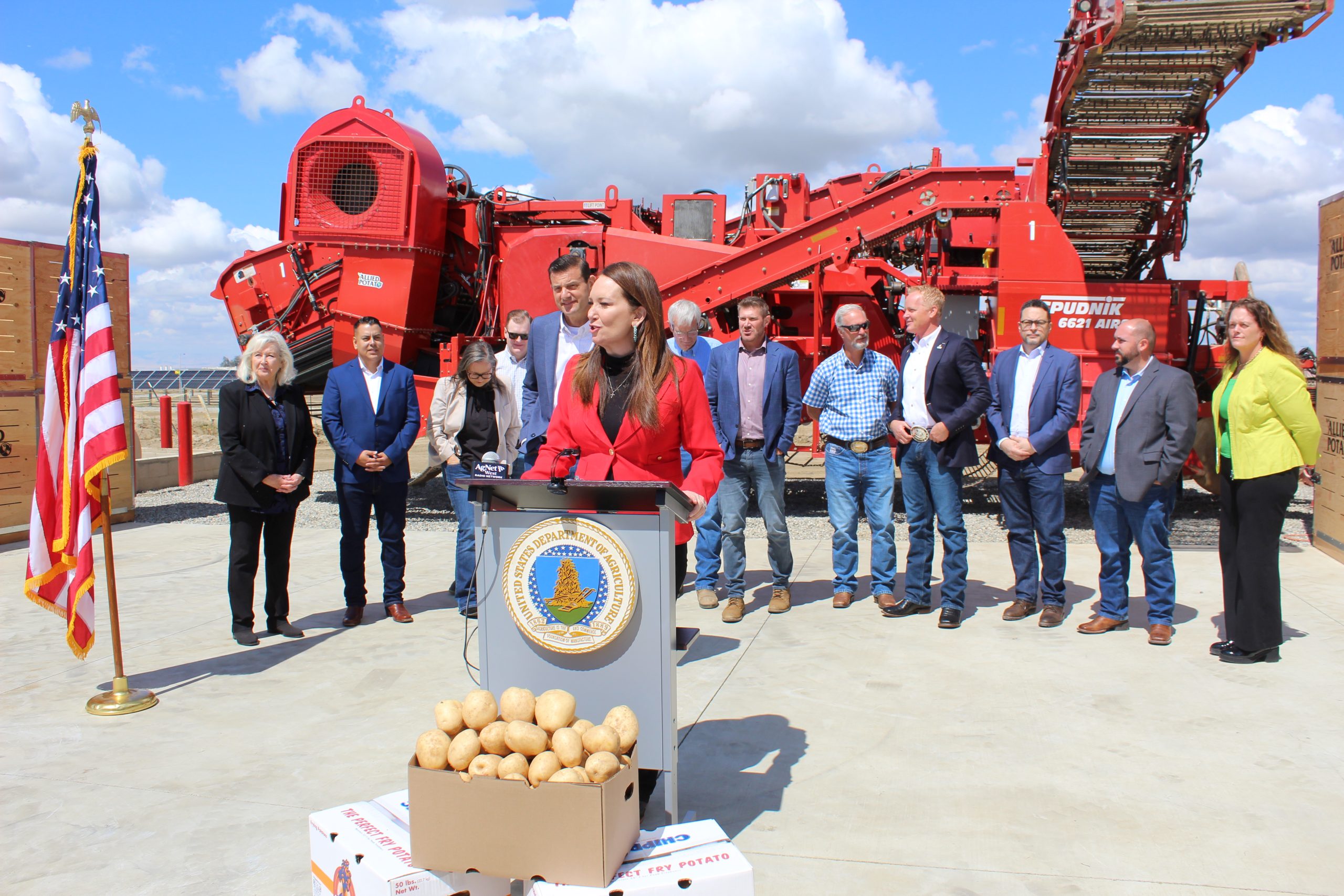
On May 29, U.S. Secretary of Agriculture Brooke Rollins, hosted by Congressman David Valadao, toured Allied Potato in Bakersfield, California, and announced that the U.S. Department of Agriculture will provide $1.625 billion to specialty crop producers through the new Assistance for Specialty Crops Farmers program.
“This temporary bridge is a vital source of short-term support for farmers who need help now,” Rollins said. “It is just one key piece of our broader strategy to provide long term stability as we fix the structural issues that have left our great farmers and ranchers hurting for too long.”
Rollins explained that the department will utilize an expedited online application and payment process to ensure specialty crop producers receive funding faster.
Producers with a Login.gov account — which is the public’s tool to sign in to several U.S. government websites using just one account — can access and submit a pre-filled application starting June 1. Producers without an account or who prefer to enroll at their local Farm Service Agency office can request a prefilled application beginning June 8. The ASCF enrollment period closes on August 7.
More information on the program as well as a list of eligible specialty crops is available at fsa.usda.gov/ascf.
During the press conference, Rollins also discussed the agricultural trade deficit, which she stated was inherited by the previous administration.
“Potatoes, specifically fresh market potatoes…have been sold below or near the cost of production for multiple consecutive years now,” Rollins said.
According to American Farm Bureau Federation estimates, the U.S. potato industry faced an economic shortfall of about $717 million or $801 per acre in 2025.
“Potato farmers are not alone. Specialty crop producers across the nation have faced negative margins and growing economic pressure due to rising labor costs, import pressures, and high input prices,” Rollins said. “That’s why President Trump is pursuing a variety of policies to ensure all our farmers, especially and including potato and specialty crops, see improvements for the short term…but also can compete and more importantly win over the long term.”
She explained that the USDA has been working to expand new export opportunities for farmers in places such as Japan and Southeast Asia. According to Rollins, exports of specialty crops around the world increased by 5% in the last year.
“Our ag exports, including specialty crops, are rising, [and] new markets are opening,” Rollins said. “We’ve had 24 new trade deals struck in the last year after not one new trade deal in the last administration.”
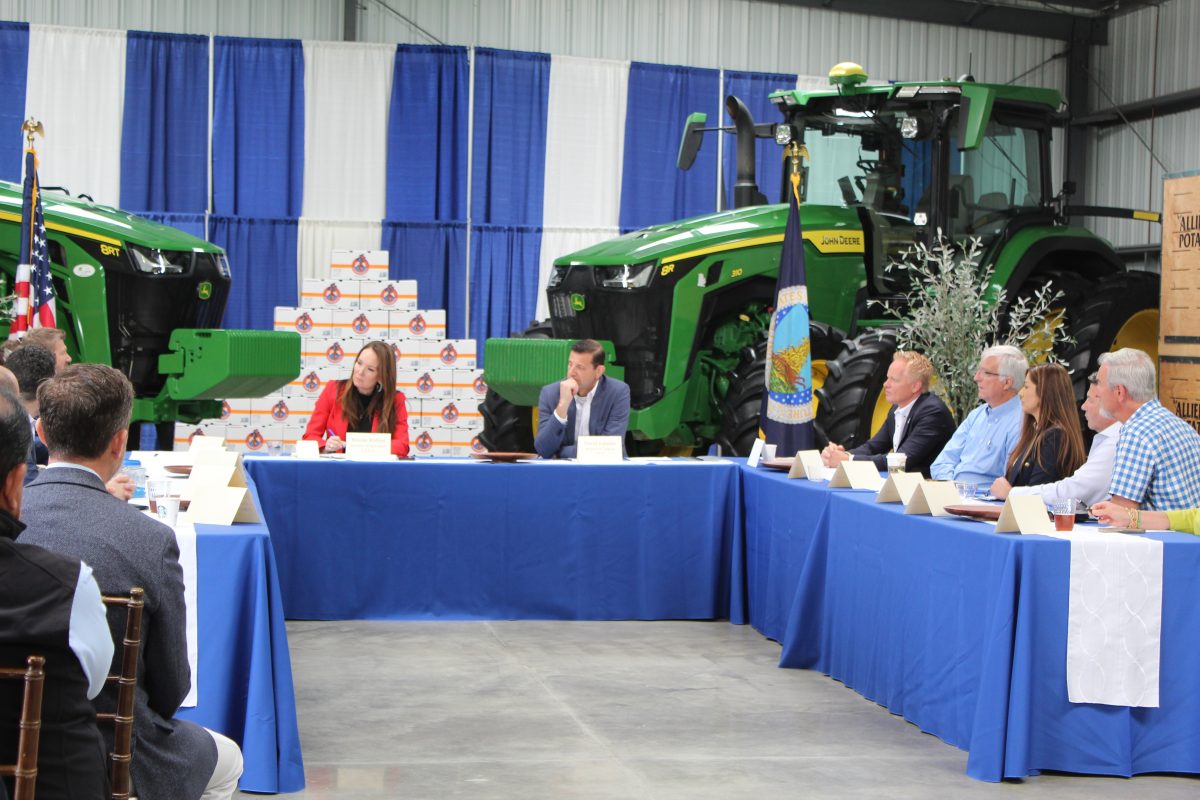
During his remarks Congressman Valadao explained that having sound trade policy, water policy, and labor policy in place will ensure the Central Valley can continue producing the nation’s food supply.
“And it’s so important to continue to do that and make sure we continue to produce the safest, healthiest food that we possibly can,” Valadao said. “It cannot be done without the farmers that were here, the farmworkers that work with us, and obviously the leadership in Washington that we now have that will be able to help deliver for us.”
Valadao — the newest member of the House Committee on Agriculture — voted in favor of the Farm, Food, and National Security Act of 2026, otherwise known as the Farm Bill, which passed out of the House on April 30 and is being reviewed by the Senate.
He told Valley Ag Voice that there are several key provisions for specialty crops and dairy producers in the 2026 Farm Bill. Valadao explained that he is following Senate negotiations over the provisions that affect California agriculture, but his main hope is that the Senate advances a bill.
“Our hope is just that they do something, and [Senator John] Boozeman, I think, will do his best and try to get something done,” Valadao said.
Boozman serves as Chairman of the Senate Agriculture, Nutrition, and Forestry Committee.
WOLF-LIVESTOCK DEPREDATION
Rollins told Valley Ag Voice that the administration is pushing to downlist, and potentially delist, the gray wolf from the federal Endangered Species Act as wolf-livestock depredation cases continue to increase.
“We’re actually working to downlist and perhaps delist as soon as possible at a time when our cattle herd is at a 75 year low, at a time where the demand for beef, real American beef, is at the highest it’s ever been, whether it’s the new dietary guidelines, everyone understanding that real food is how we move back to real health in our country,” Rollins said. “Our cattle ranchers are at the center of that.”
Rollins explained that wolf-livestock depredation — that is, the injuring or killing of livestock by wolves — is creating serious challenges for cattle ranchers, stating that ranchers are often unable to protect their livestock from predators.
According to Rollins, the administration is finalizing an “all-of government” plan to address the issue, with an announcement expected in the coming weeks. Rollins explained that she is working closely with Secretary of the Interior Doug Burgum as the Department of the Interior manages and administers the Endangered Species Act for land-based and freshwater species.
“We are going to be hyper-focused, especially out here West, on that issue,” Rollins said. “Hopefully we can step in the gap where California’s leadership and Arizona’s leadership and a few other states have not been willing to do so…but it is an existential issue for our cattle ranchers out here, and we’re on it.”