By Scott Hamilton, President, Hamilton Resource Economics
The origin and purpose of the Kern Water Bank is often mischaracterized in the context of California’s water infrastructure and supply. For example, Alexandra Nagy, California director for the advocacy organization Food and Water Watch, is quoted in Forbes Magazine as saying: “Assets like this (the Kern Water Bank) that were once in public control and now are in private control need to be returned to the public.” Since this concept has been perpetuated in one form or another for nearly two decades, it is worth understanding the accurate history of how the Kern Water Bank came to be, to ensure the facts are part of the broader conversation.
J.B. Haggin formed the Kern County Land Company in 1870. It grew to control vast acreages around Bakersfield, developing much of the water infrastructure, and was instrumental in forming many of the public water districts — including North Kern Water Storage District. The North Kern Water Storage District included the James-Pioneer Improvement District, located west of Bakersfield between Stockdale Highway and Taft Highway. Because the soil there was sandy and not productive, the water rights were moved to more productive land in North Kern. Tenneco West, which purchased the Kern County Land Company in August of 1967, dissolved the James-Pioneer Improvement District and sought buyers for the land. The person in charge of the sale was Bill Balch, Vice President of Tenneco West. Balch was a humble man with great vision.
When the Kern River flooded, the Land Company organized men on bulldozers to develop berms and move water around on the land to recharge the aquifers below. Balch knew the land’s unique geology and location allowed for substantial groundwater recharge. He approached the Kern County Water Agency and other local public entities seeking to sell the property, but there was no interest. Recognizing the value of the property as a water asset, Balch approached the California Department of Water Resources (DWR) and was successful in completing the sale in 1988. However, not all of DWR’s State Water Project contractors were excited about the purchase and project idea. Recognizing that the risks involved were significant, the Metropolitan Water District of Southern California wanted to ensure DWR could sell the land and recover its investment if the project was not successful.
For the next six years, the concept of the Kern Water Bank was in the hands of DWR. It was a blank sheet full of potential. David Kennedy was one of the great directors of the DWR. However, from the beginning, bureaucracy kept getting in the way. Kennedy wanted to develop the water assets in the Kern Water Bank, but DWR’s sister organization in the Department of Natural Resources, the California Department of Fish and Game, wanted much of the bank preserved for upland endangered species such as the San Joaquin Kit Fox and Tipton Kangaroo Rat. In the end, the land use issues were never resolved by DWR.
There were also issues with the neighbors. The adjoining groundwater districts were concerned that water bank operations would adversely affect groundwater levels, particularly during extended droughts. DWR was unable to come to a satisfactory resolution of that issue with the neighboring water districts Finally, there was an issue of economics. As DWR continued to work on the project, the costs of the project increased, and the expected water yield of the project decreased.
By the end of 1994, Kennedy had seen enough. An agreement with the Department of Fish and Game on an amicable sharing of land to ensure wildlife preservation was not achieved. Issues with neighbors were not being resolved, and the potential project was heading toward economic infeasibility. At that point, no recharge ponds had been built on the Kern Water Bank, there was no environmental plan for moving forward, and only a few of the wells on the property were connected to conveyance facilities that were capable of moving water from the property.
At the same time, there were numerous ongoing concerns about the operation of the State Water Project (SWP) – a water project that was contracted to bring one million acre-feet per year into Kern County. By 1994, Kern County had experienced several years when the water delivered was far less than the amount of water it had contracted for. In 1991, ag contractors in Kern County received a 0% allocation from the SWP, even though it still had to pay its share of the full-fixed costs of the project. The Kern County Water Agency (KCWA), led by its manager, Tom Clark, argued that the shortages were not just a result of drought, but that the DWR had failed to build the necessary facilities to deliver the water that KCWA had contracted for, and subsequently filed a lawsuit.
Settlement discussions were initiated to avoid litigation and to address concerns raised by KCWA and other SWP contractors. The issues were ultimately resolved in what became known as the Monterey Agreement. Within that agreement, Kennedy was able to exchange the Kern Water Bank land for the State Water Project Contract supply. That is, agricultural SWP contractors in Kern and Kings Counties were given the opportunity to exchange a portion of their SWP entitlement for the Kern Water Bank land.
The exchange provided immediate water supply benefits for SWP contractors not participating because they received a slighter larger share of whatever water was available from the SWP. But it was a risky gamble for the contractors who were to take on the Kern Water Bank Project. After all, DWR had tried for nearly seven years to make the water bank work and could not.
The Monterey Agreement required that 45,000 acre-feet of SWP entitlement be retired in exchange for the Kern Water Bank lands. Of all the water districts in the San Joaquin Valley with a contract or subcontract for SWP water, only five entities elected to participate: Semitropic Water Storage District, Wheeler Ridge-Maricopa Water Storage District, Tejon-Castac Water District, Improvement District #4 of the Kern County Water Agency, and Dudley Ridge Water District. Each participant decided how much SWP supply they would give up to participate in the project. The five public entities collectively committed to retire roughly 23,400 acre-feet, leaving a shortfall of about 21,600 acre-feet.
At that time, Paramount Farming Company held land developed to orchards on the west side of the San Joaquin Valley. That land had no groundwater. With a zero allotment from the SWP in 1991, Paramount was forced to purchase expensive emergency supplies of water. Paramount had agreed to participate indirectly as a landowner through the Dudley Ridge Water District, but with no other entities committing to participate, the company offered to take on the uncommitted share to fulfill the remaining commitment under the Monterey agreement.
While Paramount agreed to participate, the westside water districts where it owned land did not. So as not to put other landowners in the westside districts at risk, Paramount formed the Westside Mutual Water Company, giving it the legal authority to participate directly with water districts in the development of the Kern Water Bank. Paramount retired the required ~21,600 acre-feet of SWP entitlement for the remaining stake in the Kern Water Bank. With Westside Mutual, there was now a partnership of six entities with the responsibility to fund the development of the Kern Water Bank themselves at an additional cost expected to be in the order of $30 million(ultimately closer to $50 million).
Over the next decade, investments were made and unresolved issues addressed. The participants developed a Habitat Conservation Plan to ensure the endangered species were protected and to enhance habitats that would accommodate some 77 new species on the property. They negotiated agreements with neighboring districts to ensure there would be no adverse impacts on neighboring farmers, and they developed a pragmatic plan for new infrastructure on the water bank.

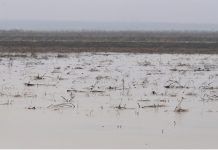
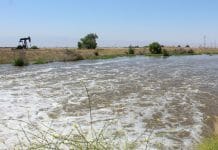
The water bank operates like a savings account, storing water during wet years for use by local agricultural and municipal users during drier years. This includes capturing surplus water that otherwise would be lost to the ocean or flood farmland. To ensure its operation, they built new canals, 7,000 acres of recharge ponds, 85 recovery wells, a 36-mile distribution system of pipelines, and a canal that could move water in multiple directions.
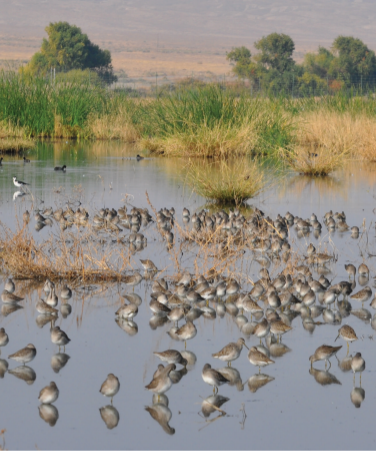
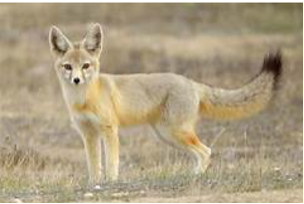
This public-private partnership emerged to produce what the State Government could not. And while critics now condemn some private participation in the Kern Water Bank, those critics fail to recognize that the project would never have happened if not for the combined commitment of the participants. As for public benefits, KCWA’s Improvement District No. 4, which serves Bakersfield, is a 10% participant in the Kern Water Bank, helping provide a reliable water supply to the urban community. Additionally, some 400 farmers in public water districts are now also beneficiaries of the public-private partnership. Its operations have restored seasonal wetlands that were once abundant in the Valley and protect upland endangered species such as the San Joaquin Kit Fox.
The Public Policy Institute of California holds the Kern Water Bank as a model for groundwater management. It received the Clair A. Hill Award from the Association of California Water Agencies for excellence in water management. In 2000, Bruce Babbitt, then U.S. Secretary of the Interior, hailed it as “the most effective groundwater storage program in the United States, probably the whole world.” As Lois Henry of SJV Water said, “The Kern Bank continues to be an absolute jewel of banking and recharge in California, bar none.”
The water leaders involved in the creation of the Kern Water Bank are now mostly gone. Director Kennedy passed away in 2007, Tom Clark in 2011, and Bill Balch in 2019. Bill Phillimore retired as Chairman of the Kern Water Bank Board in January of 2025, having served as its chairman for 30 years.
Given prolonged droughts and underdeveloped water infrastructure, California struggles to achieve water supply reliability. The question should not be how to return the Kern Water Bank to public control. The state had that opportunity and could not make it work. The better question is: “How can we do more of what has worked so well?” There are many opportunities for new recharge facilities in the San Joaquin Valley – many that could help achieve groundwater sustainability and provide habitat for a variety of species. For more information, go to www.kwb.org.
The author can be reached at Scott@ResourceEconomics.net