By Natalie Willis, Reporter, Valley Ag Voice
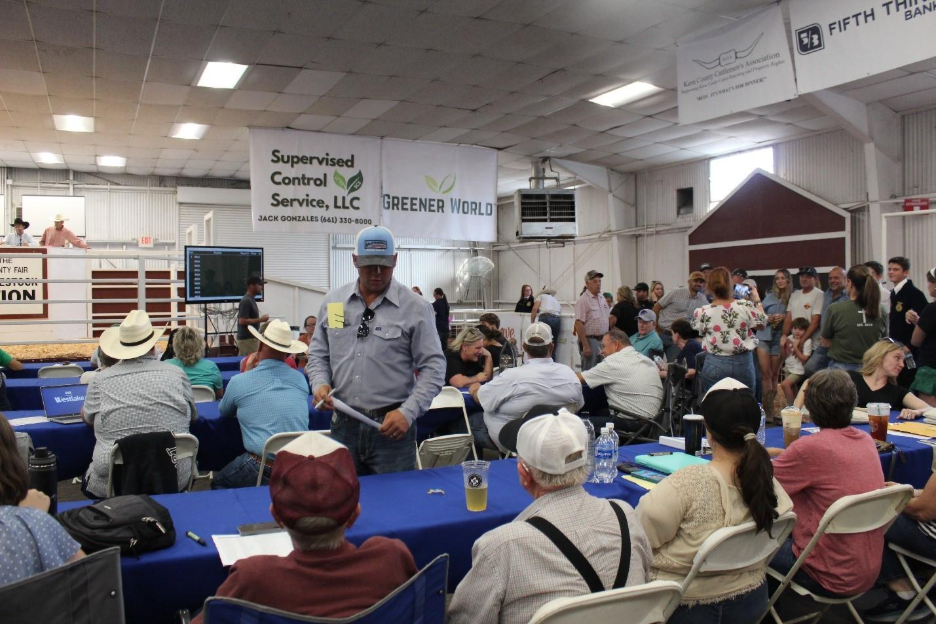
After spending the better part of the year raising and caring for their livestock projects, Kern County FFA and 4-H students enjoyed the culmination of their hard work in the Junior Livestock Auction from Sept. 25 to 27.
For farmers and ranchers, the value of attending local livestock auctions offers insights into market demand, trends, and prevailing prices — with the added benefit of supporting the next generation of farmers and agricultural leaders.
Only market beef, goats, lambs, hogs, rabbits and poultry that are judged “market- ready” are permitted to sell at the auction, including the Grand Champions of each species. According to the Kern County Fair website, the Junior Livestock Auction supports educational agricultural programs throughout Kern County, and each purchase directly supports youth participants who are working to become future agriculture and community leaders.
In light of ongoing concerns surrounding the Avian Flu, the Kern County Fair reimagined the dairy and poultry shows and subsequent auction involvement. According to Chelsey Roberts, marketing specialist for the fair, dairy and poultry shows took place on Sept. 6-7.
“Our livestock supervisor had to put in a whole plan and submitted it to the state on how we were going to mitigate the spread of the poultry flu and what things we’re going to be doing to help keep dairy separated and how we’re going to keep everything clean,” Roberts said. “And with that, the state allowed us to have them come in prior to the fair.”
Roberts hopes to have dairy and poultry exhibitors participate in the full fair next year.
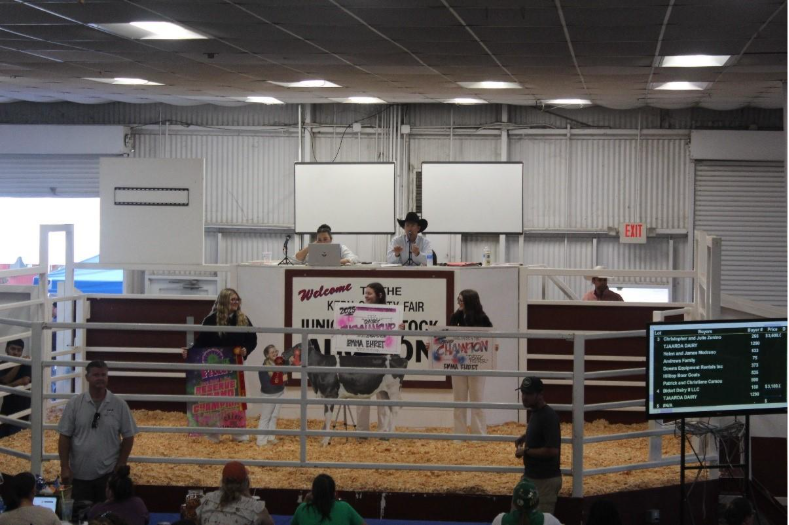
As for the auction, students with dairy replacement heifers embraced the fair’s 2025 theme — “Create Your Moment.” While dairy heifers were not physically allowed at the auction, exhibitors displayed pictures of their livestock projects while enjoying the thrill of the live auction.
Grayson Daves of Southwest 4-H sold his Grand Champion dairy replacement heifer for $10,000 from just a picture.
This high bid is not just reflective of a desire to support youth agriculture; it is indicative of a broader market trend. According to a 2025 estimated inventory by the U.S. Department of Agriculture, dairy heifers over 500 pounds — ready to enter breeding pens or those that are pregnant — are at 3.914 million head. This indicates an 18% drop from 2018.
According to a report from CoBank, the historic low in heifer inventory is driven in part by the profitability of the “beef-on-dairy” trend wherein dairy farmers use beef semen to produce high-priced beef calves instead of dairy replacements. As such, tight supplies for dairy replacements have led to a substantial price increase.
“Top dairy heifers in California and Minnesota auction barns were bringing upwards of $4,000 per head by mid-year 2025, speaking volumes to the limited supply,” the report explained.
For students auctioning dairy replacements at the Kern County Fair, the lowest bid was $3,100.
Visit https://www.kerncountyfair.com/p/livestock/auction for more information about the annual Junior Livestock Auction and the value it provides to both local youth and established farmers.