
By Jenny Holtermann, President, Kern County Farm Bureau
Ten years ago, we embarked on a water journey that no one could predict or foresee would change our future. When the Sustainable Groundwater Management Act passed in 2014, we were told it aimed to address the overuse or depletion of groundwater across the state. While SGMA applies differently to various basins across the state, in Kern, it will have detrimental impacts on our agricultural communities as we know them.
As a high-priority basin, we were slated to submit our first plan by 2020 through the newly formed Groundwater Sustainability Agencies. Well, here we are, five years after that, and on June 20th, the Kern Subbasin submitted yet another draft plan. With a combination of failed plans, inadequate determination, the DWR passing us off to the State Water Board, amending failed plans, probationary hearings, and continuance status to allow more time, here’s to hoping this new amended plan finally hits the mark.
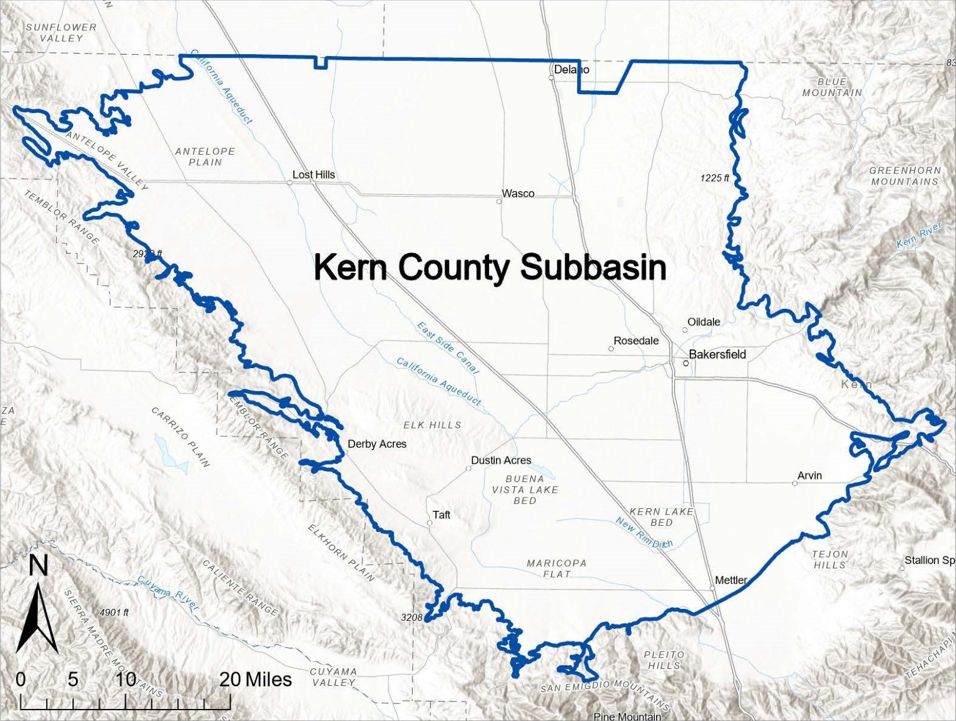
Five years later, here we are. Kern subbasin has a unique makeup, with roughly 1.8 million acres covering 34% of Kern County. Groundwater has multiple beneficial users ranging from domestic wells, municipal users, agricultural users, small water systems, disadvantaged communities, public and community water systems, as well as environmental users. Active agricultural farmland comprises about 650,000 acres of the Kern Subbasin, with 600,000 acres of native land. With the Kern Subbasin representing such a broad and unique set of users and land use, it has been a challenge to meet state board needs and requests.
Just how different is this plan this time around? There are a few key changes to outline in this draft amendment to the plan that are worth understanding. The Kern Subbasin is expanding the groundwater quality representative monitoring network by adding additional monitoring sites in areas deemed to have data gaps. Additionally, it outlines a plan to ensure that domestic wells are better represented in the monitoring network, leading to more informed decisions and increased data. Along similar lines, the Kern Subbasin is also expanding its groundwater level monitoring networks.
The Sustainable Management Criteria look at three elements: Minimum Threshold, Interim Milestones, and Measurable Objectives. Revising the groundwater level minimum thresholds and triggers on an undesirable result were modified to a more representative level with accountability backstops.
Subsidence has been a concern, and the plan details a proactive strategy to avoid significant and unreasonable pump-induced damage to critical infrastructure. The revisions are to clarify a process for interim milestones or minimum threshold exceedances.
In general, agricultural users could experience reduced operational flexibility, increased monitoring to improve analyses and decision-making, as well as protection for critical infrastructure.
A detailed look at the Kern Subbasin amended GSP can be found online at kerngsp.com as well as through your Water District and GSA. The approach and impacts of each GSA will vary depending on the factors laid out in the plan. In June, each GSA had a process to review the amendments. Final approvals by the Water Districts are expected in August, ahead of the state’s probationary hearing scheduled for September 17.
I encourage you to attend your Water District or GSA meetings to review the plan, ask questions, and become more familiar with your specific impacts. SGMA and the impacts will change our future in Kern County and the agricultural environment where we operate. It is in your best interest to become familiar with the specific impacts to your water district.