By Valley Ag Voice Staff
California’s agriculture industry continues to face emerging pest threats and according to the California Department of Food and Agriculture, the state’s Pest Prevention System has been stretched to its fullest capacity.
Detections of invasive species, such as the glassy-winged sharpshooter, nutria, golden mussels, and new world screwworm have kept state agencies and farmers on alert.
GLASSY-WINGED SHARPSHOOTER
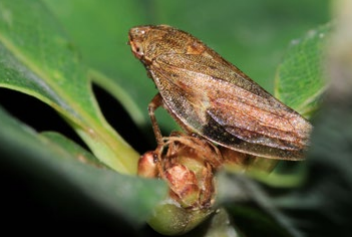
The glassy-winged sharpshooter is a large leafhopper that obtains its nutrients by feeding on plant fluids in the xylem, according to the University of California Integrated Pest Management program. This invasive insect pest spreads the bacterium that causes Pierce’s disease, which is a fatal grapevine disease, according to CDFA.
Glassy-winged sharpshooters were detected on grapevine shipments sold at North California Costco locations between April 21 and May 19. The detection was associated with a shipment of grapevines from a Fresno nursery.
Along with grapevines, the pest can also damage citrus trees, landscape plants and other crops.
The initial detection of the pest on May 19 triggered a widespread containment effort by CDFA, agricultural commissioners, and winegrape growers throughout Northern California.
“While many vines have been intercepted and destroyed, locating the thousands that may still be in customers’ hands remains our top priority,” California Secretary of Agriculture Karen Ross said in a press release. “Anyone who purchased these vines should contact their local agricultural commissioner immediately.”
To prevent the potential spread of the pest, CDFA officials are urging customers who find glassy-winged sharpshooters to isolate the infected plant and contact their county agricultural commissioner immediately.
NUTRIA
In 2017, the California Department of Fish and Wildlife announced the discovery of the invasive South American rodent known as nutria in Merced County. According to a CDFW press release on April 7, 2026, the 2017 discovery has been linked to a population in central Oregon.
Scientists with the Wildlife Genetics Research Unit at CDFW completed a genomic study of nutria to link the discovery. According to CDFW, nutria is a semi-aquatic pest species that harms wetland habitats and agriculture.
“There was no sign of nutria presence in the state until 2017 when a pregnant female was found in Merced County,” CDFW stated in a press release. “Unlikely that nutria could have gone undetected since eradication in the 1970s, particularly given the rapid rate of reproduction and geographic spread observed following their discovery, CDFW went to work to assess genetic variation in past and present nutria populations in California to find the origin of this recent discovery.”
CDFW’s Nutria Eradication Program has taken 8,470 nutria in California since 2017, 984 of which were taken in 2026 as of June 7, 2026.
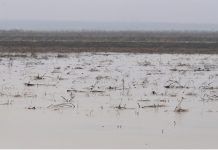
Eradication efforts are underway across hundreds of thousands of acres of wetland and riparian habitat in California’s Sacramento-San Joaquin Delta and Central Valley, spanning from San Pablo Bay to Kings County, CDFW stated.
The recently published paper on the study, “Population Genomic Insights Into Recent Nutria Invasion Dynamics,” is available online.
GOLDEN MUSSELS
On May 12, the Kern County Board of Supervisors declared a local state of emergency due to the presence and threat of invasive golden mussels. According to a May 2026 fact sheet from the State Water Resources Control Board, golden mussels are an invasive freshwater mussel that can attach to hard surfaces, forming dense colonies and reproducing quickly.
They clog water intake systems, increase operations and maintenance costs for water infrastructure, and alter aquatic ecosystems by competing with native species. Golden mussels were first detected in California in October 2024 in the Sacramento-San Joaquin Delta, via the Port of Stockton. They have spread throughout the state.
On June 2, four members of Congress — Vince Fong, David Valadao, Josh Harder, and Jim Costa — submitted a letter to the Director of the U.S. Fish and Wildlife Service, requesting immediate emergency funding to support state and local response efforts.
The letter explained that golden mussels spawn several times throughout the year and produce microscopic larvae of up to one million eggs annually per female.
“This has led to the unrestrained spread of larvae throughout California and has made eradication efforts especially challenging,” the letter stated.
NEW WORLD SCREWWORM
While a detection of New World Screwworm has not been made in California, the first detection in the United States occurred on June 3 in Zavala County, Texas. Since that announcement, USDA has confirmed additional detections in other parts of Texas and New Mexico.
According to CDFA, screwworms are fly larvae that feed on living flesh. These parasites can infect any warm-blooded animal. They can enter wounds as small as a tick-bite, and if untreated, screwworm infestations can be fatal.
“At this time, there are no confirmed detections of New World Screwworm in California. CDFA is coordinating closely with USDA APHIS and neighboring state animal health officials to monitor the situation,” CDFA’s website stated. “All California dairies and livestock operations are encouraged to maintain vigilance. NWS is not a food safety concern.”
The USDA has urged residents in affected areas of Texas and New Mexico to inspect animals daily for: draining or enlarging wounds, maggots or egg masses, signs of discomfort or irritability, and lesions around body openings.