By Natalie Willis, Reporter, Valley Ag Voice
AgTech startup companies across North America, Europe, Asia, and Africa experienced multiple shutdowns in 2025, according to research from the University of Nebraska-Lincoln.
The January 2026 study, “Why AgTech Startups Fail? Evidence from Global Shutdown Patterns in 2025 and the Cost-adoption Mismatch Effect,” found that while AgTech has expanded rapidly with venture activity, that growth is mainly driven by expectations that innovation can overcome labor constraints, environmental pressures, and rising production risks.
“Yet despite significant investment, many AgTech ventures struggle to achieve commercial viability, and high-profile shutdowns in 2025 have prompted renewed scrutiny of the underlying economic and adoption dynamics shaping the sector,” the study stated.
According to the study, while agricultural technologies are regarded as essential to addressing global industry challenges, most startups struggle with adoption at the farm level. Simply stated, the costs of implementing and operating the technology do not always make sense for a farmer’s bottom line, especially in light of tight economic margins, volatile commodity prices, labor constraints, and rising energy and input costs.
“Under these conditions, the adoption of new technology is not a technical choice; it is a financial and operational decision made under cash-flow constraints, seasonal risks, and uncertain payback periods,” the study explained. “Technologies that add cost, require workflow and behavioral change, or depend on sustained energy inputs must compete directly with thin margins and traditional practices optimized over decades.”
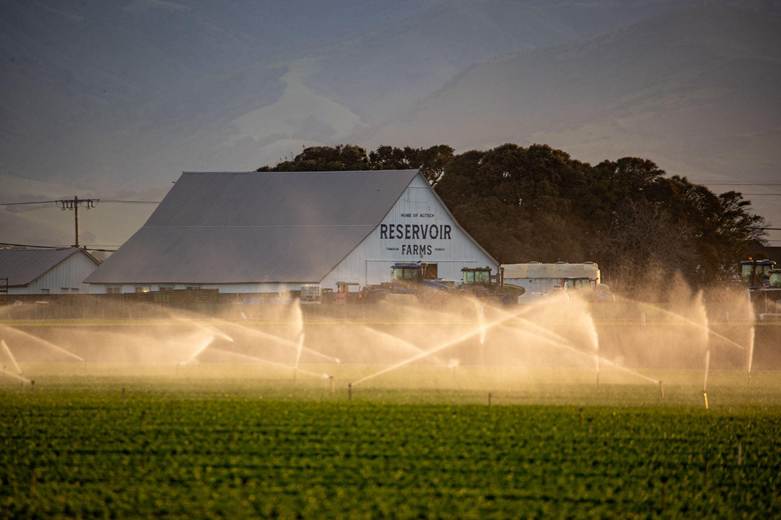
The Reservoir, an on-farm startup incubator, aims to address the gap between innovation and practicality. The central concept is to provide a space for AgTech startups to provide a viable product in less time and for less capital by providing a shared space for research and development. It also connects startups with farms to test and fine-tune products.
Reservoir Farms first opened in Salinas, California, establishing a 40-acre campus for AgTech startups to fine-tune their technologies in line with real needs.
“Our focus has been on technology for specialty crop agriculture or high value crop agriculture, and the goal has been to create an innovation model that can accelerate startups or startup innovation for those areas,” Bernstein said. “In particular, startups that are incredible with technology but come from outside of ag have historically failed. That’s not the case in defense, that’s not the case in Medtech, it’s not the case in financial services technology.…so, ag is unique in the sense that it has historically been really challenging for amazing technologists to enter the space.”
Bernstein explained that Reservoir Farms is a California-story. He studied political science at the University of California, Davis, but has always held a deep interest in the state’s agricultural industry and how he could help move innovation forward in ways that make economic sense.
The campus in Salinas Valley officially opened on March 16, 2026, and The Reservoir also opened a smaller 14-acre campus in Wine Country in partnership with wine growers in Sonoma County. According to Bernstein, the next litmus test will take place in the Central Valley.
“It wasn’t like we prioritized Salinas. It was just more like it happened, [and] it just was able to move faster,” Bernstein said. “We’ll be able to apply a lot of those learnings over… ‘Can we get open? Can we fill the farm? Can we make it feel like a community?’ We’ve answered those questions.”
With proof of concept in Salinas, The Reservoir is shifting focus to the next question: Is the technology coming out of Reservoir Farms being adopted?
“The way I think about it now is that California really deserves, or has earned, a sustainable future in agriculture,” Bernstein said. “It’s earned a resiliency story, another chapter, and that chapter will be heavily technology driven.”
To write that next chapter, The Reservoir will continue its work to understand local growers’ priorities around AgTech as well as applications across crop types.
“Then, when we’re recruiting startups out of Ivy League schools or out of University of California or globally, we’re guiding them toward high-impact areas at a very specific level,” Bernstein said.
In discussions with growers, Bernstein explained that a few central themes emerge, such as the need to create autonomous technology that can replace less desirable agricultural jobs.
“The data would say that less than one half of 1% of farm jobs receive an application. Americans are just not applying for these jobs,” Bernstein said. “We have a situation where, really across crop, there’s an interest in automating the hardest-to-fill jobs. Harvest work in 110-degree weather would be a great example.”
Grower feedback also points to a need to reduce material and chemical use, as the California Department of Pesticide Regulation aims to eliminate Priority Pesticides by 2050.
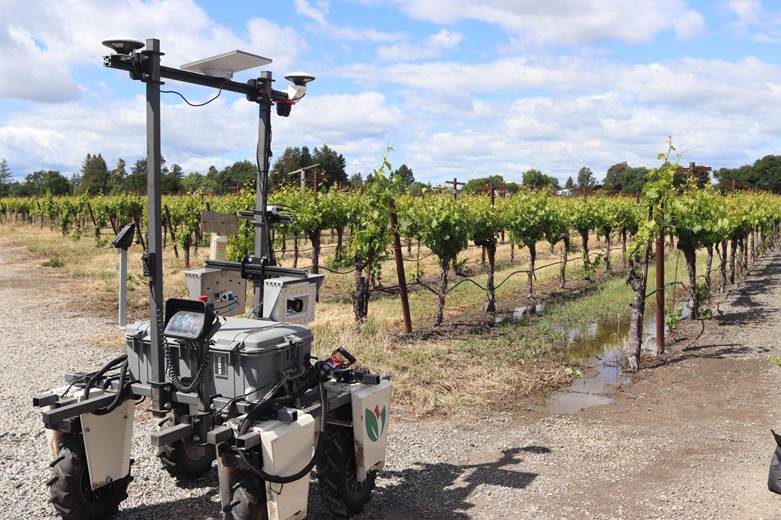
“So, chemical replacement technologies, whether those are bio-based technologies like biologicals or bio stimulants or those are mechanical replacements for chemicals like steam or electricity or lasers or UV light or other things,” Bernstein said. “And we’re testing all those at the farms right now. So, having that alignment at an industry level, [and] at a crop level, allows us to accelerate solutions.”
CENTRAL VALLEY CHAPTER
In 2025, $9.2 million in grant funding from the state of California was awarded to the Merced AgTech Alliance, which includes Reservoir Farms, Merced Community College, UC Merced, and the Community Foundation of Merced County.
“That group received over $9 million in state funding, [and] $2.4 million of that goes to Reservoir,” Bernstein said. “Every dollar will go into building Reservoir in Merced.”
The Reservoir facility will be adjacent to the 60-acre farm at Merced College, Bernstein explained. According to a press release from Merced College, the public-private partnership includes over 40 local and regional companies, such as John Deere, Blue Diamond Almonds, Gallo, Western Growers and Merced County Farm Bureau.
On May 8, 2026, Western Growers announced a three-year partnership with Reservoir Farms to provide its members and affiliated startups with exclusive access to robotics field trials.
“The way that it typically works is that a startup is incubated at Reservoir, and then when they’re ready to test on more acreage, we can reach out to Western Growers or other contacts through a commission, through an association and say, ‘We feel like we validated this technology. They’re ready for some trials. They’re ready for their first customers,’” Bernstein said.
The Central Valley campus, which is slated to open in fall 2026, will focus on almonds and processed tomatoes, but Bernstein explained there will be a wide range of commodities such as melons, peppers, table grapes, citrus, and olives.
According to Bernstein, The Reservoir’s future in the Central Valley will not be limited to Merced.
“We really want it to feel like we’re not just a Merced thing or just a Kern thing,” Bernstein said. “For Reservoir to be successful, it really needs to feel accessible to growers and producers and retailers all throughout the Central Valley.”
As Reservoir Farms works to establish itself in the Central Valley, Bernstein explained that they plan to host networking events to engage with local growers. To keep an eye out for these events, visit Reservoir Farms’ LinkedIn at www.linkedin.com/company/reservoirfarms/.
“We just want to get folks coming up and showing and giving us feedback and asking hard questions,” Bernstein said. “That’s really what’s going to make this work.”