By Raymond Mireles, M.S., UCCE Fruit and Almond Area Advisor
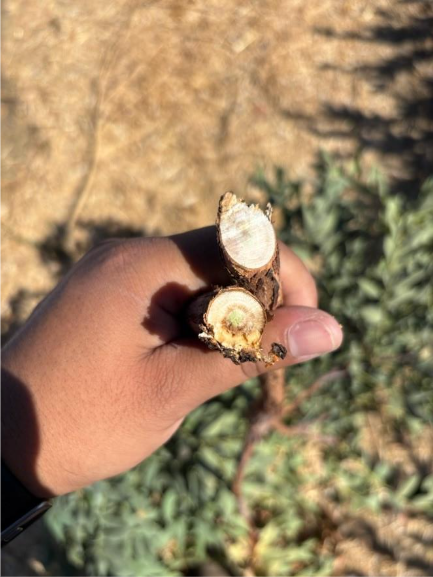
Over the 2025 season, UCCE Fruit and Almond Area Advisor Raymond Mireles was called out to investigate sudden plant decline in a blueberry field located in the southern San Joaquin Valley. With assistance from UC Davis plant pathologist Dr. Themis Michaelides and his laboratory, disease-related plant death was confirmed. Diagnostic testing identified the presence of stress-associated crown and wood pathogens contributing to plant decline, specifically charcoal rot caused by Macrophomina phaseolina and Botryosphaeria canker. Charcoal rot is commonly associated with hot weather and dry or stressed conditions and has become more noticeable in perennial crops during prolonged heat events.
Once established, the fungus can survive in the soil for long period of time and cannot be cured with fungicides. Botryosphaeria canker is also a stress-related disease and typically infects plants through wounds such as pruning cuts, cracked wood or other injuries, especially when plants are weakened by heat or water stress. When both diseases are present, plant decline can occur more rapidly, and symptoms may be more severe, including weak growth, dieback, and eventual plant death. From a management standpoint, there are no effective chemical treatments that will reverse these diseases once a plant is infected, so management must focus on prevention and reducing plant stress.
Maintaining consistent irrigation during hot periods is critical, as even short periods of water stress can increase the risk of charcoal rot. Avoiding excessive salinity, preventing nutrient imbalances, and limiting unnecessary pruning or mechanical injury can also help reduce the risk of Botryosphaeria infection. Severely declining plants may need to be removed to reduce disease pressure in the field, and care should be taken to avoid moving contaminated soil or plant material on equipment.
Over the long term, improving soil conditions and overall plant health may help blueberries better tolerate stressful conditions, yet these practices will not eliminate disease once it is present. These findings highlight the importance of laboratory testing when blueberry decline is observed, as aboveground symptoms alone often appear similar regardless of the underlying cause. As blueberries continue to be grown in hotter parts of the Central Valley, managing plant stress, particularly during summer heat, will be one of the most important tools growers have to reduce losses from these diseases.
Growers, PCAs, and industry professionals are encouraged to contact their local Cooperative Extension farm advisor if similar symptoms are observed in blueberry plantings.