By Natalie Willis, Reporter, Valley Ag Voice
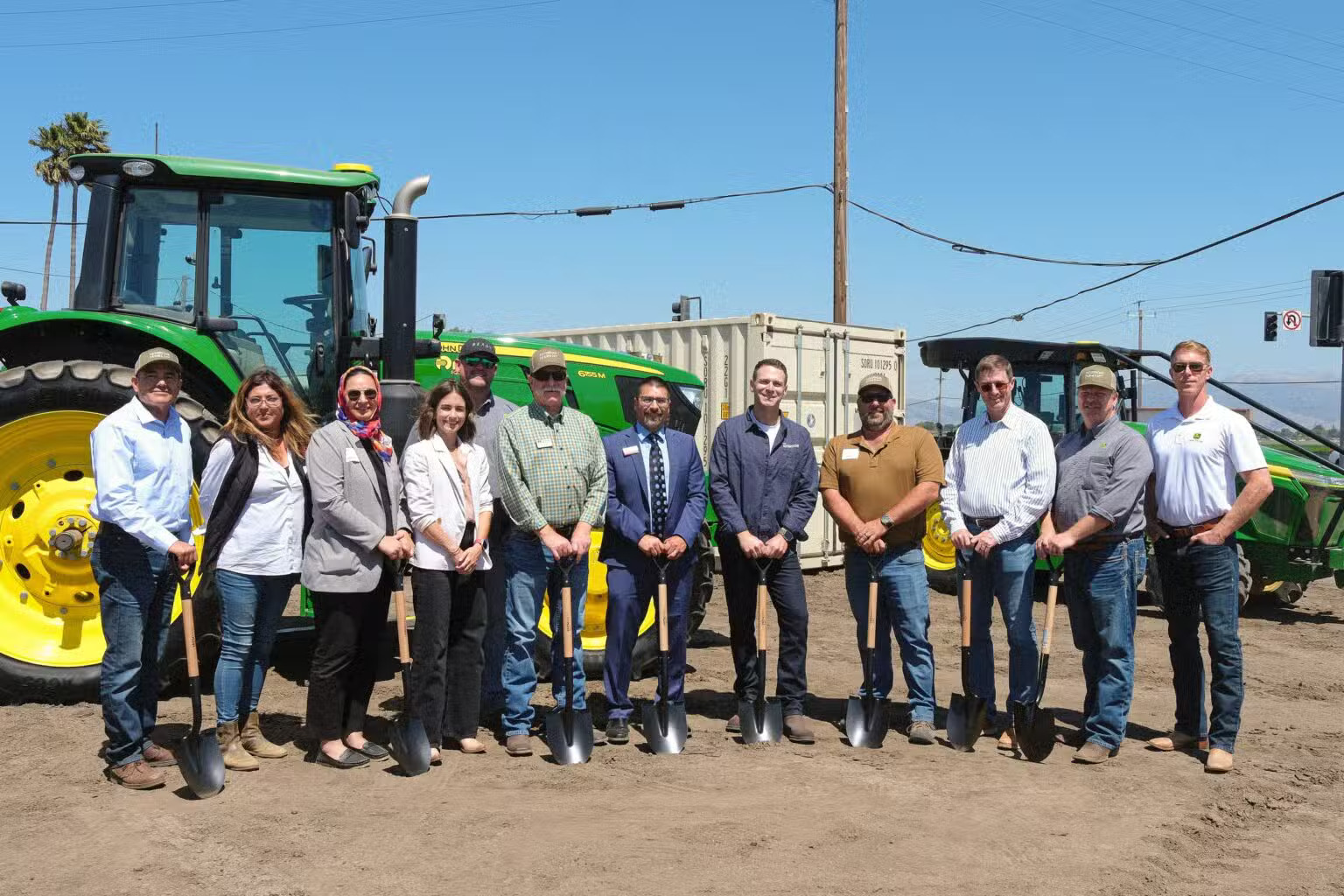
“If the tech does not succeed, then farming will not succeed,” Danny Bernstein, CEO of The Reservoir said at the groundbreaking ceremony of an inaugural on-farm innovation hub in Salinas.
On August 27, The Reservoir — a first-of-its-kind startup incubator aimed at accelerating AgTech innovation — plans to address the challenges facing specialty crop production in California and the U.S.
Located on a specialty crop farm in Salinas, California, the incubator will provide startup companies with access to a farm environment, equipment, and resources to test and develop new agricultural technologies.
Six startups — FarmBlox, High Degree Machinery, Beagle Technology, BHF Robotics, Cropmind, and GeoVisual Analytics — are the first residents at Reservoir Farms, where they will test and refine their technologies in real-world conditions alongside growers.
Bernstein explained that, while the concept of having an AgTech startup incubator is basic, forming the right partnerships are the key for long-term success. As such, he announced a strategic partnership with John Deere which will allow startups to utilize the company’s technology to avoid reinventing the wheel.
“Someone asked me the other day, ‘Well, why partner with a corporate entity when you’re trying to build a startup incubator?’ And I thought about the question, and I said, ‘Well, if you were building a startup incubator for mobile apps and you had an opportunity to work with Apple, would you do it?’” Bernstein said. “That’s basically what this opportunity is — we get to work with the Apple of agriculture, which is John Deere.”
Sean Sundberg, business integration manager at John Deere, explained that more innovation is needed for high-value crops to have a measurable impact on the industry.
“We’re planting our flag, so to speak, here in Salinas,” Sundberg said. “Investing in Salinas, investing in The Reservoir so that we can game change how agriculture is done going forward.”
Sundberg highlighted that the partnership aims to help specialty crop growers adopt new solutions to address labor challenges and increase efficiency.
“We’re at a crossroads, I think, in this industry. If you look at the pressures from labor, finding labor, labor cost, regulatory impacts, if we can bring technology that helps on the labor side, whether it’s autonomy, whether it’s automation, game changer,” Sundberg said. “John Deere’s heavily invested in this space. We’ve acquired companies like Monosem, Bear Flag Robotics, Blue River Technology — we’re trying, and we’ve got to find a way to impact and we’ve come to realize this is where it’s going to be, here in Salinas, California.”
Most recently, John Deere announced its full acquisition of GUSS Automation, building on an existing joint venture established in 2022 that included a 40% equity investment.
Founded in 2018, GUSS’s autonomous sprayers can be remotely supervised by a single operator who can manage up to eight machines at once, according to a press release. Additional software features enable GUSS machines to navigate vineyards and orchards with precision, reducing operator error, labor costs and material waste.
Over 250 GUSS machines have been deployed globally to date, accounting for 2.6 million acres sprayed over 500,000 autonomous hours. Through the acquisition, GUSS sprayers will continue to be sold and serviced exclusively through John Deere dealers.
As such, The Reservoir and its future AgTech startups will have access to this technology. John Deere will be the exclusive original equipment manufacturer to The Reservoir and will have access to early-stage startups, co-developed research and development programs and curated field days for technology demonstrations.
“If you look at the solutions that we have and whether it’s the next year, whether it’s the next two years, seeing them in the hands of growers here in Salinas Valley is going to be an amazing opportunity to see,” Sundberg said.
Driscoll’s, Netafim, Nutrien, and Taylor Farms also joined as new partners, increasing collaboration opportunities.
BRIDGE OVER TROUBLED WATER
According to Bernstein, as rising labor costs, strict regulatory burdens, and water scarcity continue to afflict the state’s agricultural industry, the future of specialty crops hinges on the success of technology.
In its 2022 Specialty Crop Automation Report, Western Growers noted that harvest automation remains limited, with less than 5% of acres automated for specialty crops, and most specialty crops are harvested by hand.
“Inherently there’s nothing wrong with that, but the challenge is that coming across labor now is just more challenging than it’s ever been,” Bernstein said. “Forty percent of specialty crop production budgets are labor-related.”
He views The Reservoir as a means to integrate AgTech with the future workforce.
Agricultural technology has become a major focus of investment, with Governor Gavin Newsom and the California Jobs First Council announcing $28.6 million for ag tech and farm equipment in August. However, raising funds is only one part of the issue, Bernstein explained.
While technology is improving across various industries, agricultural-specific technology is struggling to meet the moment. This is due, in part, to limited testing access as most startups are not actually located at or near farms.
“I’ve spoken to startups that have raised venture capital money, and it might take them six, nine, 12 months to actually get on a farm to test,” Bernstein said. “Meanwhile, they’ve raised money and they’re burning down their capital in the bank, but they don’t actually have a place to test.”
This leads to the second issue — startups are disconnected from the agricultural communities they aim to serve. Bernstein explained that these companies are not able to directly interface with growers to see what innovation gaps need to be filled.
“Another thing that we noticed is that if you looked at a map of California and you put a pin into where all the different startups are, you would realize pretty quickly that there were no dense hubs…there aren’t walkable hubs where you can meet and greet other startups,” Bernstein said. “And we think that this is an issue because it means that you’re isolated from other companies. You start reinventing the wheel, you start building things that other people have already built.”
In studying various incubators in California, Bernstein’s team found that, unlike other industries, AgTech lacks a flagship incubator, and most were office-based rather than rooted in farming. Through visits with growers, farms, and industry leaders, they realized the need for a unique model.
Thus, unlike traditional accelerators tucked away in office parks, The Reservoir combines the attractive elements of being sited on a working specialty crop farm managed by professional growers and creating a dedicated space for developing and testing advanced ag technologies.
If success is evident, Bernstein plans to spread the wealth by expanding the model to sites across other major growing regions, including the Central Valley.