By Natalie Willis, Reporter, Valley Ag Voice
In California’s Central Valley, where agriculture fuels both the local economy and national food supply, the success of the industry depends not just on what is grown — but on how it moves.
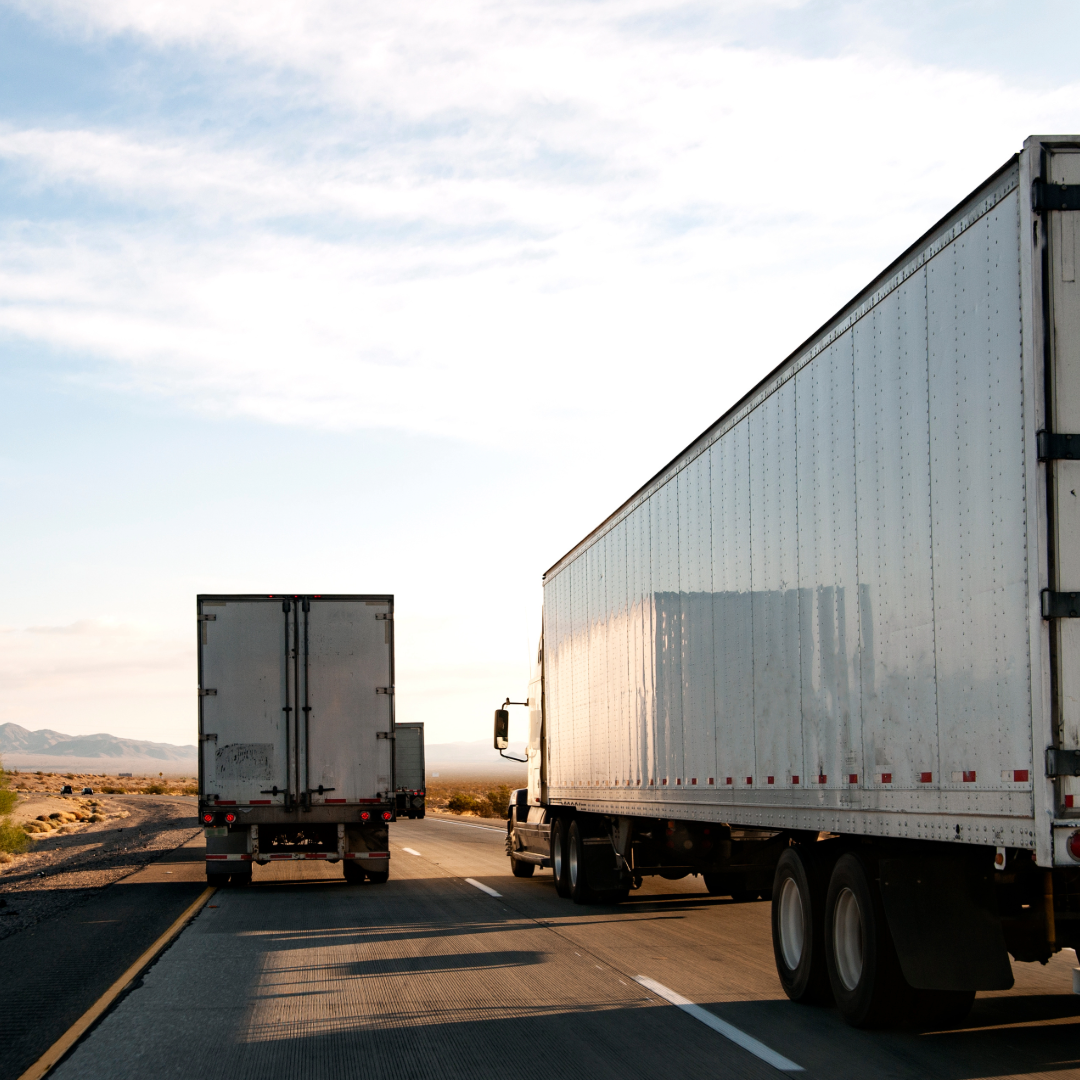
Over 463 million tons of commodities are moved in the San Joaquin Valley each year, with current projections anticipating an increase to 800 million tons by 2040, according to the 2023 California Freight Mobility Plan. Ninety-two percent of freight in the Valley is carried by truck, making Interstate 5 and State Route 99 the core goods movement corridors — they are among the busiest truck routes in the entire state.
However, with increasing freight demand, aging infrastructure, and evolving state regulations, the future of ag transportation in the Valley faces new obstacles. To better understand these challenges, a research team from the CSU Long Beach Research Foundation is studying the transportation infrastructure supporting the agricultural industry and its role in moving products across the state and to both national and international markets. Their research will inform the California Department of Transportation’s Division of Research, Innovation, and System Information.
Preliminary draft research on the study — Impacts of Changing Agriculture Supply Chains on California Roads and Bridges — was provided by Kevin Spiker, task manager and associate transportation planner for Caltrans.
On Nov. 25, 2024, researchers Shailesh Chandra, Benny Herrera, and Yashashwini Dasamapur conducted interviews with Bakersfield-based trucking companies and businesses involved in transporting agricultural commodities.
I-5 and SR 99 were repeatedly flagged as sources of delays, especially when accidents, closures, or peak-hour traffic brought everything to a standstill. One respondent — a safety manager at Green Globe Inc., a company hauling produce across the West — simply stated that any accident causes a shutdown.
“While truck operators reported minimal challenges navigating Bakersfield itself, they faced significant difficulties upon approaching Los Angeles,” the report explained. “Commonly cited causes of delay included road closures, heavy traffic, and various logistical bottlenecks, with I-5, SR-99, and I-40 frequently mentioned as major trouble spots.”
Once published, the research study is expected to assess the existing heavy vehicle agricultural network and what needs to be done to improve it. The findings aim to help California better understand its heavy-truck routes and support updates to the 2027 California Freight Mobility Plan, in line with federal requirements.
GOODS MOVEMENT
These firsthand accounts and preliminary findings echo a growing body of research on the challenges within Central California’s freight corridors. For instance, the San Joaquin Valley I-5/SR 99 Goods Movement Sustainable Implementation Plan published in 2017 was one of the first coordinated efforts to analyze how goods move through the region and what improvements are needed to sustain economic growth.
Developed by a collaboration of the San Joaquin Valley’s eight counties — San Joaquin, Stanislaus, Merced, Madera, Fresno, Kings, Tulare, and Kern — the plan identified key choke points, infrastructure needs, and policy recommendations to accommodate the heavy flow of freight.
At the time of the study’s publication in 2017, it suggested that based on the analysis of current land use in the counties within the I-5/SR 99 corridor, freight traffic would grow in the coming years, thereby putting significant pressure on the corridor.
Since then, freight traffic has increased substantially, with the 2020 Route 99 Business Plan projecting that average daily traffic through the corridor will rise from 42,000 to 165,000 trips to between 62,000 and 243,000 trips by 2040.
While the Goods Movement Study offers recommendations to improve infrastructure and details planned projects, finding grants to fund such improvements is hard-fought, according to the San Joaquin Valley Regional Planning Agencies Policy Council.
Still, some local projects have successfully secured funding — such as in Tulare County, where a major infrastructure upgrade on SR 99 was funded in October 2024.
In a press release, Fresno Rep. Jim Costa announced $98 million from the U.S. Department of Transportation’s Nationally Significant Multimodal Freight and Highway Projects grant program. The project would widen SR 99 in Tulare County at the Paige Avenue multimodal interchange, expanding about 5.4 miles of freeway from four to six lanes, adding a lane in each direction.
In doing so, a major bottleneck would be eased along the heavily used freight corridor.
“Highway 99 has been the most dangerous road in America for years, but we are changing that by working with our partners throughout the Valley,” Tulare County Association of Governments Chairman and City of Woodlake Mayor Rudy Mendoza said in the release. “We competed for this funding against projects from across the nation and could not have been successful without the support of the Valley’s home team in Congress, Congressmen David Valadao, Jim Costa, and Vince Fong. Our Congressional delegation has gone to bat for the Valley time and time again, and this funding is another demonstration of their effectiveness.”
The funding will also reconstruct four ramps to form a cohesive multimodal interchange, including roundabouts at the ends of the ramps and nearby intersections as well as help build 10-foot-wide shared-use paths on both sides of Paige Avenue, creating an east-west corridor for different modes of transportation.
“It will dramatically reduce the safety issues we have seen over time. As well as improving access and movement of goods. So, it’s a great economic project as well,” Tulare City Manager Marc Mondell told ABC 30.
While local transportation projects are gaining momentum, the state’s infrastructure remains underprepared to support its own regulatory transitions.
Nowhere is this tension more visible than in California’s push to decarbonize its freight sector. As new mandates accelerate the transition to zero-emission vehicles, the agricultural industry faces mounting pressure to adapt without the necessary infrastructure to support that shift.
REGULATORY ROADBLOCK
Along with the complex and time-sensitive issue of transporting perishable goods, the state’s push toward zero-emission vehicles pose another unique challenge for the agricultural industry, which relies on high-energy usage. According to the 2023 California Freight Mobility Plan — which is overseen by Governor Newsom, the prominent advocate for electric vehicles — the ZEV transition is a large obstacle for the agricultural industry.
The plan explained that while a few tractor manufacturers are developing electric equipment, it is limited to small to medium-sized vehicles.
“The electric versions are not competitive with the existing diesel and gas counterparts and are more expensive and less flexible and durable. As discussed earlier, the federal government limits the gross vehicle weight to 80,000 pounds (a few states have exemptions) for highways,” the freight mobility plan states. “However, agricultural machinery and trucks also utilize local and county roads. Zero-emission vehicles and equipment are heavier than their standard diesel-fueled counterparts, and aging rural roadways, culverts, and bridges cannot accommodate the extra weight.”
Thus, before the agricultural industry can be reasonably expected to comply with these stringent climate mandates, the state’s outdated infrastructure must be upgraded to accommodate the larger and heavier ZEV equipment.
Without a cohesive plan that addresses both regulatory requirements and infrastructure realities, the future of agricultural transportation in California may be forced to idle, waiting for the green light that never comes.