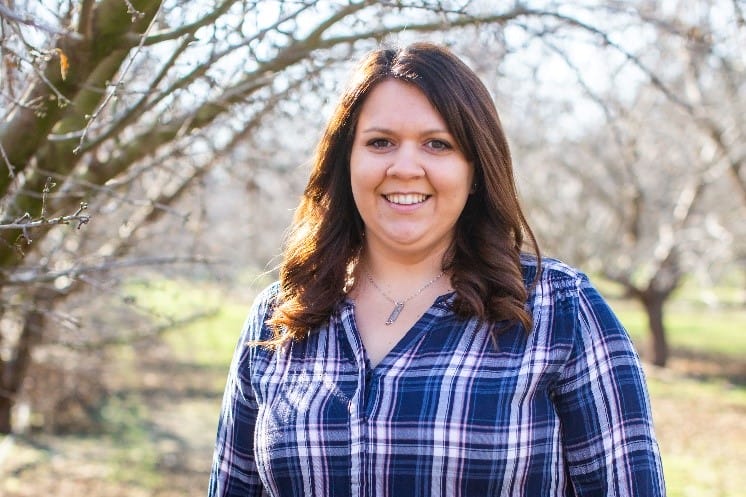
 By Jenny Holtermann, President, Kern County Farm Bureau
On Thursday, February 20, the State Water Resources and Control Board held a hearing on the Kern Subbasin Sustainable Groundwater Management Plan. Several Kern water district managers, board members, and landowners attended the hearing. I attended as the Executive Director of the Kern Non-Districted Lands Authority as a representative for their landowners. Attending in person was an opportunity to hear firsthand the opinions of the State Water Board and their staff.
It was a relief to hear that the Kern Non-Districted Land Authority has jurisdictional oversight from the Kern County Water Agency and meets all GSP and SGMA coverage requirements to represent the non-districted landowners, previously known as white lands. This was an important item to receive confirmation on, since Kern County withdrew their coverage years prior.
To start it off, Senator Melissa Hurtado’s office and the City of Shafter Mayor Chad Givens spoke in support of the Kern Subbasin. Then, SWB staff went into a detailed staff report on the deficiencies of the Kern Subbasin’s GSP. Natalie Stork, the SGMA Manager for the State Water Board, outlined the deficiencies as follows:
1. The GSPs do not establish undesirable results that are consistent for the entire subbasin. Refinement is needed for the undesirable results pertaining to groundwater quality.
2. The subbasin’s chronic lowering of groundwater levels sustainable management criteria do not satisfy the requirements of SGMA and the GSP regulations.
3. The subbasin’s land subsidence sustainable management criteria do not satisfy SGMA.
State Water Board staff went into more detail on subsidence issues they found and the GSP areas that need more details and implementation focus as well as groundwater quality undesirable results and the attention needed to the GSP. There were many points of clarification to reiterate that Kern is working with State staff on these issues.
At the end of their report, they offered the two options: probationary status for the state to take over local control of our organizations and write their own interim SGMA plan or issue a continuance of the hearing and reconvening in September after a revised plan is submitted in June.
The Kern Subbasin was given the opportunity to host a panel discussion at the probationary hearing to discuss these deficiencies. They began this discussion by detailing the complexities of our subbasin, outlining the fact that the basin encompasses 1.782 million acres and has over 35 water agencies. For visualization purposes, DWR has 40 approved subbasins’ GSPs that could fit within the Kern Subbasin. When compared to 5 years ago, we have come a long way in collaboration and coordination. Our basin is working together and completed seven identical GSPs with some supplemental blue pages, achieving consensus across the subbasin.
Through consultation and weekly meetings with the SWB staff, the Kern Subbasin was able to address deficiencies, such as minimum threshold exceedances of groundwater levels and well mitigation analysis with paths forward. The chronic lowering of groundwater levels is being mitigated for in regional monitoring wells and a mitigation program with Self Help.
Land subsidence methodology criteria have been updated and coordination with the Friant Water Authority and California Aqueduct is underway. The completion of the basin study will give more light to this issue while we complete cost sharing agreements and mitigation plans. Members of the Friant Water Authority spoke on the coordination and cooperation.
More in depth details were outlined for the mitigation programs and the four key protective layers to ensure no undesirable results are triggered through continued coordination and collaboration. Following these discussions, a public comment period was opened for landowners, stakeholders, NGO groups, community organizations and many others. Kern County Farm Bureau along with California Farm Bureau made comments to support the Kern Subbasin.
After public comments, the SWB heard from various expert panels. A water banking panel detailed our unique hydrology and aquifer capabilities. Semitropic Water Storage District had a panel to outline the unique steps they are taking toward water balance and demand management. Urban Purveyors had a panel of the cities of Bakersfield, Shafter, Wasco, Arvin, and Cal Water providing an overview of their municipal systems and demands. Several of the original panels chose to provide public comment instead due to time restraints. Wetlands representatives also organized a panel to detail Kern wildlife habitats.
Each State Water Board member concluded with a statement, mainly thanking the community members for speaking up as well as their diligence to the subbasin for working together. The board made a motion and passed in agreement for the Kern Subbasin to complete a new draft GSP by June 20, adopted by all GSAs and the continuation of the hearing for September 17.
The efforts of landowners, farmers, water district board members and all of us representing the Kern Subbasin do not stop here. We hold our weekly meetings as managers and policy members, and the technical groups are putting in the hard work to get our revised plans completed by June 20. This coordination and collaboration will be the key to getting this across the finish line.