
By Scott Hamilton, President, Hamilton Resource Economics
The Sustainable Groundwater Management Act of 2014 was intended to fix the undesirable results of over-pumping groundwater. Undesirable results include the chronic lowering of groundwater levels, reduction of groundwater storage, seawater intrusion, degraded groundwater quality, subsidence, and depletion of surface water. Under SGMA, groundwater sustainability agencies have until 2040 to address and correct these issues.
For most of the undesirable results, there may not be severe consequences if correction takes time. Not so for subsidence. Subsidence is an immediate and critical concern that will likely cost billions of dollars to fix.
Subsidence is a sinking of the land surface in response to physical changes in an underlying aquifer. In the San Joaquin Valley, subsidence has been attributed to several mechanisms including hydro compaction of soils as well as oil and gas extraction, but the dominant cause of historical subsidence is believed to be groundwater overdraft, according to the Department of Water Resource’s Probabilistic Subsidence Forecast Model for the California Aqueduct Subsidence Program.
When groundwater is extracted faster than the rate of replenishment, the water suspending fine-grained sediments is removed, and the sediments compact. Even if over-pumping were to stop today, subsidence would continue for several more years. Continuing over-pumping exacerbates the problems and makes solutions more expensive. Thus, more immediate action is required.
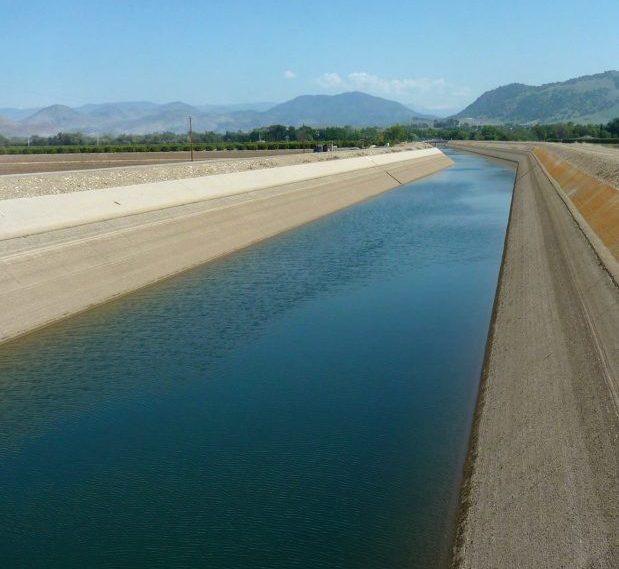
Subsidence is a major concern on the Friant-Kern Canal in southeast Tulare County, where capacity of the canal has been reduced by around 60%. On the Delta-Mendota Canal, the loss in canal capacity is estimated to be between 20% and 30% and flows along the California Aqueduct have been reduced by 20% in some pools. The review of collected data suggests there are three “bowls” of subsidence along the alignment of the Aqueduct. The two deeper ones are in Westlands Water District and the shallower one in northwest Kern County.
The correction of subsidence in canals can be very expensive. Hundreds of millions of dollars are needed to fix the Friant-Kern Canal. And the cost to fix the California Aqueduct has been estimated at $3 billion. The question of who should pay for the fixes is contentious. The water users downstream of the subsidence have the most to gain from the correction. This issue was highlighted at a recent Metropolitan June Imported Water Subcommittee meeting.
“If we were to follow normal cost reimbursement provisions, the current planning estimate for the cost of this work to the State Water Project contractors is approximately $3 billion, and about half of that would be Metropolitan’s responsibility,” said Sarah Bartlett, interim manager for the State Water Project Supply and Programs Team. Following that provision, farmers in Kern County would pay $700 million through contracts with the Kern County Water Agency.
However, the downstream users did not cause the problem.
“Since MWD didn’t cause the problem, why would we be on the hook for paying such a substantial portion of that?” asked Subcommittee Chair Mark Gold.
He went on to explain that “the folks who are responsible and liable for the harm that was caused should have basically a really big share of paying for that.”
But who is that? Adan Ortega, chairman of the Metropolitan Board believes “many of the people that are there today were not the people that started it.”
In the meantime, efforts are moving forward to address the cause. The Westside Water Authority imposed a moratorium on pumping groundwater within 2.5 miles of the aqueduct along a 25 mile stretch from Twisselman Rd to Seventh Stand Rd. Likewise, the Tule Subbasin implemented a subsidence management plan to reduce pumping in areas close to the Friant-Kern Canal.
These are important first steps, but more creative and immediate solutions are needed to prevent a much bigger problem in the future.





