By Natalie Willis, Reporter, Valley Ag Voice
From pre-harvest to post-harvest, California’s citrus industry is at a crossroads of science, trade, and regulation.
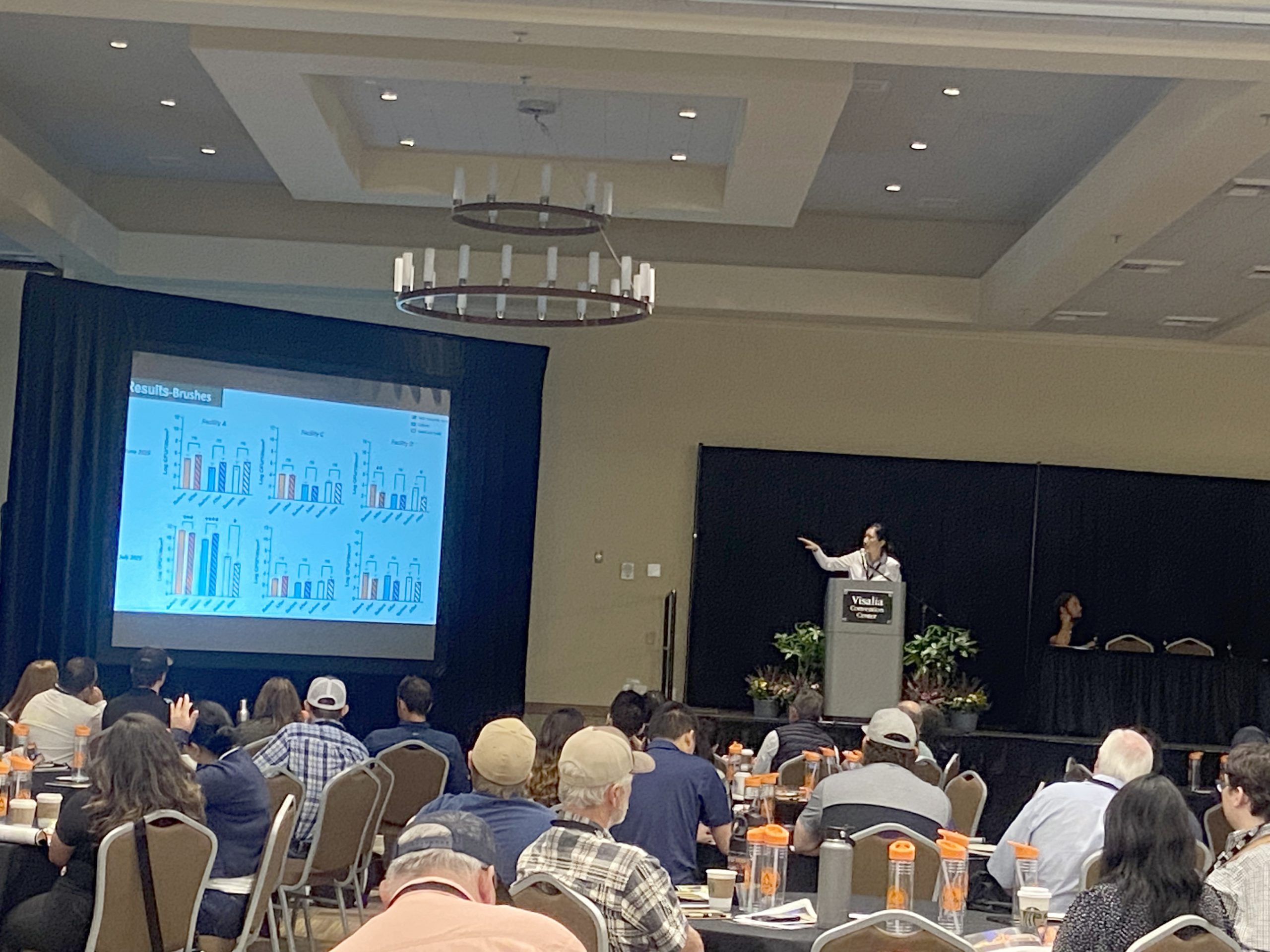
During the Citrus Research Board’s 42nd Annual Post-Harvest Citrus Conference in Visalia, President of the California Citrus Quality Council Jim Cranney explained that trade issues continue to afflict the industry.
“We’ve got more imports coming in now than we have exports coming out,” Cranney said. “That’s a really difficult situation for the industry, and it’s a completely different scenario that we’re facing than we did 10, 15 years ago.”
Under the Trump Administration’s Executive Order enforcing reciprocal trade tariffs, fresh citrus imports from 12 of the top 13 foreign suppliers to the U.S. are subject to higher tariff rates, in some cases more than tripling current duties.
According to Cranney, lemon imports from Argentina negatively affect the domestic market. As such, CCQC, California Citrus Mutual, Wonderful Citrus, and Sunkist are advocating for a cap on Argentina citrus imports or increasing the tariff from the 10% baseline.
Conversely, the same group is advocating for an exemption for the 50% tariff on all imports from Brazil as Carnauba wax — which is commonly applied to citrus to reduce moisture loss, enhance natural shine, and replace the protective natural wax layer which is often removed during cleaning processes — comes exclusively from Brazil.
“You really can’t get it any place else, so the imports that are coming in are now being tariffed at 50%” Cranney said. “We estimate that this is approximately a $7.8 million additional cost for packers.”
FEEL THE SQUEEZE
Another layer of trade complexity is the pressure to maintain market access while addressing consumer concerns about chemical use. According to Spencer Walse, research chemist for the U.S Department of Agriculture’s Agricultural Research Service, traditional “silver bullet” treatments like methyl bromide fumigation have largely been phased out, moving the industry toward systems approaches.
“Within global trade, we have demands on pest-free security, on food safety, and then, of course, consumers and regulators are restricting or limiting the amount of materials we can use,” Walse said. “So, this is the nightmare we all deal with.”
In terms of global trade, the conundrum is as follows — trade partners are increasingly strict about pests while regulators continue cutting back on which pesticides and fumigants California growers can use.
Walse explained that pest-free security requires pesticides, food safety requires antimicrobials, and while Maximum Residue Levels are dropping, new attention is being placed on disinfection byproducts.
“I’m telling you, in the next 10 to 15 years, the new thing is going to be, ‘How do those sanitizers adulterate the composition of food or leave a residue?’ We call those disinfection byproduct residues,” Walse said. “That’s a huge new field of concern that we will certainly have to address in the years to come.”
Consumer perception and the rise of chemophobia is also driving regulatory shifts. Even when science shows treatments are safe and effective, growers are caught between the science of what works and the politics of what sells.
“The consumer is driving the show, but the consumer really is not a scientist…I’d say these consumers are just fearful of things. Insects, poisons, radiation, germs, they hate chemicals,” Walse said. “And then, almost nobody understands what it’s like to be on a farm. They don’t want to know what it’s like to be on a farm because they use chemicals, and no one wants to figure anything out anymore.”
One potential solution is ethyl formate, which was recently approved by the Environmental Protection Agency and is undergoing review in California. Walse explained that it could provide a non-residual treatment that satisfies both trade partners and consumers.
“When you apply this ethyl formate to control Asian citrus psyllid, the fruit scrubs the gas. There is no gas that needs to be evaded after the fruit basically hydrolyzes it into non-detectable residues,” Walse said. “So, it’s got the biocidal registration. It’s going to be for citrus, kiwis, and grapes, and I think, right now, the main focus of what’s propelled this registration has been this use for Asian citrus psyllid control, but we really want to parlay this into our export market opportunities.”
Walse is optimistic that ethyl formate will be approved by California.
However, according to Cranney, the California Department of Pesticide Regulation has signaled a long-term push in the opposite direction with its Sustainability Roadmap. Part of the roadmap is the phase-out of pesticides from ag production, including fumigants, by 2050.
“Already they’ve identified fumigants as a concern. This is very disappointing when you hear [Walse] up here saying that the solution to all of our problems is fumigants,” Cranney said. “We have DPR identifying them potentially for phase out by 2050. This is not really compatible information, so we’re going to continue to work with DPR.”