Natalie Willis, Reporter, Valley Ag Voice
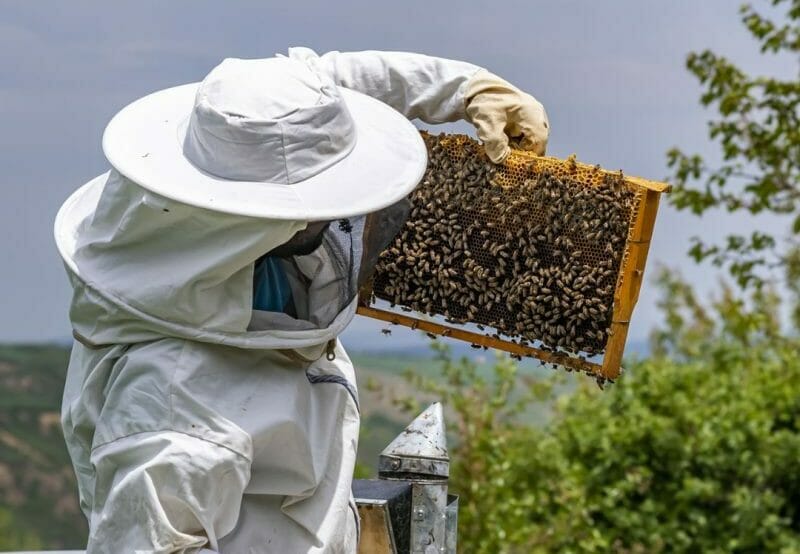
According to findings from the University of Maryland and Auburn University’s annual bee survey, roughly 50% of the nation’s honey bee population died last year. Judith Arkush from Beewise, a robotic beehive development company, explained that the population of bee colonies around the world will continue to decrease in response to weather fluctuation, Varroa mites, and pesticide exposure.
“Considering the essential role bees play in pollinating our food crops, this is a real concern for everyone, especially when we think about global food security,” Arkush said.
The U.S. Department of Agriculture explained that 35% of the world’s food crops depend on pollinators—roughly equating to one out of every three bites of food.
However, despite the reduction of U.S. bee colonies last year, beekeepers involved in the survey explained that the nation’s colonies will remain “relatively stable.”
Commercial beekeepers, through expensive and time-consuming work, have stabilized the bee colony population through splitting and restocking hives, integrating new queens, or creating starter packs for colonies, AP News reported.
AUTOMATED HIVES
Beewise utilizes precision robotics and AI technology to help beekeepers maintain colony populations. According to Arkush, Beewise technology redesigned traditional beehives through solar energy to control climate, humidity, and pests.
“The hurdles of distance and time are bridged by our system’s ability to inspect and treat bees remotely,” Arkush said. “Our machine learning algorithms fill the knowledge gap, assessing hive health as effectively as an experienced beekeeper would.”
The BeeHome is equipped with robotic arms capable of removing frames for inspection whilst AI capabilities identify threats such as pesticides, diseases, or parasites. Upon detection, the technology takes action to protect the hive and sends notifications to the beekeeper.
Beewise manages over seven billion bees—or 25,000 acres of pollinated crops. Arkush explained that the BeeHome reduces bee mortality by 80% and increases yields by roughly 50%.