By Rúbia Branco-Lopes1, Daniela Bruno1, Betsy Karle1, Randi Black1 and Noelia Silva-del-Río1,2
1University of California Cooperative Extension, UC Agriculture and Natural Resources
2School of Veterinary Medicine, UC Davis
In 2024, Highly Pathogenic Avian Influenza (HPAI) H5N1, also known as bird flu, emerged as a new threat to dairy cattle. Nationwide, 1,074 cases were confirmed in cattle across 17 states. Recently, the number of new cases has declined; only one new case has been reported in California over the past 30 days. To better understand the dairy industry’s educational needs regarding HPAI, UC Cooperative Extension (UCCE) conducted a survey in collaboration with the California Dairy Quality Assurance Program (CDQAP) and the California Milk Advisory Board (CMAB).
Respondents included 11 dairy producers (40.7%) and 16 allied industry professionals (59.3%). Producers represented a range of herd sizes: three had over 2,000 cows, five had 1,000 to 2,000 cows, and three had under 1,000 cows.
Before the outbreak reached California, only one-third of respondents (33.3%) felt well-informed about HPAI. Information was obtained through online channels such as webinars (63.0%), written materials such as newsletters or fact sheets (59.3%), and one-on-one conversations (70.4%) with trusted advisors, including veterinarians, nutritionists, UCCE, and peers.
Regarding preparation before the outbreak, most dairy producers had a treatment protocol (72.7%), acquired equipment and supplies to drench and treat cows (72.7%), provided biosecurity training for employees (72.7%), acquired personal protective equipment for workers (63.6%), and implemented enhanced biosecurity measures (63.6%).
Nearly 60% of respondents attended HPAI-related webinars hosted by UCCE, CDQAP, CMAB, and UC Davis. All these attendees considered the webinars informative. Overall, the three topics rated as most interesting were the HPAI overview (81.2%), producer perspectives (75.0%), and veterinarian perspectives (75.0%; Fig. 1).
When asked what topics they would like more training or information on, the top priorities among all respondents were the long-term health impacts of HPAI on lactating cows (73.1%), calves and heifers (65.4%), and vaccination updates (65.4%; Fig. 2). Among producers, the most selected topics were financial assistance programs (90.9%), long-term health impacts on calves/heifers (72.7%), and on lactating cows (63.6%), updates on HPAI transmission (63.6%), and treatment strategies (63.6%).
UCCE will use this information to refine its outreach programs, with the goal of improving preparedness, strengthening biosecurity practices, and supporting the dairy industry’s ability to respond to current and future challenges related to HPAI.
Acknowledgement: We thank all survey participants for their contributions.
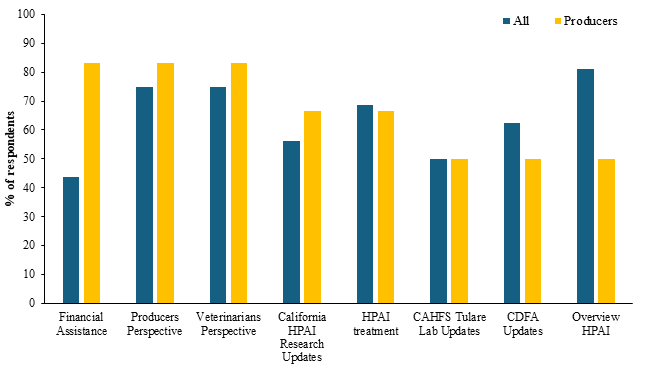
Figure 1. Proportion of webinar attendees that rated topics as “very interesting”. There were 16 attendees, and 6 of those were dairy producers.
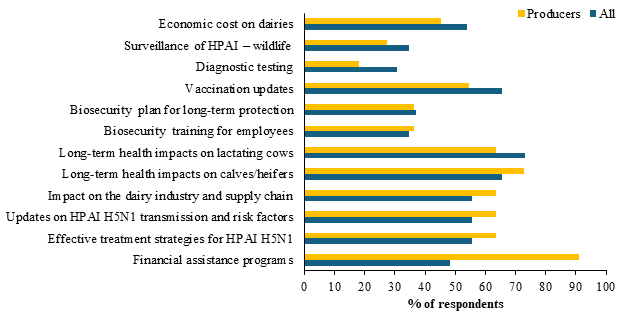
Figure 2. Proportion of survey participants that would like to receive additional information on HPAI. There were 27 total respondents and of those 11 were dairy producers.