By Natalie Willis, Reporter, Valley Ag Voice
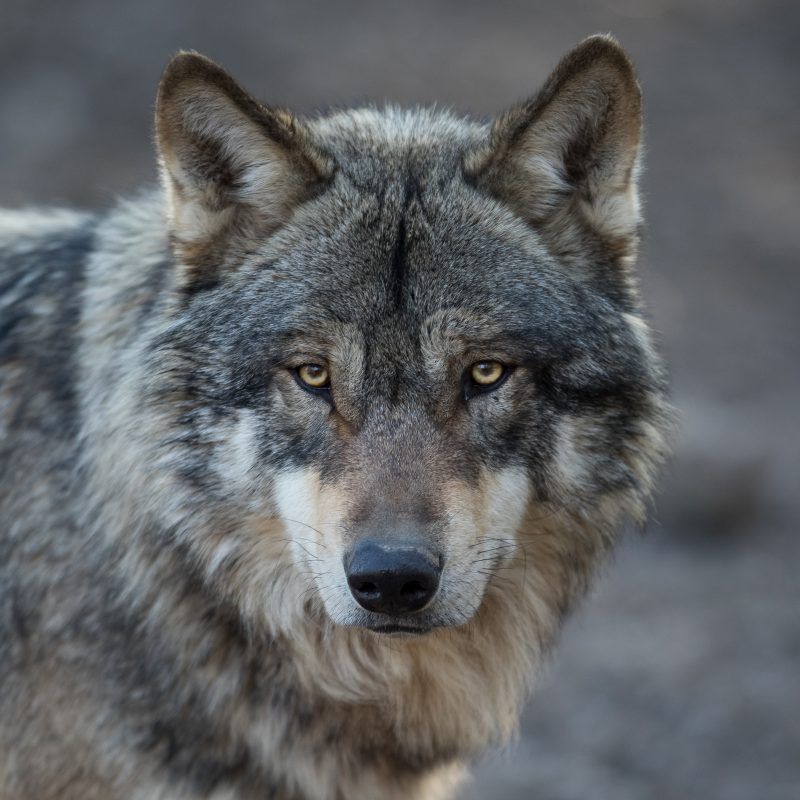
A new peer-reviewed research article by researchers at the University of California, Davis found that gray wolves from the Lassen and Harvey packs in northeastern California were primarily eating cattle.
The study, “Gray Wolf Diet Composition in California’s Human-Dominated Landscape,” was published on July 8 in PLOS ONE — a multidisciplinary, open-access scientific journal operated by the Public Library of Science. According to PLUS ONE, the journal evaluates research on the basis of scientific validity, strong methodology, and high ethical standards.
UC Davis researchers, including Cooperative Extension professor in the UC Davis Agricultural and Resource Economics Department Tina Saitone, collected scat samples during the summer months of 2022 and 2023, finding that 72% of wolf scat contained cattle DNA.
“Whether it’s through scavenging or whether it’s through depredation, it’s a huge component of the wolves’ diet,” Saitone said in a press release. “Their conservation success is because of livestock producers in the state.”
According to the study, dietary biomass estimates — that is, the quantified mass, caloric value, or tissue quantity of food consumed by a specific population within an ecosystem — confirmed that cattle were the principal dietary component for gray wolves in the Lassen and Harvey packs at 55%. Mule deer and small mammals contributed smaller portions of the wolves’ dietary biomass at 12% and 15%, respectively.
“These results revealed that wolves in California’s human-modified landscape primarily satisfy their caloric requirements through livestock consumption, underscoring the considerable challenges posed by coexistence of wolves and humans within the state,” the study stated.
Because gray wolves are a state and federally recognized endangered species, it is illegal for ranchers to kill a wolf in California even if that wolf kills their livestock. Ranchers are limited to non-lethal deterrents such as range riders, guard animals, motion-sensor lights, and fladry.
According to the study, the territories of the Lassen and Harvey packs entirely overlap with U.S. Forest Service grazing allotments and private land where cattle are present from May through October each year.
Additionally, there are fewer wild ungulate prey options such as mule deer in California than wolf populations. According to Saitone, the scarcity of wild prey may be one reason wolves are eating cattle.
The study explained that gray wolves typically switch to other wild prey when their main prey becomes scarce, but in human-modified landscapes, some wolves eat large amounts of anthropogenic food — food products and resources produced by human activities like agriculture — even when wild prey is easy to find.
In places where wild hoofed animals are almost gone, the study explained, wolves survive by eating livestock and other available food near people.
“These behavioral modifications illustrate the opportunistic foraging strategy of wolves and their inclination toward food sources that require less energy to obtain and pose lower perceived risk of injury during acquisition and consumption,” the study stated.
Simply stated, wolves are flexible feeders and often choose food that is easier to get and less likely to cause injury.
With limited legal options available to ranchers facing wolf-livestock depredation, protecting cattle remains a hardship for many working landscapes, Saitone explained.
“Conservatively, we’re talking about a million acres in our study area and 10,000 cow-calf pairs,” said Saitone. “It’s not as simple as putting up an electric fence on a two-acre pasture or putting cattle in the barn at night.”
To view the full study, visit https://journals.plos.org/plosone/article?id=10.1371/journal.pone.0351768.