Originally published in July 2023 print edition.
Caroline Webby, Contributor, Valley Ag Voice
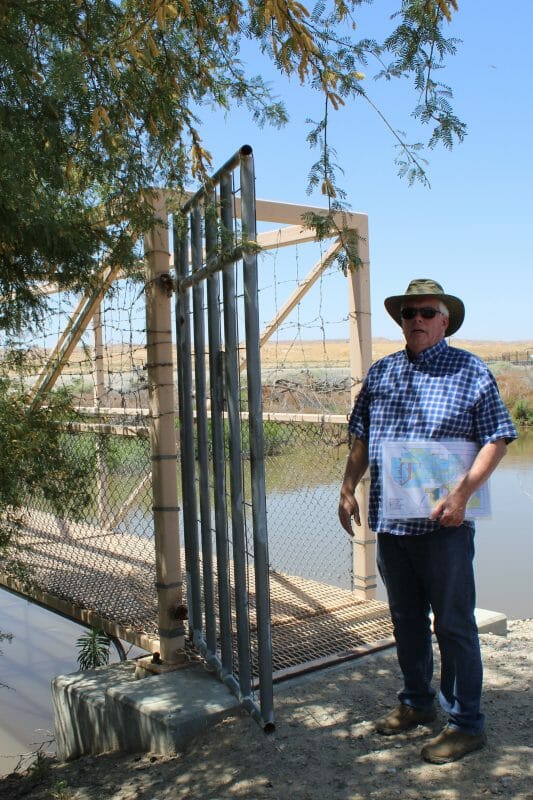
The Water Association of Kern County recently partnered with the Kern Water Bank Authority to provide a tour of the Kern Water Bank property. Jon Parker, General Manager of the Kern Water Bank Authority, led the tour.
If this tour were held any other time in the last five years, it would be a vastly different scene. Water filled the shallow recharge ponds that surrounded the tour bus at every turn, and the river was fuller than it has been in years. Due to extensive rain this year and increased snowmelt, the Kern River is flowing at a level not seen since 1983. Kern County residents, especially those in Bakersfield, are excited by the sight of the flowing river, but it is a wonder where all the water will go. As the tour participants learned, some of that water will go to the bank. Not a traditional bank one would use for their finances, but a water bank.
A water bank is where a water authority can conduct water banking, which includes capturing and storing surface water in an aquifer until needed. It is an efficient water management tool that helps increase water reliability by storing the surface water in years of abundance for later use during years of scarcity. The Kern Water Bank (KWB) accomplishes this goal with groundwater recharge basins.
The Kern Water Bank was established in the mid-90s as a water banking project. It is a sizeable water banking project that covers approximately 32 sq. miles of ground with about 8,800 acres of recharge ponds.
On the tour, Parker spoke about water banking and the role the land and ponds play in wildlife preservation and conservation. The bank operates under a conservation plan that designates land for specific uses until 2072. The ponds are earthen-lined and gently sloped to create a more natural environment for wildlife. The KWB also uses natural remedies to mitigate fire risk and overpopulation of insects, such as cattle for grazing and fish for mosquitoes and other insects. In addition, the KWB leaves brush around the recharge ponds for birds to nest close to their water sources.
Overall, the tour was informative, revealing facts that most people may not know about water in Kern County and the state. Parker said of the water bank, “We provide a huge benefit to a lot of Kern County…” and that is evident in how the project navigates wet and dry years while simultaneously helping conserve part of the local environment.
If you would like to learn more, visit the Kern Water Bank website at www.kwb.org/.