Letters to the Editor
The opinions expressed in the Letters to the Editor are those of the authors and do not reflect the views of Valley Ag Voice or its management.
Dear Valley Ag Voice,
Environmental groups want to limit Colorado River water going to Imperial Valley farms, saying it’s not of “beneficial” use. What is a more beneficial use of water than growing food (“Groups call on Trump administration to curb wasteful use of Colorado River water,” May 6)? In addition, no one has done more in the way of conservation on the Colorado River than Imperial Valley farmers. Since the implementation of the Quantification Settlement Agreement in 2003, they have saved over 8 million acre-feet of water with another half million-acre feet saved every year. California is also part of a three-state plan to save an additional 1.5 million acre-feet a year to help balance the Colorado River.
The groups’ particular beef is with alfalfa, a foundational crop that feeds the livestock that bring us protein-rich foods like milk, cheese, meat, yogurt, ice cream and more. In this time of global uncertainty, do we really want to limit food production?
Mike Wade, Executive Director of the California Farm Water Coalition.
Dear Valley Ag Voice,
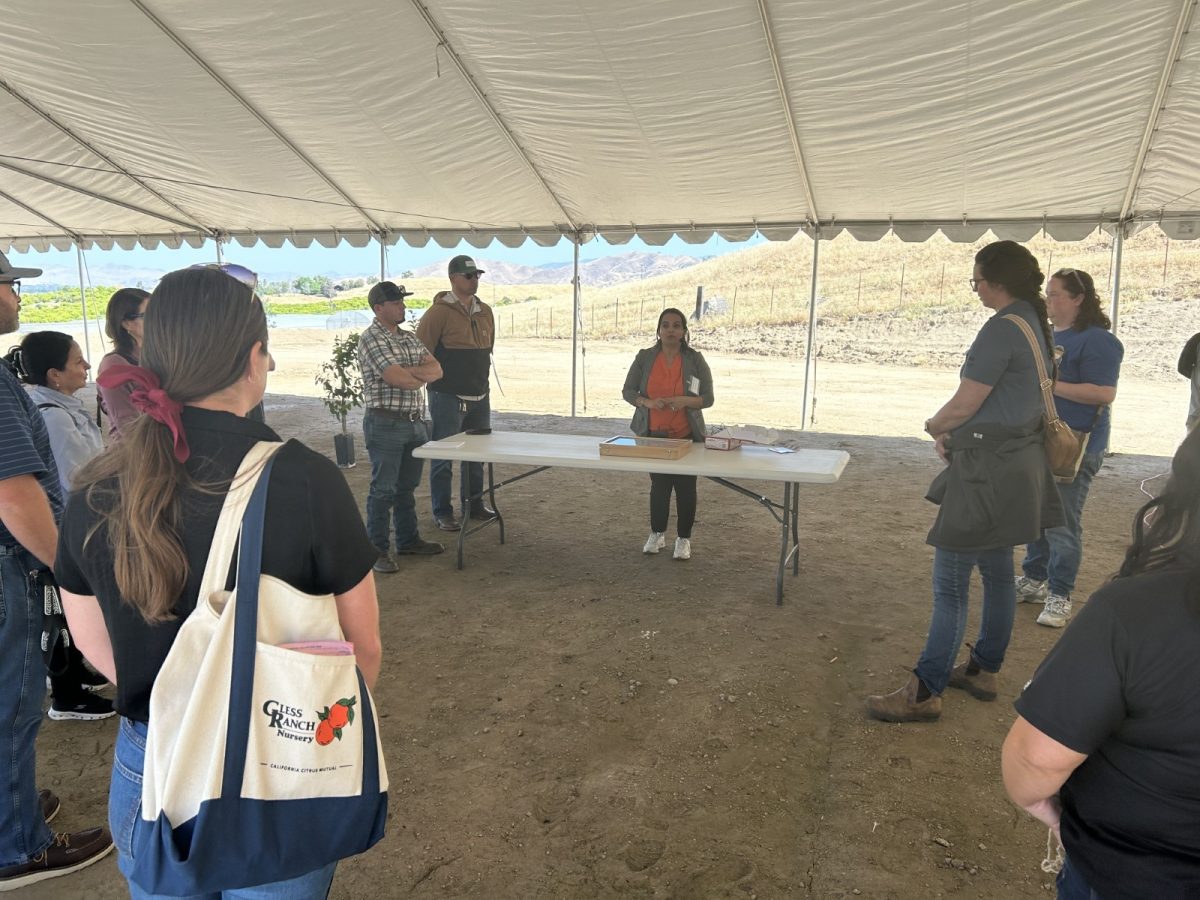
I recently attended the Citrus Mealybug Field Day at UC Lindcove, where experts Dr. Sandipa Gautam, David Haviland (UCCE Kern County), and Fresno State grad student Kelby Keeling shared valuable insights into the biology, phenology, and management of this emerging primary pest in citrus.
We got hands-on experience identifying different life stages, spotting males on trap cards, observing parasitism, and learning how sugar-feeding ants play a key role in mealybug survival. One important discussion centered on which citrus varieties are most susceptible — with lemons, tangerines, and even grapefruit all showing vulnerability.
Key takeaway: There’s a growing need for new tools (like mating disruption) and grower collaboration. Dr. Gautam and the Lindcove team are actively looking for grower partners for product trials targeting Citrus Mealybug.
If you’re a grower or PCA interested in collaborating on trials or learning more, reach out to Dr. Sandipa Gautam at UC Lindcove. While Citrus Mealybug has been a key pest in California, this year I’ve already heard from growers in other states reporting CMB in their groves. Let’s work together!
Mando Perez, Southern California Territory Manager
(661) 805-7561; mperez@semios.com
Dear Valley Ag Voice,
“Man – despite his artistic pretensions, his sophistication and his many accomplishments – owes his existence to a 6-inch layer of topsoil and the fact that it rains.”— Paul Harvey
A recent study in the journal Science concludes that, due to climate change, global soil moisture is in permanent decline. The drying out of continents, because of increased heat and evaporation, has been so pronounced, that the transfer of water to the oceans has affected the distribution of our planet’s mass and the rotation of the Earth on its axis.
Ecologist and conservationist Aldo Leopold is best known for his 1949 book, A Sand County Almanac, in which he developed the concept of the land ethic. According to Leopold: “All ethics so far evolved rest upon a single premise: that the individual is a member of a community of interdependent parts…The land ethic simply enlarges the boundaries of the community to include soils, waters, plants, and animals, or collectively: the land.”
Allowing unchecked climate change is a grave violation of this ethic. Urgently reducing greenhouse gas emissions should be a top priority for every citizen who is concerned about, not only the preservation of the natural world, but also farming and food security.
Terry Hansen
Inaction from the County of Kern = Dangerous Road for Local Farmworkers
Imagine standing on the side of a rural road, only to have a massive gravel truck blow past you at unsafe speeds. That’s not a hypothetical. It’s the daily reality for hundreds of farm workers on Valpredo Avenue.
As growers in Kern County, we have repeatedly raised concerns. The truck traffic associated with Granite Construction’s Solari Aggregate Plant is not just a nuisance; it’s a serious safety threat. Employees from Anthony Vineyards, Richardson Farms, and others regularly experience close calls with speeding haulers while actively working in the fields. Still, meaningful action from the County has yet to come.
Instead, we get traffic counters and empty promises that the problem will be addressed. Worse, the County seems to be favoring Granite as evidenced by giving them advance warning of the traffic counters and advising them to reroute their trucks temporarily, undermining any chance of gathering real data! Meanwhile, our workers’ safety remains at risk, and our concerns continue to be dismissed as a “neighborly dispute.”
But this isn’t neighborly. This is a matter of public health and safety. Kern County’s zoning ordinance is clear: if a business operates in a way that endangers the community, the County has both the right and legal obligation to step in. That means reevaluating Granite’s Conditional Use Permit.
We’re not asking for special treatment; we’re asking for equal protection. Kern County agriculture feeds the world, and our workforce deserves roads that won’t cost them their lives.
It’s time for the Board of Supervisors to prioritize our local workforce over outside corporate interests and use the tools already available to protect farm workers. The crops we grow are valuable—but not more valuable than the people who grow them.
Paul Loeffel, Chief Financial Officer, Anthony Vineyards