By Natalie Willis, Reporter, Valley Ag Voice
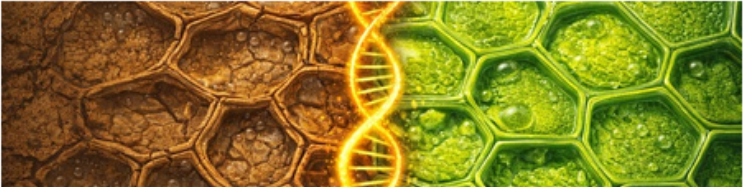
Recent research from the Salk Institute for Biological Studies, based in San Diego, studied the effects that drought has on plant cells and identified a gene that could be targeted to create more resilient crops.
According to a news release, Salk scientists profiled nearly a million cells from Arabidopsis thaliana leaves — a small flowering plant that acts as a research stand-in for crops like corn, wheat, and rice. The team tracked how plant genes changed in different cells under varying levels of drought and at different stages of leaf growth, then built a public database of the results.
“We have been grinding up leaves and looking at general gene expression for a long time now—this is the first time we are looking at drought with cell type-specific resolution,” Joseph Ecker, senior author and professor at Salk and a Howard Hughes Medical Institute Investigator, said in a press release. “We are pushing the boundaries of what is known, and this atlas provides a really critical view into how plants are impacted by their environment.”
The study found that drought accelerates plant aging which reduces how much they produce. However, researchers found that a specific gene, Ferric Reduction Oxidase 6 (FRO6), could be used to rescue leaf growth during droughts.
When the research team increased FRO6 in the cells, the plant partially maintained leaf growth under drought stress.
“Usually when we try to engineer drought resistance, the plant ends up stunted, because you’re essentially telling it not to grow. Of course, that isn’t what we want out in the field,” Joseph Swift, first author and former postdoctoral researcher in Ecker’s lab, said in a press release. “FRO6 may be a way to encourage plants to keep growing during mild droughts, which would preserve important crop yield for farmers.”
The researchers noted that the work could guide future efforts to develop crops that maintain productivity under limited water conditions.
The full study, “Stress drives plasticity in leaf ageing transcriptional dynamics in Arabidopsis thaliana,” was published on March 19, 2026, in Nature Plants.