By Natalie Willis, Reporter, Valley Ag Voice
As California’s dairy industry enters 2025, producers are navigating a complex landscape shaped by evolving regulations, shifting consumer preferences, and global market dynamics. According to Lucas Fuess, Senior Dairy Analyst at Rabobank, H5N1, or avian influenza, continues to affect California and the West Coast.
“California and Nevada are the only states within the past 30 days that have officially identified new cases in dairy cows,” Fuess said. “Looking ahead, we still see some additional spread in California over the next few weeks and months. Weaker milk production throughout the spring flush, the peak spring milk production month of the year.”
Fuess explained that as bird migratory season starts again, there may be a spread in the central part of the country again due to the migratory pattern.
The U.S. Department of Agriculture has been involved in various mitigation efforts against avian influenza ranging from prohibiting the move of untested cows across state lines to testing bulk milk samples of the farm as well as milk silo samples at dairy processing plants, tracking the overall spread.
As a result of California’s national dominance in dairy production — the state contributes around one-fifth of the United States’ milk production according to the USDA — its 6% decline in production over the prior year due to effects from avian influenza has brought down national production levels.
“So right now, almost every other region or big producing state in the U.S. is growing milk production versus the prior year. So, places like Idaho, Texas, Wisconsin, New York, all the other big dairy states are all growing,” Fuess said. “Because the bird flu has negatively impacted California so significantly and that pace of California decline has been so intense — that California decline, even when you look at milk production on a national level, California is pulling the U.S. down.”
Regardless, Fuess’ research points to a more positive year for California’s dairy producers due to lower input costs and a favorable outlook for milk prices.
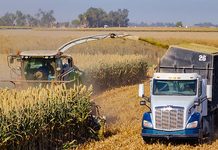
“Generally, milk prices look favorable this year, and when we compare that to input costs, something like feed specifically, we’re looking at the lowest feed costs in around four years. So, corn, soybean, meal, and alfalfa prices have all trended lower in recent months,” Fuess said. “We had decent harvests in the U.S…so what happens for dairy farmers is that you know, they don’t need as high of a milk price to cover those input costs. So, looking ahead to 2025, RaboResearch is expecting profitability throughout this year, which is welcomed after a tough 2023 and first half of 2024.”
While research currently suggests positive trends for the dairy industry in 2025, it is important to note that the market is volatile and subject to fluctuation. RaboResearch will release its global quarterly update on the dairy industry on March 3, covering near-term milk production, exports, and price forecasts.