By Natalie Willis, Reporter, Valley Ag Voice
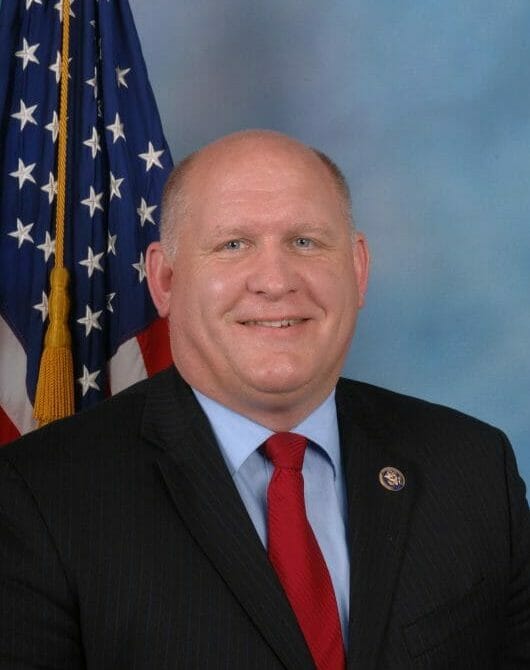
After a series of delays, House Agricultural Chair Glenn ‘GT’ Thompson released the $1.7 trillion Farm Bill draft, balancing bipartisan priorities and political initiatives. The draft was released ahead of the House Agriculture Committee’s legislative markup on May 23.
Thompson published a note along with the Farm Bill draft, explaining that the bill is meant to align with the needs of producers, especially in light of economic uncertainty.
“Each title takes into consideration the varying opinions of all who produce as much as those who consume,” Thompson said. “It is not one-sided, it does not favor a fringe agenda, and it certainly does no harm to the programs and policies that feed, fuel, and clothe our nation.”
Within 942 pages, the bill includes funding for programs in 12 titles across five years.
FARM BILL PRIORITIES
The draft farm bill includes a provision exempting producers from state or local government conditions or standards on the production of covered livestock — simply put, out-of-state producers would not be mandated to comply with California’s Prop 12 regulation.
“State and local governments cannot impose, directly or indirectly, as a condition for sale or consumption, a condition or standard on the production of covered livestock unless the livestock is physically located within such state or local government,” the bill summary explained.
Prop 12 has been a point of contention for pork producers as it requires at least 24 square feet of space for certain farm animals — retailers that sell pork products in California who are not in compliance face a $1,000 fine or 180 days imprisonment per transaction.
The Animal Wellness Action and the Center for a Humane Economy are expected to “vigorously oppose” the Farm Bill during committee work this week for circumventing animal welfare laws.
The farm bill would also increase specialty crop funding, expand international markets for farmers, require reporting requirements for the foreign purchase of agricultural land, and enhance current disaster programs.
Since its release on May 17, the Farm, Food, and National Security Act of 2024 has received various comments in support and opposition, setting the stage for Thursday’s markup.
“The markup is one step in a greater House process, that should not be compromised by misleading arguments, false narratives, or edicts from the Senate,” Thompson said. “I look forward to engaging with colleagues on both sides of the aisle as we move to markup.”
EARLY OPPOSITION
According to Thompson, the 2024 Farm Bill was written for a time of uncertainty and reflected the narrow margins of the 118th Congress comprised of 217 Republicans and 213 Democrats. The bill expired in 2023 and was postponed due to conflicting agendas in the House.
Following the release of the draft, Democratic House Agriculture Ranking Member David Scott said Thomspon’s discussion draft confirms his “worst fears” by reducing funding for climate-smart agriculture and limiting future updates to the Thrifty Food Plan which calculates SNAP benefits.
“The economic impact of the SNAP cuts alone would be staggering,” Scott said in a press release. “A $27 billion reduction in food purchasing power would not only increase hunger, but it would also reduce demand for jobs in the agriculture, transportation, manufacturing, and grocery sectors.”
However, Thompson’s farm bill would expand eligibility requirements for obtaining SNAP benefits and would remove the ban on low-income Americans who have a felony drug conviction.
In a previous statement, Scott explained that the current bill is unlikely to pass the House. Opposition to cuts in climate funding was also voiced as the proposal would redirect Inflation Reduction Act funding from its current climate change focus to conservation.
“There exists a few, loud armchair critics that want to divide the Committee and break the process,” Thompson said. “A farm bill has long been an example of consensus, where both sides must take a step off the soapbox and have tough conversations.”
Congress has until Sept. 30 to pass the 2024 Farm Bill or face another extension.