 By Rachel Nettleton, Executive Director, Kern County Farm Bureau
Recently, I had the opportunity to participate in an agriculture tour through Leadership Bakersfield. During one of our stops, I spoke with a fourth-generation farmer who shared a little about his family’s history in agriculture.
Four generations.
Think about how much agriculture has changed in that amount of time.
The crops we grow, the equipment we use, the technology available to us, the regulations we operate under, and even the way we communicate with consumers have all evolved. He talked about how his family has had to adapt to those changes over the years, adjusting their operation as new challenges and opportunities came their way.
It left me thinking about a simple question: What will it take to get to the fifth generation?
And maybe more importantly, who will make up agriculture’s next generation?
When we talk about the future of agriculture, we often focus on preserving family farms and encouraging the next generation to come back to the operation. That is incredibly important.
There is something special about seeing a farm, ranch, or agricultural business passed from one generation to the next.
But keeping the youth engaged in agriculture cannot stop with the kids who were fortunate enough to grow up in it.
Some of agriculture’s next great leaders may not come from an agricultural background at all.
They may be sitting in a classroom today thinking they want to become an accountant, engineer, software developer, mechanic, scientist, attorney, marketer or communications professional. What they may not realize yet is that agriculture needs every single one of those careers.
Agriculture is no longer simply about what happens between planting and harvest, although that will always be at its heart. Today’s agricultural industry incorporates sophisticated technology, water management, finance, engineering, logistics, research, policy, human resources, communications, and countless other specialties.
Agriculture has a place for the kid who loves tractors, but there is also a place for the kid who loves computers.
There is a place for the student who wants to study plant science and for the student who wants to study accounting. There is a place for someone whose family has farmed the same ground for 100 years and for someone whose family has never set foot on a farm.
Our job is to make sure they know it.
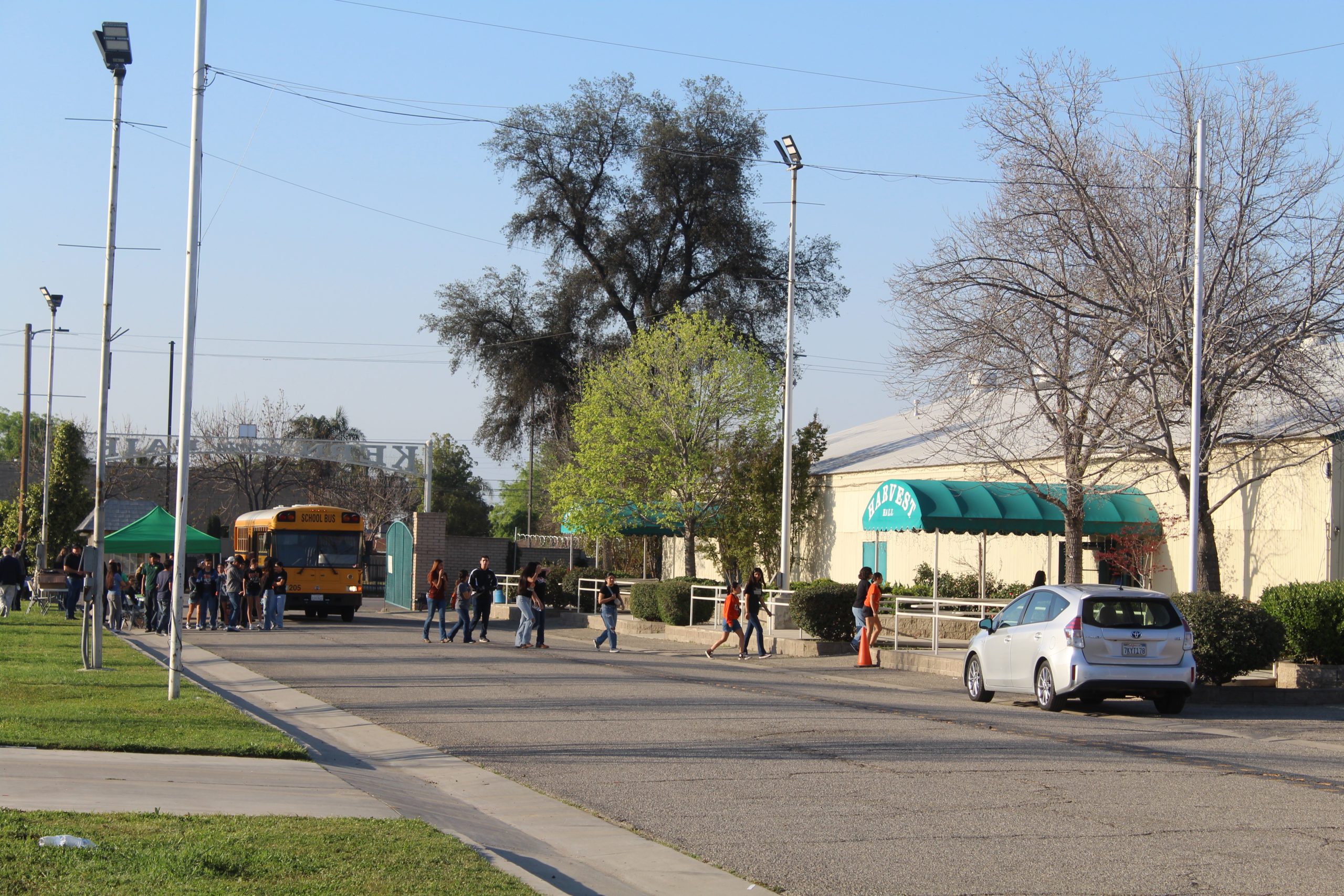
That is one reason programs that expose young students to agriculture matter so much. Each year, Kern County Farm Bureau’s Farm Day in the City brings thousands of local elementary students face-to-face with agriculture. For some, agriculture is already part of their everyday lives. For others, it may be their first meaningful interaction with the people, animals, equipment, and products behind the food and fiber they depend on every day.
Not every student who attends Farm Day will pursue a career in agriculture, nor should that be the expectation.
But maybe one will.
A student fascinated by a piece of equipment could become an agricultural engineer. Another may become interested in water and eventually help solve some of the enormous water challenges facing our region. Maybe someone who enjoys technology discovers precision agriculture. Maybe a student who loves animals becomes a veterinarian. And maybe another grows up with a better understanding of where their food comes from and who produces it.
Those connections matter.
At the same time, we have to think about the children who are already growing up in agriculture.
They see the challenges. They hear conversations around the dinner table about water, labor, regulations, input costs and whether another difficult year can be weathered. Asking them to carry on the family operation simply because generations before them did may not be enough.
We must give them reasons to be excited about its future.
That means giving the next generation a voice, letting them bring new ideas to the table, and recognizing that their version of the family farm may look different from the one their parents or grandparents built.
After all, that is likely how many fourth-generation operations became fourth-generation operations in the first place. They adapted.
The future of agriculture will require us to do the same.
We need to continue investing in programs like 4-H, FFA, agricultural education, internships, scholarships, classroom outreach, and hands-on experiences. We need farmers and agricultural professionals willing to tell their stories and open their doors. We need to talk about the challenges facing agriculture, but we also need to make sure those challenges aren’t the only things the youth hear from us.
Because tremendous opportunities still exist.
Kern County agriculture is innovative, diverse, and constantly evolving. The careers supporting it are just as diverse. If we want this industry to remain strong for another four generations, we need students who are excited to be part of what comes next.
For some families, that means preparing the fifth generation to take the reins. For others, the first generation may be sitting in a classroom right now, with no idea that agriculture has a place for them.
It is up to us to show them that agriculture has a place for them—and that its future needs them.