By Rúbia Branco-Lopes, Jennifer Heguy, Betsy Karle, Randi Black and Daniela Bruno, UC ANR
The California dairy industry continues to evolve, with fewer dairies, larger herds, and new challenges from regulations such as the Sustainable Groundwater Management Act (SGMA). To ensure UC Cooperative Extension dairy programs address the most important issues, a statewide survey of dairy producers was first conducted in 2017. In 2024, the survey was repeated to capture current concerns, research and education priorities. Most of the same ranking topics (concerns, research and education) were kept for comparison with 2017, with a few new ones added to reflect emerging challenges for California dairies.
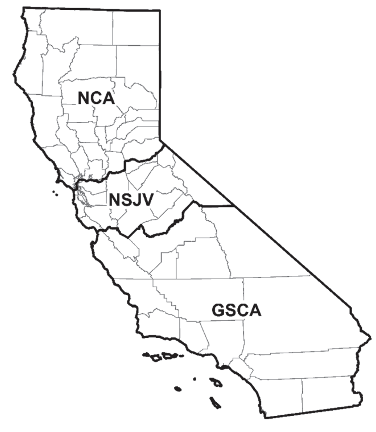
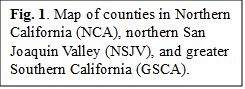
A total of 87 producers participated in the survey, representing an 8.1% response rate. Herd sizes ranged from 50 to 7,000 cows, with an average of 1,663 cows. Most respondents operated conventional dairies (82%), while 16% were organic and remaining did not inform the production system. Producers from across the state were represented (Fig.1), with 19% from Northern California, 36% from the Northern San Joaquin Valley, and 45% from Greater Southern California.
Concerns. The top five dairy producers concerns were milk price, feed costs or availability of feeds, labor cost, environmental concerns or regulations, and water quality or availability (Fig. 2). Compared to 2017, feed costs or availability of feeds moved up as a top concern in the recent survey. Producers across regions expressed similar levels of concern for most issues, except for urban encroachment. Producers in Northern California were more concerned about urban expansion (60%) compared to those in the Northern San Joaquin Valley (44%) and Greater Southern California (39%).
Research priorities. In 2024, the top research priorities identified by producers were environmental regulation, milk quality, reproduction, water use efficiency, and herd health. Four of these topics had already been among the top five in 2017 (herd health, environmental regulation, reproduction, and milk quality). Water use efficiency was first asked in 2024. Although overall priorities have remained consistent over time, regional differences were observed. Producers in Greater Southern California placed higher importance on alternative forages, while Northern California producers prioritized extreme weather and organic or pasture-based management. Heat stress and herd health ranked higher in the Northern San Joaquin Valley and Greater Southern California, whereas milk quality received less emphasis in the south.
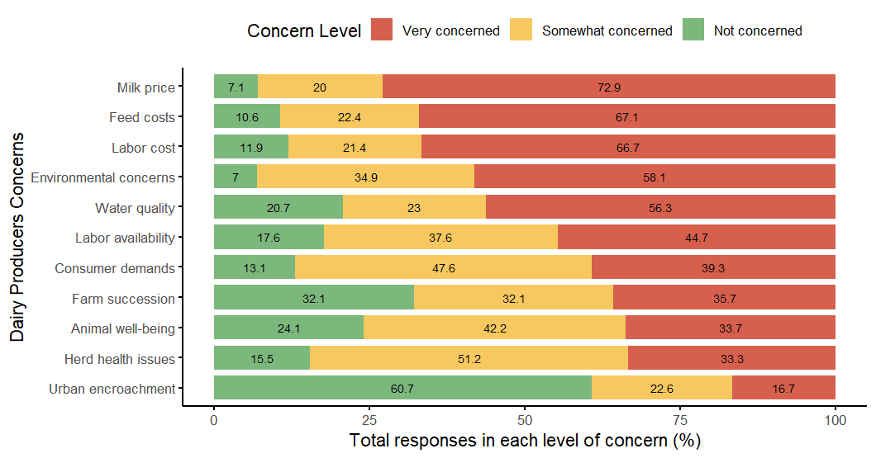
Fig. 2. Level of concern among California dairy producers by topic
Educational priorities. Producers’ educational priorities closely aligned with their research priorities. The five high priority educational topics were milk quality, environmental regulation, reproduction, water use efficiency, and herd health issues. As with research, four of these had been top priorities in 2017, with water use efficiency being newly added in the most recent survey. Producers in Northern California gave greater emphasis to extreme weather and organic or pasture-based systems, while those in the Northern San Joaquin Valley and Greater Southern California identified heat stress as a key educational need.
Acknowledgment. Thank you to all producers who responded to the survey. Your input will guide the direction of UC Cooperative Extension dairy programs.