Global fruit breeder strengthens collaboration with California growers at new 150-acre site.
By Natalie Willis, Reporter, Valley Ag Voice
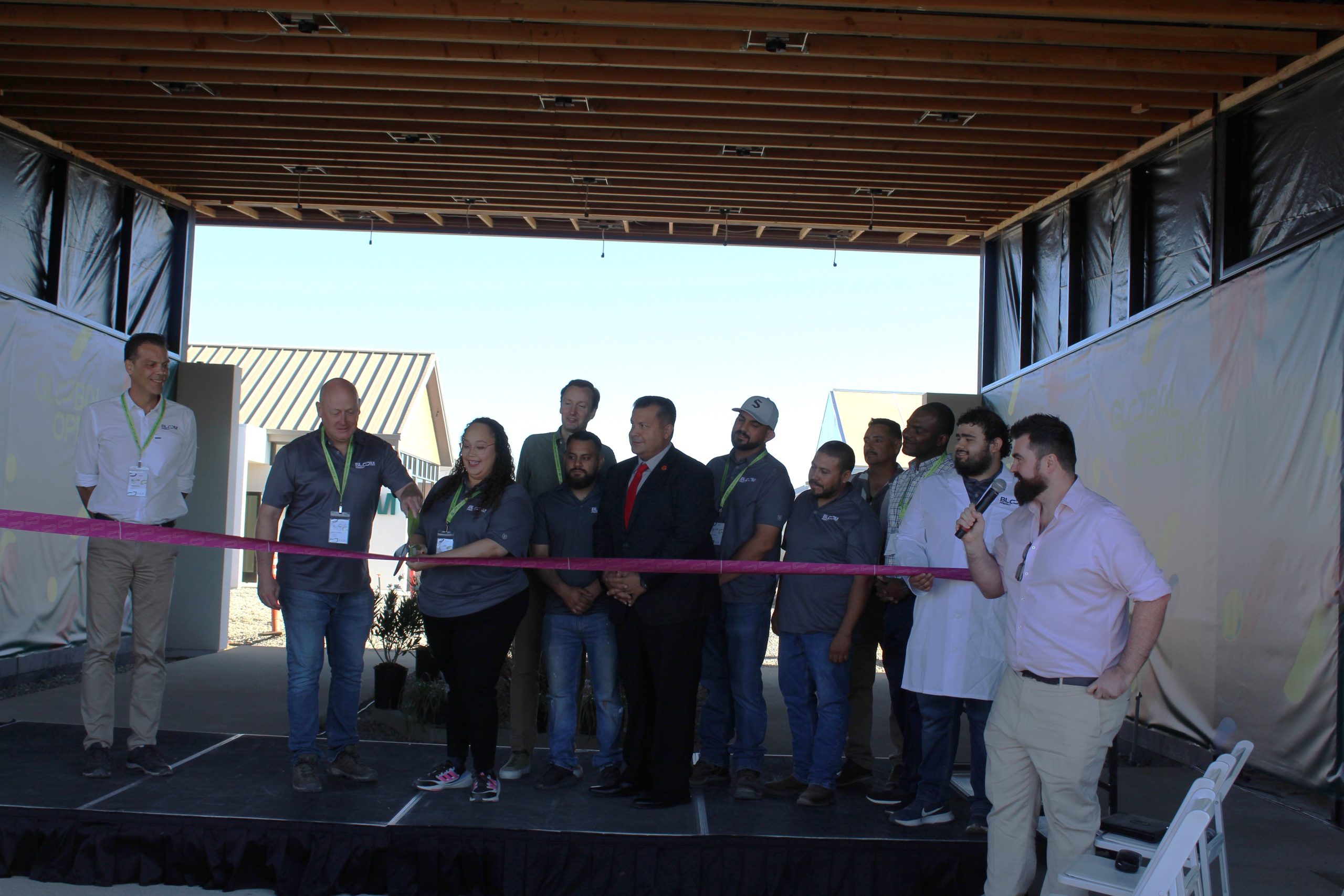
Bloom Fresh International — the largest global premium fruit-breeder company — unveiled its 28,000-square-foot Discovery Center and Breeding Campus in McFarland, California on Aug. 20. The facility’s official inauguration comes one year after AMFRESH Group, EQT Future, and Paine Schwartz Partners acquired International Fruit Genetics, and merged it with Special New Fruit Licensing Group to create Bloom Fresh.
According to Josep Jove Estiarte, interim CEO of Bloom Fresh, this marks the company’s largest investment to date into the breeding of table grapes and cherries. Being in Kern County enables Bloom Fresh to collaborate closely with local growers, ensuring that new varieties are quickly validated and adapted to the region’s conditions.
“We are at the heart of the table grape industry in California… [when] breeding grapes, you need to breed them at the right place because when you do the selection, it’s a natural selection process. So, you need to do it based on the expression, and the expression is 100% associated with the area where you grow them,” Estiarte said. “If you want to have the real potential of a variety, you need to grow in the real place where everything else grows.”
He explained that, as an international company, Bloom Fresh operates in over 24 countries, and the varieties developed in McFarland will be planted in five continents — McFarland and Spain host Bloom Fresh’s two variety development centers.
The 150-acre Discovery Center in McFarland is developing several IFG table grape varieties, but some are already patented and commercially available in California. During a facility tour, Elena Aguaron, USA and Canada Commercial Lead for Table Grapes explained that growers can obtain Bloom Fresh patented varieties through Wonderful Nurseries, Sunridge Nurseries, and Casa Cristal Nursery.
Estiarte explained that Bloom Fresh works closely with growers in California to understand the region’s unique challenges including high labor costs and water restrictions.
“By working together with the growers, we understand the challenges. And by understanding the challenges, we can do something about it,” Estiarte said. “So, certainly, this is one of the strongest points that we have, is this working collaboration and closeness with the table grape industry in California to address the issues that they are facing today.”
He explained that they have dealt with similar challenges in their research and development of new varietals.
“We are aware, and we are suffering, as every other grower in the Valley, with the restrictions on water. But, of course, when we built this site, we obviously made plans to have enough water to cover it, and, you know, this is a 150-acre plot. We are not using everything for production. We have areas without production, so we can actually utilize [water] more efficiently,” Estiarte said.
Bloom Fresh’s labs utilize a natural process to develop varieties with ideal genes rather than utilizing genetic modification. The center strives to create varieties that produce high yields, have an appealing taste and crispy texture, and are less labor intensive.
Aguaron emphasized the importance of developing varieties with “low labor” requirements through looser vines, pointing to an MF 2236 variety that has not yet been commercialized.
“They are very productive, but the bunch is pretty loose. You don’t really have to do much to it…they don’t really take much work, they don’t shoot a ton of laterals — growing grapes is never low labor, but they are on the lower labor side,” Aguaron said.
In addition to tailoring table grape varieties to suit the unique needs of Central Valley growers, the $14 million facility will supply up to 100 jobs when the site is fully operational, Estiarte explained. Job openings will range from in-field work to research and development in the lab.
GOT A DECADE?
Across various commodities such as table grapes, carrots, and potatoes, commercializing a new variety can take up to 10 years. Researchers are tasked with extensively testing potential varieties to ensure the quality meets grower and consumer standards. According to Estiarte, to measure the broad-based adaptability of table grape varieties, several hybrids are created in the process.
The development facilities streamline this process, he explained.
“When you develop a table grape variety you have all these requirements, and you need to generate a lot of hybrids. Every hybrid is a tree, so you need a lot of space — you need a lot of lab space also to do the whole project,” Estiarte said. “So, having these facilities will actually help us to fast track those breeding targets and objectives that we have as a company.”
The facility’s strategic location also positions California growers to be among the first to plant these innovations once fully patented.
“It’s a blessing to be part of this industry…in California, we’ve been working in this industry for more than 20 years. We’ve seen this industry going up and down, through good years and bad years,” Estiarte said. “Our partnership with the growers is what we value, what we value in this business. To have these relationships and to understand their problems, their challenges, and for us to address that into our breeding program.”