By Natalie Willis, Reporter, Valley Ag Voice
Nestled within a 14-acre wedding venue near the Kern River, a vision is taking root — one that intertwines employment opportunities, sustainable agriculture, and nutrition education for individuals with intellectual and development disabilities.
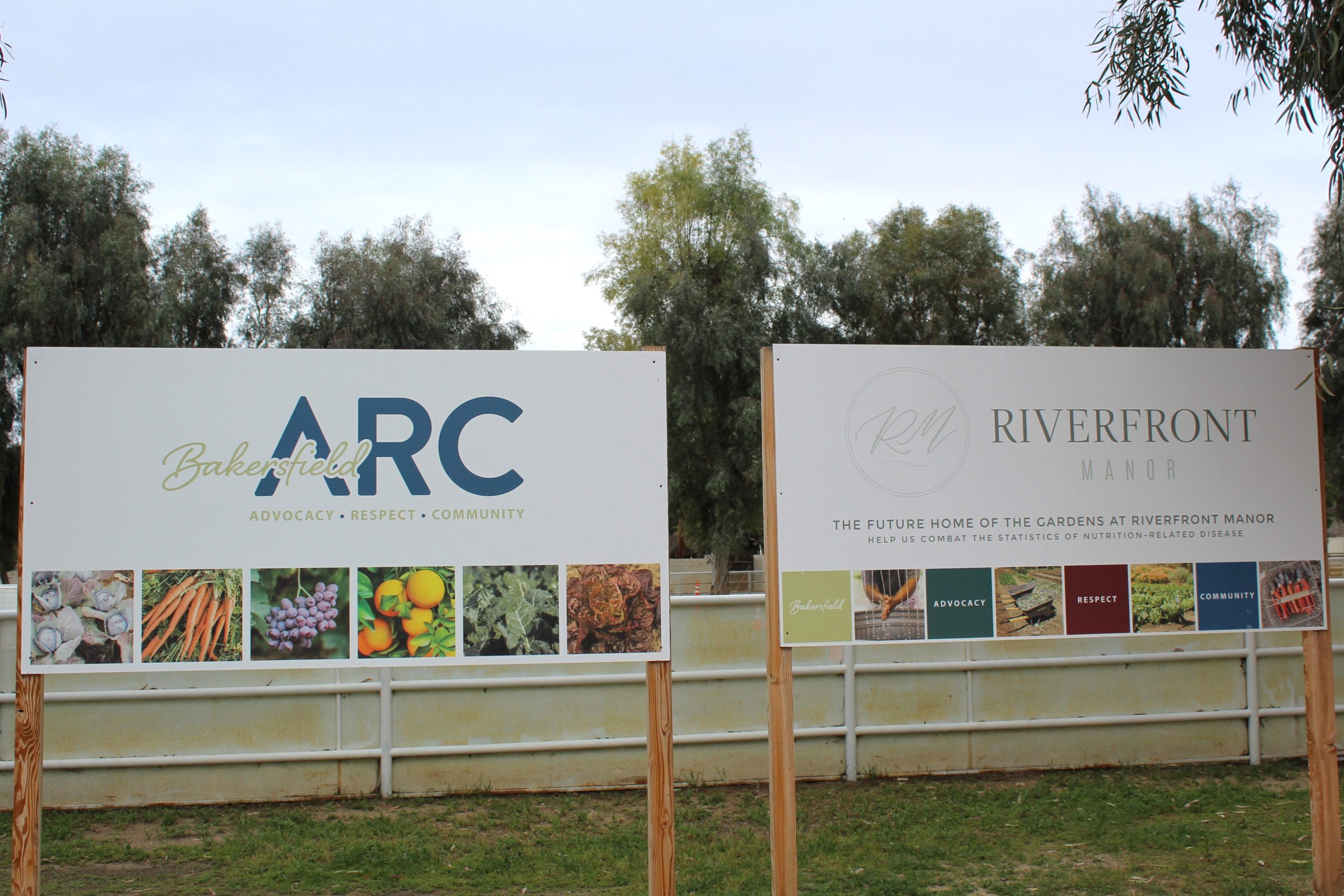
The Bakersfield ARC — a nonprofit organization dedicated to supporting individuals with intellectual and developmental disabilities — purchased Riverfront Manor in April 2024 to serve as a funding source.
“Bakersfield ARC purchased the property in April of 2024 with the intention that we would utilize the property as a new program opportunity to advance the mission of Bakersfield ARC,” Erika Dixon, Vice President and Director of Development for Bakersfield ARC, said. “With the volatile funding that’s coming out of the state in taking care of the individuals that we serve, we know we have to get innovative, and we have to get scrappy.”
Dixon explained that the venue, formerly known as JEH Ranch, has functioned as a successful full-time wedding venue for several years. With that in mind, the non-profit purchased the property with the understanding that the money generated from the venue would go directly toward advancing Bakersfield ARC’s mission.
According to Shawn Kennemer, Bakersfield ARC President and CEO, the ultimate goal is for the venue to provide employment opportunities and revenue to support their mission.
“This can be a blueprint for other successful ventures,” Kennemer said.
CULTIVATING EXPERIENCE
While the venue will serve as a funding source for Bakersfield ARC, the broader ambition for the property is to create a community garden. Employment opportunities for IDD individuals are at the core of Bakersfield ARC’s mission, and the garden project is a natural extension of this mission, equipping participants with valuable skills while promoting health and sustainability.
“The number one cause of death amongst elderly people with disabilities is nutrition-related disease. And I will tell you that the state has no incentive to help the individuals we serve live longer, especially when they fund them primarily,” Dixon said. “So, there’s no grants, there’s no programming, there’s no funding to teach the individuals we serve proper nutrition to extend their life.”
Dixon explained that heart disease and diabetes are on the rise in IDD individuals, and a majority of the people they serve live below the poverty level.
“So, for us, it’s important to teach the individuals we serve how to eat healthy, how to have sustainable living, how to extend their life, bring value to who they are and what they offer to us and to our community and to their families,” Dixon said. “It’s exciting to see the people come back from a job and say, ‘My grandpa taught us all to have the work ethic and to work so hard, and I never got to do that until Bakersfield ARC led me to this place, and now I make money and my friends at work invite me to go out after.’ They’re really part of the community, and that’s where they need to be. That’s where they should be. We all deserve that.”
Dixon explained that as a mother of two children on the autistic spectrum, and one with epilepsy, a healthy diet made a significant difference for her family.
“It makes a difference on how our brains function. It makes a difference on disease. It makes a huge difference,” Dixon said. “And so, for us, the goal is to get that garden in and teach sustainable living for our individuals.”
Originally, Bakersfield ARC envisioned converting a large portion of the property into a sprawling community garden. However, Dixon explained that maintaining extensive plots would be an overwhelming challenge, so they plan to implement a more manageable approach, starting with raised beds with plans to gradually expand as resources allow.
Pointing to the planned garden’s plot with several workers prepping the area, Dixon explained that the goal always points back to employment opportunities — the transferable skills that IDD individuals can learn from working at the garden to other opportunities in agriculture.
“Our individuals are getting paid to work here,” Dixon said. “We are making a lot of friends in the ag industry…so, my hope is as we develop these partnerships and these friendships, that it will go beyond putting a garden in the ground.”
Kennemer added that he hopes to keep expanding the dream to reach other areas of the ag industry.
“Ultimately, we’d like to start our own disabled FFA,” Kennemer said. “So, the ultimate goal is, you know, ‘How do we get involved in the ag side?’ possibly raising goats and raising some pigs or chickens and then showing them at the fair.”
EXPANDING OPPORTUNITIES
Community partnerships are the foundation to push Bakersfield ARC’s mission forward. According to Dixon, the garden and venue provide direct opportunities for the community to be involved.
“The hope is that the community pours into Bakersfield ARC,” Dixon said. “The garden turns into ag jobs, the venue turns into new venue jobs, and that it all becomes a community project.”
The community can support Bakersfield ARC’s mission not just through funding but also through education and genuine outreach.
“[They can] come out here and teach the individuals that we serve some of the information that they know. How to eat healthy, how to work, how to be a good employee. What are they looking at for employment? Can we teach skills out here that transfer into what they’re doing?” Dixon said. “You see these people out here, they’re willing to work hard, do whatever it takes to learn a new skill. So, we just need the community to come out and believe in us and believe in them.”
Kennemer echoed this sentiment, explaining the importance of potential employers coming to the facility to witness the work that is being done.
“We’re very new on the ag side of it, but the first step is you have to get people out to see they’re people. They’re not people with disability, they’re people,” Kennemer said.
He explained that the ultimate vision is that Bakersfield ARC can help connect individuals to employment opportunities and encourage independence.
“So, we have to start with the connotation of ‘How do we put ourselves out of business where we’re no longer needed?’ knowing it’s never going to happen in this society, but that’s got to be our utopic vision,” Kennemer said.
COMMUNITY SUPPORT
Kennemer and Dixon explained that building this vision requires collaboration and support from the Kern County community. Bakersfield ARC is actively seeking partnerships with agricultural organizations, local businesses, and community members who can contribute materials, expertise, financial resources, or employment opportunities for the individuals it serves.
Bakersfield ARC also offers paid internship programs to connect individuals to employment opportunities, and Dixon encouraged agricultural companies to reach out to the organization to get involved.
“If an ag company wanted to come out and they help Bakersfield ARC put in some of these things, and they learn and see the skills that our individuals have, there’s paid internship programs that’s paid through us and the state that they could work for the company, make sure they’re a good fit, and then the goal is that they would hire them on permanently.”
For others looking to contribute, Bakersfield ARC offers multiple ways to get involved, with detailed information on their website through their giving program, “The ARCitects.”
“Bakersfield ARC is advocacy, respect, community,” Dixon said. “Community is key. We’re creating a space for the community, and we are welcoming the community, and we hope that the community will embrace Bakersfield ARC and the people of Bakersfield ARC in this space.”