 By Rachel Nettleton, Executive Director, Kern County Farm Bureau
One of the greatest strengths of agriculture has always been our ability to adapt. Every season brings new challenges, whether it is weather, markets, pests, labor shortages, water availability, or changing regulations. Farmers and ranchers do not have the luxury of standing still; they adapt because their livelihoods depend on it.
The same is true when it comes to advocacy.
Every day, decisions are being made that affect agriculture. Some happen in Sacramento. Others happen in Washington, D.C. Many happen much closer to home, at county board meetings, water district meetings, regulatory hearings, and local agency discussions. Whether it is a new regulation, funding decision, infrastructure investment, or environmental policy, those decisions may move forward with or without agriculture’s input.
The question is simple: Will agriculture be represented when they do?
Too often, it is easy to assume someone else is already carrying that responsibility. Organizations like the Kern County Farm Bureau work every day to advocate on behalf of local farmers and ranchers, but our voice is strongest when it reflects the experiences, expertise, and engagement of the people we represent.
Over the past year, we have seen firsthand what can happen when our agricultural community chooses to engage.
When the future of the USDA Farm Service Agency’s (FSA) Bakersfield office was uncertain, more than 200 letters were written by producers, agricultural organizations, and community members emphasizing the importance of maintaining strong local USDA services. That outpouring of support demonstrated just how vital this office is to our region. Ultimately, the Bakersfield office remained open, preserving local access to critical USDA programs and services. While many factors contributed to that outcome, it served as a powerful reminder that when agriculture speaks with a unified voice, decision-makers take notice.
More recently, the emergence of invasive golden mussels has highlighted the power of collaboration. What began as conversations among local agricultural and water leaders quickly grew into a coalition effort. Agricultural organizations, water districts, businesses, and local government joined together in support of a statewide response, while more than 50 individuals submitted their own letters to Governor Gavin Newsom urging action. That level of engagement demonstrated that protecting California’s water infrastructure is not the responsibility of one organization, it is a shared responsibility across our entire agricultural industry as well as our community.
Advocacy is not always about sending letters or meeting with legislators. Sometimes it starts with simply showing up.
The same principle applies whether the topic is water, wildlife management, labor, regulatory reform, or food security. The people making decisions need to hear directly from the farmers and ranchers who experience these challenges every day. No report or statistic can replace the perspective of someone living it.
Fortunately, meaningful engagement does not require traveling to Sacramento or Washington, D.C.
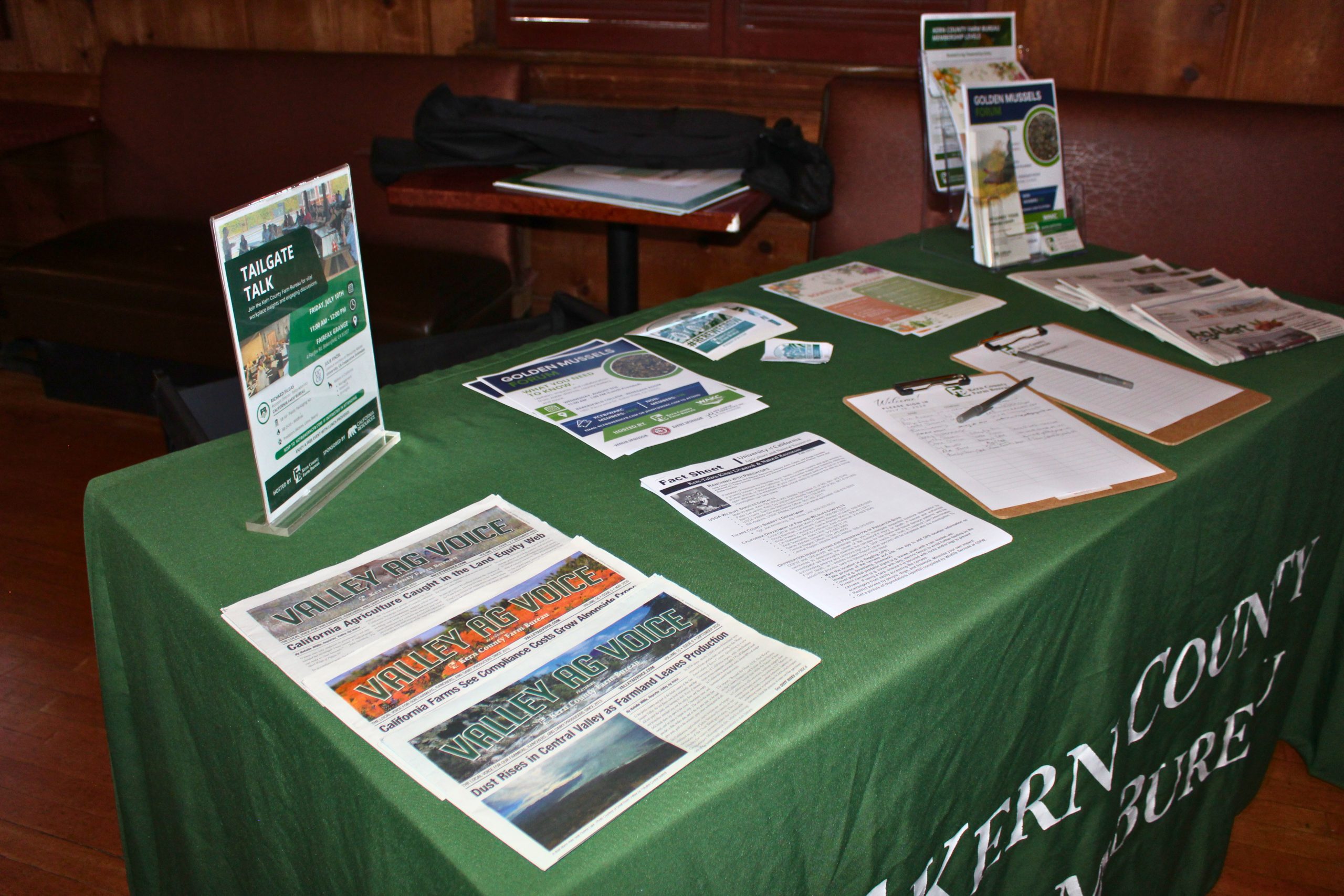
It can be attending a local educational forum. Participating in a Kern County Farm Bureau Tailgate Talk. Responding to a FarmTeam Action Alert. Inviting an elected official to visit your operation. Serving on a committee. Joining your county Farm Bureau. Or simply taking a few minutes to share your perspective when an issue directly affects your operation.
Each of those actions helps ensure agriculture’s voice is heard before decisions are made, not after.
A common quote in the agricultural industry is, “If you are not at the table, you are probably on the menu.” While it is often shared with a smile, there is an important lesson behind it.
Agriculture cannot expect others to tell our story, explain our challenges, or advocate for our future. That responsibility belongs to all of us.
The good news is that agriculture already has a seat at the table. The challenge is making sure that seat never sits empty.
The future of agriculture will not be decided solely in our orchards, fields, dairies, or ranches. It will also be shaped in meeting rooms, legislative chambers, county boardrooms, and community conversations. Every meeting attended, every conversation held, every action alert completed, and every voice shared helps strengthen agriculture’s ability to protect this industry.
Agriculture has earned its seat at the table through generations of hard work and adaptability. Now it is our responsibility to continue showing up, speaking up, and ensuring the voice of Kern County agriculture is heard—for ourselves, for our neighbors, and for the generations who will farm and ranch long after us.